

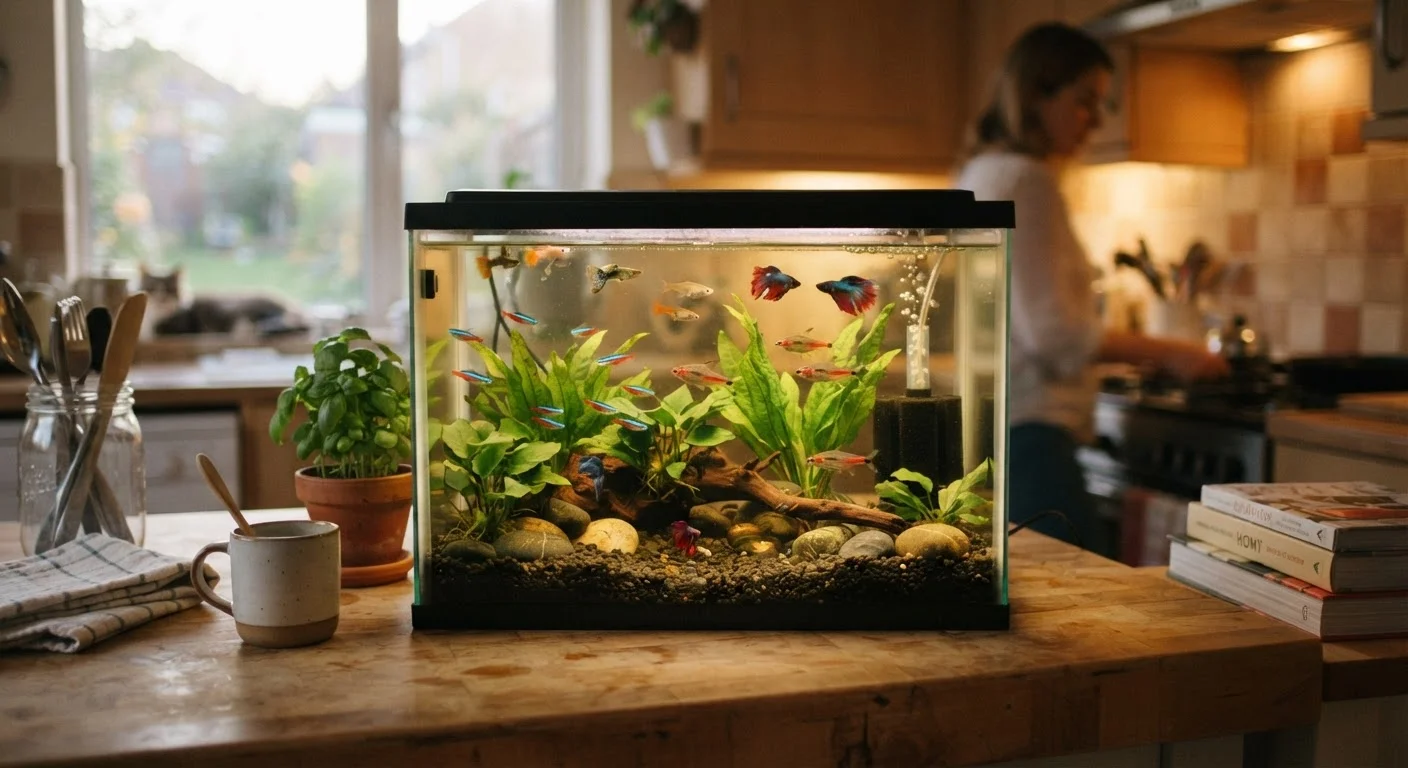
The Hidden Science Behind a Healthy Tank
Starting an aquarium feels exciting — you pick out a tank, fill it with water, add some decorations, and bring home your first fish. But many families are heartbroken days later when those fish begin to die. In most cases, the culprit isn't bad luck. It's an invisible biological process that most beginners never hear about at the pet store.
A healthy aquarium depends on a colony of beneficial bacteria that convert fish waste — specifically ammonia — into less harmful compounds. This process is called the nitrogen cycle, and a brand-new tank has no such bacteria yet. Adding fish before the cycle completes means ammonia builds up to toxic levels rapidly. Fish suffer from what hobbyists call "new tank syndrome," and even hardy species can decline within days.
The cycle typically takes two to six weeks to establish. You can test for it using an inexpensive liquid water test kit that measures ammonia, nitrite, and nitrate levels. Only when ammonia and nitrite readings reach zero and nitrate is detectable is the tank truly ready for fish.
Adding fish to an uncycled tank before beneficial bacteria are established.
Why it happens: Pet stores often don't explain the nitrogen cycle, and new owners assume a clean, filled tank is immediately ready for fish.
Using untreated tap water that still contains chlorine or chloramines.
Why it happens: Tap water looks and smells safe to us, so it's easy to assume fish will tolerate it without any preparation.
Overstocking the tank by adding too many fish at once.
Why it happens: Fish are small and inexpensive, so families often underestimate how much biological load each fish adds to the water.
Skipping proper temperature acclimation when introducing new fish.
Why it happens: It seems minor, but fish brought home in a bag are at a different temperature than the tank water, and a sudden shift can cause fatal shock.
Mixing aggressive or incompatible fish species in the same tank.
Why it happens: Many beginners choose fish based on appearance alone, without checking whether species share compatible water parameters, temperament, or territory needs.
Setup and Stocking Mistakes That Cost Fish Their Lives
Beyond the nitrogen cycle, several other setup errors compound the problem for new fish owners. Understanding these mistakes — and why well-meaning beginners make them — is the first step toward a thriving tank.
~90%
New fish deaths linked to water quality
Aquarium hobbyist communities and veterinary resources consistently estimate that the vast majority of new fish losses stem from preventable water chemistry problems, not disease.
2–6 weeks
Time needed to fully cycle a new tank
Most aquarium care guides recommend allowing at least two to six weeks for beneficial bacterial colonies to establish before adding fish.
If you're drawn to fishkeeping as a low-maintenance alternative to other pets, it helps to approach it like any living ecosystem. Much like bringing a new cat into a multi-pet home, adding animals too quickly without proper preparation leads to stress and conflict. And for a deeper look at what kind of aquarium commitment actually fits your family's lifestyle, comparing freshwater and saltwater setups is a useful next step.
Families curious about specific species should also check out the reality of goldfish care — many popular assumptions about goldfish are flat-out wrong and lead to preventable losses.
Don't Trust the "24-Hour Rule" Alone
Some beginners believe letting a tank sit for 24 hours before adding fish is enough preparation. While this allows water temperature to stabilize, it does nothing to establish the nitrogen cycle. Waiting just one day still leaves fish vulnerable to ammonia poisoning. Always cycle your tank fully — not just briefly — before adding any living inhabitants.
The content provided on our blog site traverses numerous categories, offering readers valuable and practical information. Readers can use the editorial team’s research and data to gain more insights into their topics of interest. However, they are requested not to treat the articles as conclusive. The website team cannot be held responsible for differences in data or inaccuracies found across other platforms. Please also note that the site might also miss out on various schemes and offers available that the readers may find more beneficial than the ones we cover.