

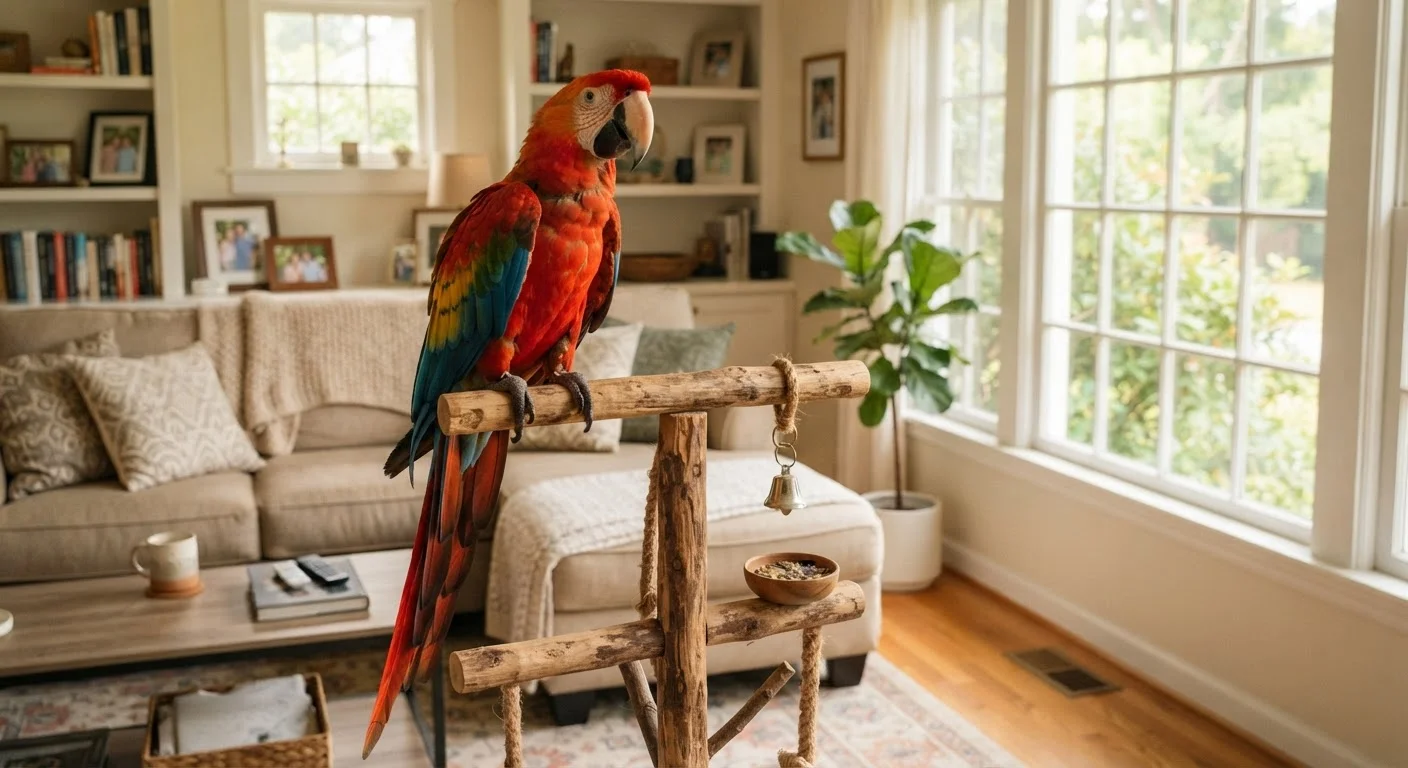
Is a Pet Bird Right for Your Family?
Birds are among the most rewarding pets a family can share their home with — but they're also among the most misunderstood. Unlike cats or dogs, birds communicate through vocalizations, body language, and feather posture in ways that take time to learn. Before you fall in love with a bird at a rescue or aviary, it's worth asking honest questions about your household's readiness.
Consider how much time your family can realistically dedicate each day. Most companion birds need at least one to two hours of supervised interaction outside their cage. Birds left isolated for long stretches can develop stress-related behaviors such as feather plucking or excessive screaming. If your family is frequently away from home, a bird may not be the right fit — or you may need to consider keeping a compatible pair.
Noise tolerance is another key factor. Even small species like cockatiels can be surprisingly loud during morning and evening hours. Parrots and macaws can reach decibel levels comparable to a power tool. If you live in an apartment or have noise-sensitive neighbors, this deserves serious thought. For a broader comparison of how birds stack up against other small pets, see our small pet matching guide.
Visit Before You Commit
Spend time with the species you're considering at a reputable rescue or breeder before making any decision. Observing how a bird interacts with strangers — and how your family responds to its sounds and energy — is invaluable. Many rescues also allow trial fostering, which can help gauge real-life compatibility.
Choosing the Right Species
The phrase "pet bird" covers an enormous range of animals — from the tiny budgerigar (commonly called a parakeet) to the large hyacinth macaw. Each species has distinct social needs, noise levels, and lifespans that should guide your family's decision.
- Budgerigars (budgies): Gentle, relatively quiet, and inexpensive to house and feed. They can live 7–10 years and are often a good starting point for first-time bird families.
- Cockatiels: Affectionate and trainable, cockatiels whistle and mimic sounds. They typically live 15–20 years and bond closely with their caregivers.
- Conures: Playful and curious, but notably louder than cockatiels. Lifespan ranges from 15 to 30 years depending on the species.
- African grey parrots: Exceptionally intelligent and capable of complex speech, but demanding in terms of attention and environmental enrichment. They can live 40–60 years.
- Macaws: Beautiful and social, but require very large enclosures and experienced owners. Lifespans often exceed 50 years.
Longevity is not a small consideration. Adopting a large parrot may mean a multi-decade commitment that outlasts your children's time at home. Before deciding, use our family readiness checklist to confirm you're prepared.
50+ years
Potential lifespan of large parrots
Species like African greys and macaws can outlive their owners, making long-term care planning essential.
7–10 years
Average budgerigar lifespan
Budgies are among the shorter-lived companion birds, making them a common starting point for families new to bird ownership.
1–2 hours
Recommended daily out-of-cage time
Most avian behavior specialists suggest at least one to two hours of supervised interaction outside the cage per day for companion parrots.
Housing and Environment
A bird's cage is its home base, and getting the size right matters enormously. As a general guideline, your bird should be able to fully extend its wings in every direction without touching the sides. Wider is generally better than taller, since most birds spend more time moving horizontally than climbing vertically.
Bar spacing is a safety issue: bars too far apart allow smaller birds to squeeze through or get their heads stuck. Look for stainless steel or powder-coated cages, as certain metals can be toxic if chewed. Avoid cages with sharp edges or paint that flakes.
Placement within the home also matters. Birds do best in rooms where the family spends time, so they feel included rather than isolated. However, kitchens are genuinely dangerous — fumes released by overheated non-stick (PTFE-coated) cookware can kill a bird within minutes. Scented candles, air fresheners, and cigarette smoke are also serious hazards.
Kitchen Fumes Can Kill Birds Quickly
Never place a bird's cage in or near a kitchen. Overheated non-stick cookware, gas burners, and even self-cleaning oven cycles can produce airborne toxins that a bird cannot survive. This is one of the leading causes of sudden death in pet birds and is entirely preventable with thoughtful placement of your bird's living space.
Nutrition and Feeding
Seeds are often the first thing people think of when feeding pet birds, but a seed-only diet is nutritionally incomplete for most species and is linked to obesity, vitamin deficiencies, and shortened lifespans. A well-balanced diet for most companion birds includes a high-quality pellet base, supplemented with fresh vegetables, limited fruit, and species-appropriate seeds as a treat rather than a staple.
Safe vegetables include leafy greens like kale and romaine, bell peppers, carrots, and cooked sweet potato. Foods that are toxic to birds include avocado, onions, garlic, chocolate, caffeine, alcohol, and the pits of stone fruits. Grit, once commonly recommended, is now considered unnecessary and potentially harmful for most parrots and hookbills — always verify dietary guidance with an avian veterinarian rather than generalizing across species.
Introduce new foods alongside familiar favorites rather than replacing meals entirely. Birds are neophobic — meaning they're naturally wary of unfamiliar items — and gradual exposure is far more effective than a sudden diet overhaul.
Neophobia is a well-documented trait in psittacines (parrots and related species); abrupt dietary changes often result in hunger strikes rather than acceptance of healthier options.
Chop finely and mix vegetables with a small amount of a food your bird already loves. Many birds will try new items when they can't easily pick around them.
Avian nutrition educators commonly recommend the 'chop' method as one of the most reliable strategies for expanding a bird's vegetable intake without stress.
Fresh water should be available at all times and changed daily, as birds frequently drop food into their water dishes. Stainless steel or ceramic dishes are easier to sanitize than plastic.
Daily Care, Enrichment, and Socialization
Birds are intelligent animals that need mental stimulation to stay healthy and happy. Foraging toys — where food is hidden inside a puzzle or wrapped in paper — tap into natural behaviors and keep birds occupied when family members aren't available. Rotating toys regularly prevents boredom. Perches of varying diameters and textures also matter: uniform perches can contribute to foot problems over time.
Out-of-cage time is not optional for most companion species. Supervised free flight or time on a playstand allows exercise and strengthens the bond between bird and family. Families with young children should establish clear handling rules early. For guidance on safe introductions, see our guide to birds and kids.
Consistent daily routines — similar wake and sleep times, predictable feeding schedules — reduce stress. Most birds benefit from 10–12 hours of quiet darkness each night, which can be achieved with a breathable cage cover.
Health and Veterinary Care
Birds instinctively mask signs of illness — a survival instinct that makes early detection genuinely difficult. By the time a bird appears visibly sick, the condition may already be advanced. This makes routine wellness checks with an avian veterinarian (a vet with specialized bird training) especially important, ideally once a year for healthy adult birds.
Signs that warrant prompt veterinary attention include: changes in droppings, fluffed feathers combined with lethargy, loss of appetite, labored breathing, discharge from the nostrils or eyes, or sudden changes in vocalization. Never attempt to treat a sick bird with over-the-counter medications formulated for other species.
Finding an avian vet before you bring your bird home is strongly recommended, as not all general veterinary practices see birds. The Association of Avian Veterinarians maintains a directory that can help families locate qualified practitioners in their area.
If your household also includes cats or dogs, careful introductions and secure environments are essential — instinct-driven predatory behavior can cause severe stress or injury to birds even without direct contact. Our multi-pet household guide offers helpful frameworks for managing animal coexistence safely.
Avian Vets Are a Specialized Field
Not every licensed veterinarian is trained to treat birds. Avian medicine requires distinct expertise in anatomy, diagnostics, and anesthesia that differs significantly from dog and cat care. Always confirm that a vet has avian-specific experience before scheduling a bird's appointment — and locate one before bringing your bird home, not after an emergency arises.
This article is for general informational purposes only and does not constitute veterinary advice. Always consult a qualified avian veterinarian for guidance specific to your bird's health and care needs.
The content provided on our blog site traverses numerous categories, offering readers valuable and practical information. Readers can use the editorial team’s research and data to gain more insights into their topics of interest. However, they are requested not to treat the articles as conclusive. The website team cannot be held responsible for differences in data or inaccuracies found across other platforms. Please also note that the site might also miss out on various schemes and offers available that the readers may find more beneficial than the ones we cover.