

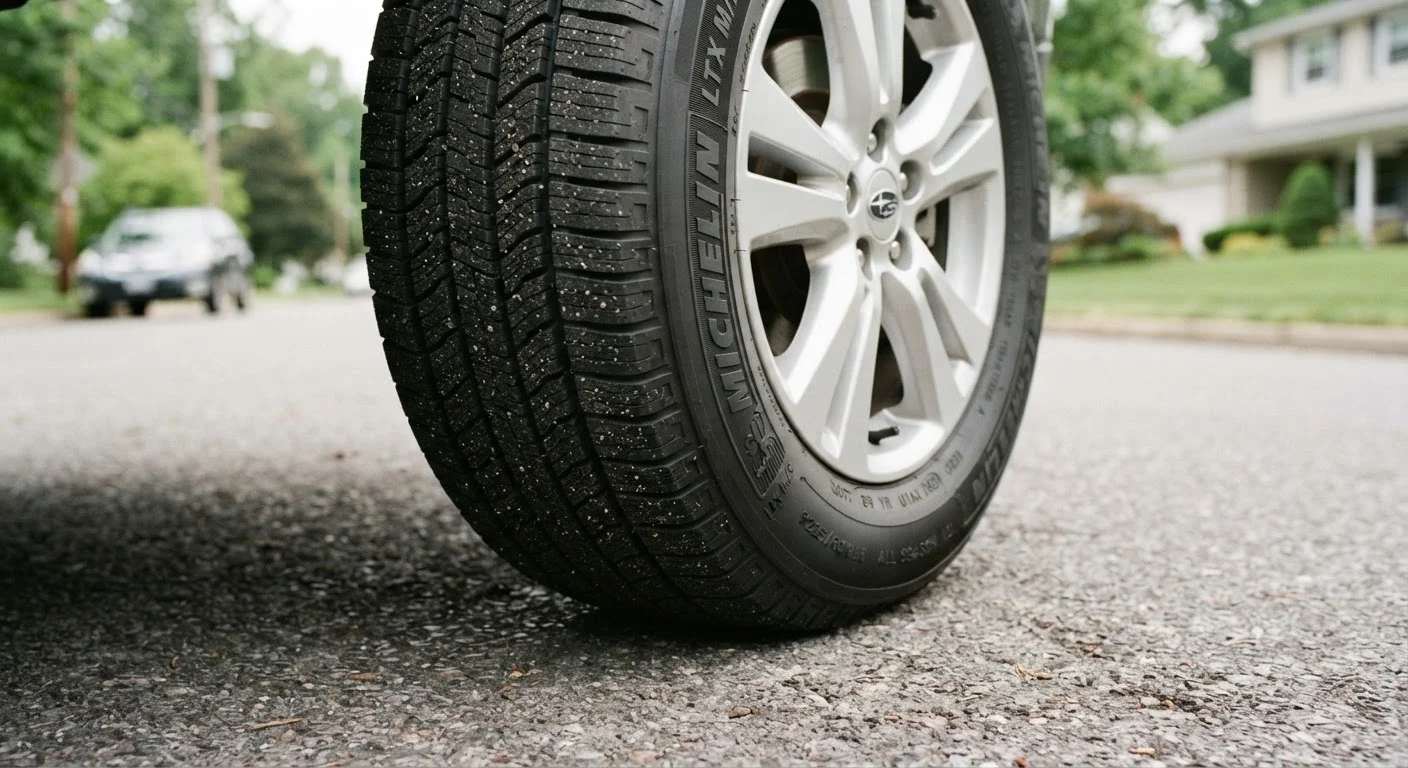
Why Tires Deserve More Attention Than They Get
Most drivers think about tires only when something goes wrong - a flat, a blowout, or a failed inspection. But tires are the only part of your car that contacts the road, and their condition affects braking distance, fuel economy, and how the car responds in rain or snow. A car with worn or underinflated tires handles noticeably worse in an emergency, even if everything else is in perfect shape.
The good news: basic tire care doesn't require any mechanical skill. It takes a few minutes a month and occasional professional service. For families who want a broader picture of vehicle upkeep, see our guide on car maintenance for families who know nothing about cars.
~1 PSI
Pressure lost per 10°F temperature drop
The U.S. Department of Transportation notes that tires lose roughly 1 PSI for every 10-degree Fahrenheit decrease in ambient temperature.
25%
Of vehicles have at least one significantly underinflated tire
A National Highway Traffic Safety Administration (NHTSA) study found roughly one in four passenger vehicles on U.S. roads has at least one tire underinflated by 8 PSI or more.
0.5%-3%
Potential fuel economy improvement from correct tire inflation
The U.S. Department of Energy estimates that keeping tires properly inflated can improve gas mileage by up to 3% compared to significantly underinflated tires.
Tire Pressure: What It Is and How to Get It Right
Air pressure inside the tire supports the weight of the vehicle. Too little pressure and the tire flexes too much, building heat and wearing the outer edges faster - it also reduces fuel efficiency. Too much pressure and the center of the tread bears most of the load, wearing unevenly and reducing grip.
The correct PSI for your vehicle is printed on a sticker inside the driver's door jamb. Ignore the number molded into the tire sidewall - that's a maximum rating, not a target. Most passenger vehicles call for somewhere between 30 and 35 PSI, but your specific number may differ.
Check pressure when the tires are cold - meaning the car hasn't been driven more than a mile or has been parked for at least three hours. Driving heats the air inside and raises the reading artificially. A digital or stick-style gauge both work fine; the gauges at gas stations are often inaccurate from heavy use.
Check Pressure in the Morning, Before You Drive
For the most accurate reading, check tire pressure first thing in the morning before the car has been driven. Even a short drive heats the air inside the tires, raising the PSI reading by several points and making it harder to know whether you're actually at the right level. Keep a gauge in the glove box so it's always on hand.
Tread Depth: Reading the Wear Before It Becomes Dangerous
Tread is the pattern of grooves cut into the tire's surface. Those grooves channel water away from the contact patch so the rubber can grip the road. As the tread wears down, that channeling ability decreases - wet stopping distances increase significantly as tread depth drops below 4/32 of an inch, well before the legal limit of 2/32 inch.
The easiest check is the penny test: place a penny into any tread groove with Abraham Lincoln's head pointed down toward the tire. If you can see the top of his head clearly, the tire is at or near the legal wear limit and needs replacement. A quarter works similarly - if you can see the top of Washington's head, you're approaching 4/32 inch and should start planning for new tires.
Most modern tires also have built-in tread wear indicators: small rubber bars molded across the grooves. When those bars are flush with the surrounding tread, the tire is worn out.
Tread condition matters even more when roads are wet. See how surface conditions affect grip and handling in our article on driving on wet roads, black ice, and gravel.
Tire Rotation: Keeping Wear Even Across All Four Tires
Tires don't wear at the same rate. Front tires on front-wheel-drive vehicles steer and deliver power simultaneously, so they wear faster than the rears. Moving tires to different positions on a regular schedule - called rotation - spreads that wear more evenly and extends the life of the full set.
The typical recommendation is every 5,000 to 7,500 miles. Many families time this with oil changes to keep it simple. A shop will move tires in a pattern suited to your drivetrain: front-to-rear, cross-pattern, or a five-tire rotation if your vehicle has a full-size spare.
Skipping rotation doesn't just shorten tire life - it can mask a developing alignment or suspension problem. If a tire is wearing unevenly even after regular rotations, that's worth having a technician look at.
Tires are also a key checkpoint before any long family trip. Our family vehicle safety walkthrough before road trips covers tires alongside lights, fluids, and emergency gear. For a seasonal perspective, the seasonal car checkup guide explains what to prioritize as weather changes.
Frequently Asked Questions
Once a month is the standard recommendation, and always before a long trip. Pressure drops naturally over time and changes with temperature - roughly 1 PSI for every 10°F change in air temperature. A quick check takes less than two minutes with an inexpensive gauge.
The pressure number molded into the sidewall (often labeled 'Max Press') is the maximum the tire can hold - not the recommended operating pressure for your vehicle. Always use the PSI listed on your driver's door jamb sticker or owner's manual instead.
The quickest test is the penny test: insert a penny into a tread groove with Lincoln's head pointing down. If you can see the top of his head, the tread is at or below 2/32 inch - the legal minimum in most states and time to replace. Many tires also have built-in wear indicators: flat rubber bars that appear across the groove when tread is low.
Most vehicle manufacturers and tire makers suggest rotating every 5,000 to 7,500 miles, which often aligns with oil change intervals. Check your owner's manual for the specific interval recommended for your vehicle and drivetrain type.
Yes. A basic tire pressure gauge costs just a few dollars and is easy to use - remove the valve cap, press the gauge firmly onto the valve stem, and read the PSI. Check tires when they're 'cold,' meaning the car has been parked for at least three hours or driven fewer than a mile.
No. Front tires typically wear faster on front-wheel-drive vehicles because they handle both steering and power delivery. Rear tires wear faster on rear-wheel-drive vehicles. Regular rotation evens this out and helps the full set last as long as possible.
The content provided on our blog site traverses numerous categories, offering readers valuable and practical information. Readers can use the editorial team’s research and data to gain more insights into their topics of interest. However, they are requested not to treat the articles as conclusive. The website team cannot be held responsible for differences in data or inaccuracies found across other platforms. Please also note that the site might also miss out on various schemes and offers available that the readers may find more beneficial than the ones we cover.