
The Costs That Slip Through Every Budget
When families calculate what a car costs, most start with the monthly payment, insurance, and gas. Those are the obvious three. What they tend to miss is an entire layer of smaller, less visible expenses that arrive unpredictably - and collectively, they can add hundreds or even thousands of dollars to a vehicle's true annual cost.
If your household budget only accounts for the big-ticket items, you're likely underestimating what you actually spend on your car. The expenses below are the ones most commonly left off family spreadsheets - and the ones most likely to cause budget friction when they finally show up. For a fuller picture of what a vehicle really costs to own each year, our annual car budgeting guide walks through every major category.
Annual Registration and Title Fees
Every state requires vehicles to be registered, and many charge annual renewal fees based on the car's age, weight, or value. In some states - particularly those that factor in vehicle value - newer or heavier vehicles can carry registration fees well above $100 per year. Title transfer fees apply when you buy a used vehicle. These are unavoidable and entirely predictable once you know your state's schedule, yet they're routinely forgotten during the car-shopping phase.
Registration fees vary widely by state and can exceed $100 annually for newer vehicles.
Depreciation - The Invisible Expense
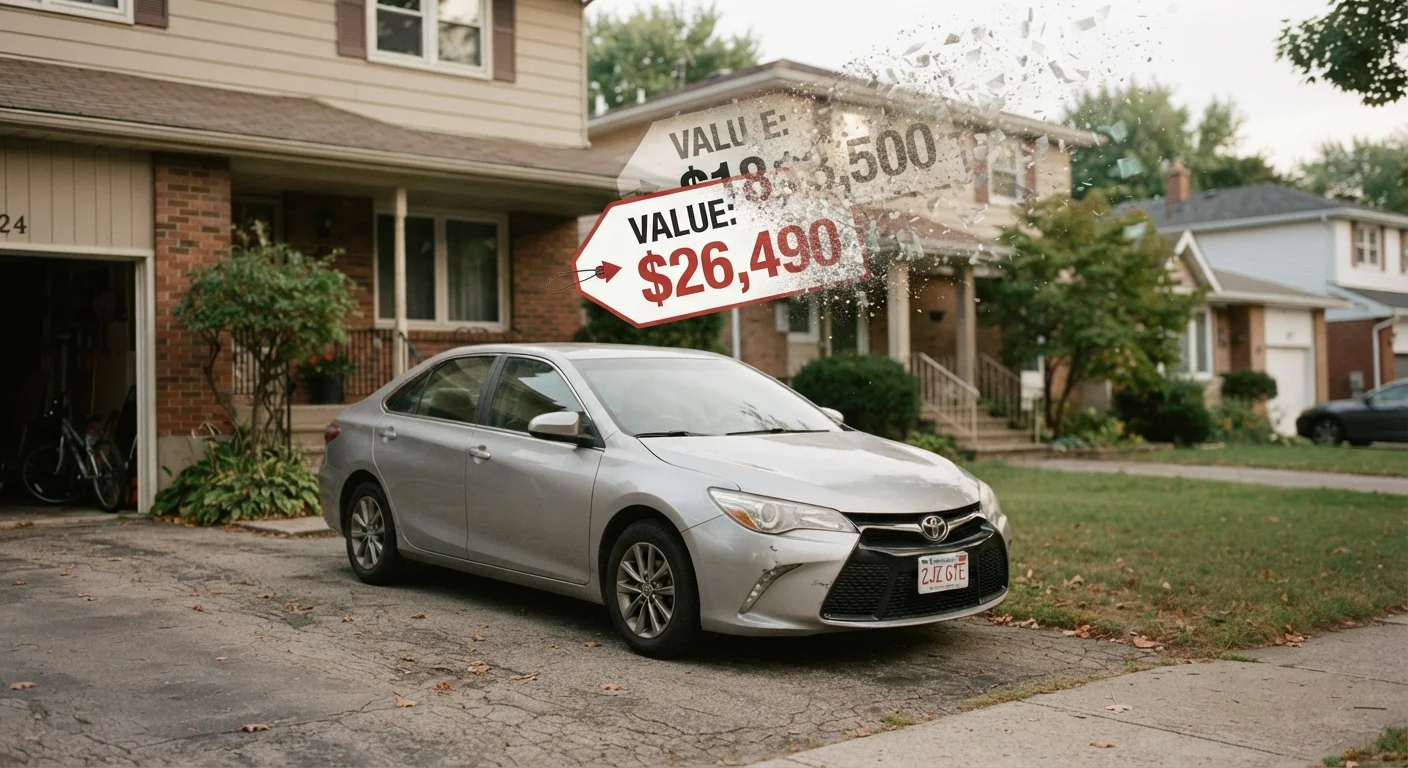
Depreciation is the reduction in your vehicle's market value over time. It doesn't show up on any monthly bill, but it's consistently cited by automotive industry analysts as the single largest component of total vehicle ownership cost. A new car typically loses a significant portion of its value in the first few years of ownership. Families who plan to sell or trade in their vehicle eventually will realize this loss at that moment - often as a surprise. Understanding depreciation matters whether you're buying new, buying used, or questioning common car-cost assumptions.
Depreciation is the largest single ownership cost - it just doesn't arrive as a monthly bill.
Tolls and Parking
Families in metro areas or those who commute on toll roads can accumulate significant toll costs annually. Electronic toll systems make this easy to overlook - charges hit a linked account automatically, making them feel abstract until you check the balance. Monthly or daily parking fees at a workplace, airport, or urban destination add up similarly. Neither cost appears in any standard car-cost estimate, yet for many families these two line items combine to rival fuel spending.
Tolls and parking fees are invisible line items that can rival monthly fuel spending.
Loan Interest Over the Life of Financing
When families finance a vehicle, they typically focus on the monthly payment rather than the total interest paid over the loan term. Depending on the interest rate and loan length, the cumulative interest cost over a five- or six-year loan can be substantial - sometimes thousands of dollars beyond the vehicle's purchase price. This is part of the true cost of the car, but it's rarely spelled out clearly at the point of purchase. Reviewing the full loan amortization schedule before signing can make this cost concrete and comparable.
Total loan interest over a multi-year term can add thousands to the real purchase price.
Roadside Assistance and Emergency Costs
A flat tire, dead battery, or lockout can cost anywhere from modest to significant amounts depending on your location and the time of day. Roadside assistance plans - whether through an auto club, your insurer, or a dealer add-on - carry their own annual fee. If you don't have coverage and pay out of pocket, a single towing incident can run $75-$200 or more. Neither the plan cost nor the potential out-of-pocket bill tends to appear in a household car budget. Routine maintenance habits can reduce the frequency of emergencies, but they don't eliminate the need for a financial cushion.
One unplanned tow or lockout can cost over $150 - budget for it before it happens.
Car Washes and Detailing
This one sounds minor - and any single wash is. But families who wash their vehicles weekly or bi-weekly, or who pay for an occasional professional detail to protect resale value, can spend $200-$600 annually without tracking it as a car expense. It gets mentally categorized as a miscellaneous purchase rather than an ownership cost. If you care about maintaining your vehicle's condition and eventual trade-in value, it belongs in your car budget.
Regular car washes and detailing can quietly cost several hundred dollars per year.
Emissions Testing and State Inspection Fees
Many states require periodic safety inspections, emissions tests, or both. These typically cost between $20 and $75 per test, depending on the state and vehicle type. If your vehicle fails an inspection, any required repairs to pass become part of that year's ownership cost as well. Families who move between states may be surprised to learn their new state has testing requirements they hadn't accounted for. Check your state's Department of Motor Vehicles website for current requirements and fee schedules.
Inspection and emissions fees are mandatory in many states - plus any repairs needed to pass.
Build These Into Your Plan Before They Surprise You
None of these costs are unusual - they apply to virtually every vehicle-owning household in the country. The issue is that they don't arrive on a predictable monthly schedule the way a car payment does, so they get mentally filed as "one-off" expenses rather than part of normal ownership costs.
Track Every Car Expense for 90 Days
If you're unsure which hidden costs apply to your household, spend three months logging every vehicle-related transaction - tolls, parking, washes, fees, everything. At the end of 90 days you'll have a realistic baseline far more accurate than any general estimate. That baseline is the right starting point for building a household budget that actually holds.
The practical fix is straightforward: once you identify which of these apply to your situation, assign each a rough annual dollar estimate and divide by 12. Set that amount aside each month in a dedicated car fund. When the registration bill or the toll invoice arrives, the money is already there.
For a structured look at how these numbers compare across vehicle types and regions, the Annual Vehicle Ownership Cost Tracker is a useful reference. And if you're thinking about adding a second vehicle, walk through the cost readiness checklist first - these hidden costs double along with everything else.
This article provides general financial information for educational purposes. It is not personalized financial advice. Consult a qualified financial professional for guidance specific to your household circumstances.
The content provided on our blog site traverses numerous categories, offering readers valuable and practical information. Readers can use the editorial team’s research and data to gain more insights into their topics of interest. However, they are requested not to treat the articles as conclusive. The website team cannot be held responsible for differences in data or inaccuracies found across other platforms. Please also note that the site might also miss out on various schemes and offers available that the readers may find more beneficial than the ones we cover.