

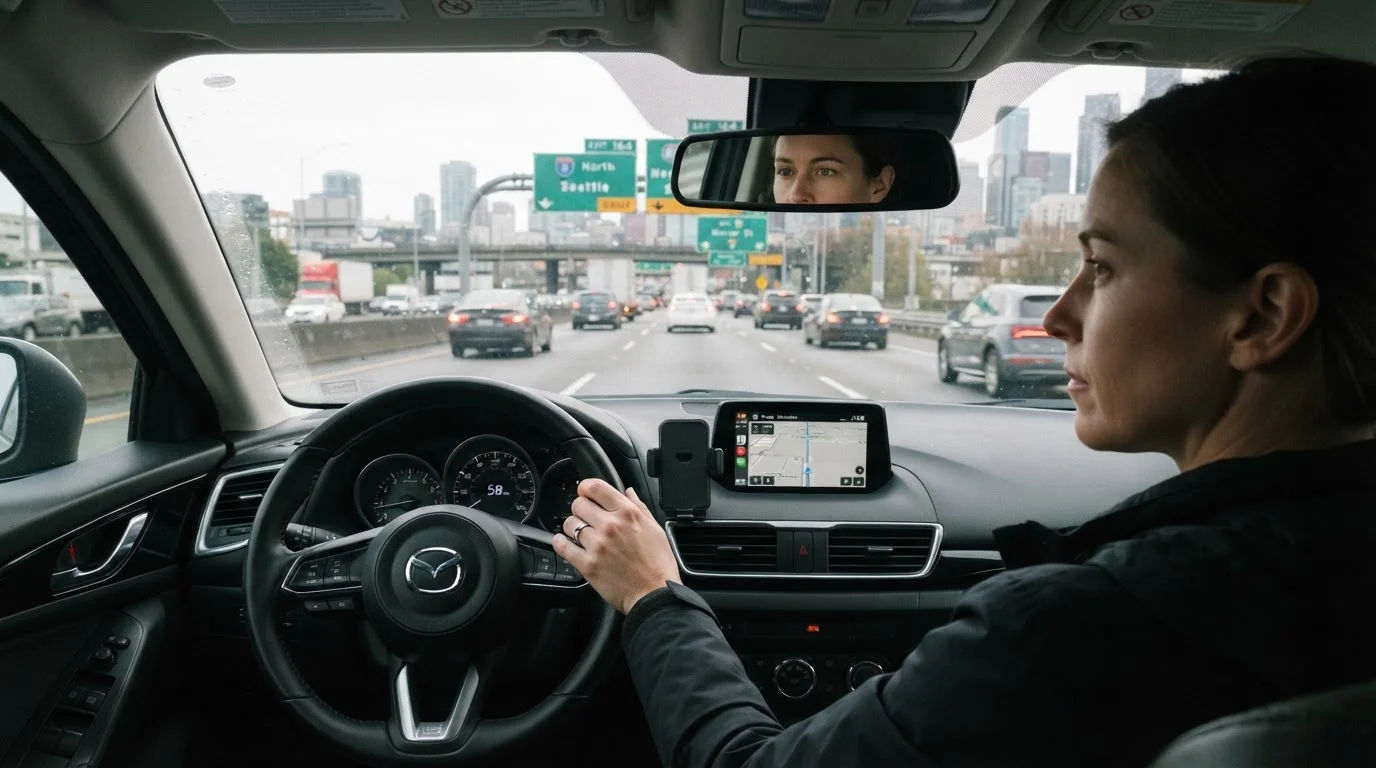
Why Road Aggression Escalates So Quickly
Road rage incidents - ranging from persistent honking to physical confrontations - are more common than most drivers realize. The anonymity of being inside a vehicle, combined with the stress of traffic, can cause people to react far more aggressively than they would in a face-to-face setting. Psychologists sometimes call this disinhibition: the sense that the metal shell of a car distances you from normal social consequences.
What makes these situations genuinely dangerous is how quickly they can compound. A minor slight - a lane change perceived as a cut-off, a moment of slow merging - can trigger a chain of escalating reactions from both drivers. Understanding that the other driver is likely experiencing a stress response, not mounting a personal attack, is one of the most effective cognitive tools for keeping yourself from joining the cycle.
For families, there's an added layer: children in the back seat are absorbing everything. How you respond under pressure teaches them what adult conflict resolution looks like on the road.
Use Controlled Breathing to Reset
When you feel your own anger spiking, try a slow exhale lasting about twice as long as your inhale - for example, breathe in for four counts and out for eight. This activates the body's natural calming response and can help you make better decisions in the next few seconds. For more on why emotional de-escalation requires more than willpower, see why "just calm down" rarely works.
What You Need Before You Start
Responding safely to road aggression isn't something you figure out in the moment - it helps to have thought through your approach in advance. Review the prerequisites and useful tools below, then walk through the steps so the responses feel familiar when you need them.
What you will need
Hands-free phone mount
Allows a passenger - or the driver safely - to call 911 without taking hands off the wheel.
Dashcam
Records incidents automatically, providing evidence if you need to file a police report.
You don't need special training or equipment. What matters most is a prepared mindset and the willingness to prioritize safety over being right. Pair these habits with broader defensive driving principles for a more complete approach to road safety.
Step-by-Step: De-escalating the Encounter
Follow these steps in order when you encounter an aggressive driver. The goal is not to win, apologize, or teach the other driver a lesson - it is simply to keep your vehicle and everyone in it out of harm's way.
Do not respond in kind
The moment you notice an aggressive driver - tailgating, cutting you off, yelling, or gesturing - your first job is to do nothing provocative. Avoid eye contact, do not gesture back, and resist the urge to honk beyond a brief, functional tap. Aggressive behavior is often fueled by a perceived audience; withdrawing that audience is the fastest way to reduce the driver's incentive to escalate.
Create physical distance between vehicles
Put as much space as safely possible between your car and the aggressive driver. Ease off the accelerator, change lanes when it is safe to do so, or take the next available exit. Increasing following distance gives you more reaction time and removes you from direct confrontation range. Tailgating dramatically shortens your reaction window - the same principle applies when someone is tailgating you.
Manage your own stress response
Your hands may tighten on the wheel. Your pulse may quicken. These are normal physiological reactions, but they can impair judgment and make you more likely to retaliate. Consciously slow your exhale, loosen your grip slightly, and say aloud - especially if children are in the car - that you are choosing not to engage. Narrating your calm decision-making also models good behavior for young passengers.
Alter your route if the driver follows
If an aggressive driver appears to be following you, do not drive home or to any private location. Instead, drive toward a busy, well-lit public place - a gas station, fire station, or shopping center - and call 911. Inform the dispatcher of your location, your direction of travel, and a description of the other vehicle. Do not exit your car until law enforcement arrives or the driver leaves.
Report dangerous driving to authorities
If the other driver is weaving dangerously, appears impaired, or has made a physical threat, call 911. Have a passenger make the call if possible so the driver's attention stays on the road. Provide your location, the direction of travel, a vehicle description, and the license plate if you can read it safely. Reporting is not overreacting - it may prevent a serious crash involving other families on the road.
Debrief and reset before continuing your trip
Once the situation has passed, take a moment before resuming normal driving speed. A tense encounter can leave residual adrenaline that affects concentration and decision-making for several minutes. If children were present, a brief, calm explanation of what happened and why you handled it the way you did can turn an upsetting experience into a genuine safety lesson. Practicing defensive driving habits daily makes these responses more automatic over time.
Never Pull Over for an Unknown Driver
If an aggressive driver signals or motions for you to pull over on the roadside, do not stop in an isolated location. Drive instead to a busy public place - a gas station, shopping center, or police station - and call 911. Stopping in a deserted area at a stranger's request puts you and any passengers at serious risk.
After the Incident: What to Do Next
Once you've reached your destination safely, consider whether to file a police report - particularly if the driver made physical threats, damaged your vehicle, or followed you. A dashcam recording or a license plate number significantly strengthens any report.
If passengers - especially children - were visibly shaken, a calm conversation matters. Normalize the experience without dramatizing it: explain that some drivers behave badly, that you chose not to make it worse, and that the priority was always getting home safely. High-stress road environments are everywhere, from school zones and construction areas to busy highways, and building a household culture of calm, deliberate driving is one of the most durable safety investments a family can make.
Retaliating Makes Every Outcome Worse
Honking back, brake-checking, or cutting off an aggressive driver can rapidly escalate a minor incident into a physical confrontation or a serious crash. Research consistently shows that mutual escalation - not just one driver's behavior - is what turns road rage into a dangerous event. The smartest response is always to disengage.
The content provided on our blog site traverses numerous categories, offering readers valuable and practical information. Readers can use the editorial team’s research and data to gain more insights into their topics of interest. However, they are requested not to treat the articles as conclusive. The website team cannot be held responsible for differences in data or inaccuracies found across other platforms. Please also note that the site might also miss out on various schemes and offers available that the readers may find more beneficial than the ones we cover.