

Start here
What Defensive Driving Actually Means
Build your foundation
The Core Principles, Explained Simply
Apply it daily
Building the Habit: Daily Practice on Real Roads
For families
Defensive Driving With Kids in the Car
Avoid pitfalls
Common Mistakes That Undermine Safe Driving
What Defensive Driving Actually Means
Most people associate defensive driving with a course you sit through to dismiss a traffic ticket or shave points off your license. That framing undersells the concept significantly. At its core, defensive driving means anticipating hazards rather than just reacting to them - and accepting that you cannot control other drivers, only your own decisions.
The idea is built on a straightforward premise: crashes almost never happen because of a single cause. They unfold through a chain of events, and a defensive driver breaks that chain early. Whether it's a car that drifts into your lane, a pedestrian stepping off a curb, or a sudden slowdown on the highway, defensive habits give you the extra seconds you need to respond safely.
Following distance
The space you keep between your vehicle and the one ahead. More space means more time to react if the lead car brakes suddenly.
Hazard perception
The ability to spot developing risks - like a car about to change lanes or a child near a curb - before they become emergencies.
Escape route
A clear path you mentally identify in advance so you have somewhere safe to steer if the vehicle ahead stops unexpectedly.
Cognitive distraction
A mental demand - like a conversation or a thought - that diverts your brain's attention away from driving, even if your eyes are on the road.
Commentary driving
A practice technique where you narrate traffic conditions aloud to keep your attention active and deliberate while driving.
This is not about driving slowly or timidly. It's about driving deliberately - with awareness of your surroundings, your vehicle's limits, and the unpredictable behavior of everyone else on the road.
The Core Principles, Explained Simply
Defensive driving rests on a handful of principles that reinforce each other. Applied together, they reduce your exposure to the most common crash scenarios.
- Maintain a safe following distance. The three-second rule is a practical starting point: choose a fixed landmark and ensure at least three seconds pass between the car ahead crossing it and you doing the same. Increase that buffer in rain, fog, or on gravel surfaces. Our guide on adjusting your driving for changing road surfaces explains how traction changes the math.
- Scan ahead, not just immediately in front of you. Train your eyes to sweep 10-15 seconds up the road. This gives you more time to process lane changes, merging traffic, or stopped vehicles.
- Expect the unexpected. Assume other drivers may make mistakes - run red lights, change lanes without signaling, brake suddenly. Position yourself where you have an escape route.
- Manage your speed for conditions, not just the speed limit. Posted limits reflect ideal conditions. Rain, heavy traffic, and fatigue all call for lower speeds regardless of posted signs.
- Eliminate distractions actively. Phones, in-car entertainment, and even complex conversations pull cognitive attention away from the road. Distraction-related crashes are consistently among the most preventable.
Check Your Following Distance in Real Traffic
Next time you're on a highway, pick a bridge or sign and count the seconds between the car ahead passing it and your vehicle reaching it. Most drivers discover they're following at one to two seconds - half the recommended buffer. Gradually increasing that gap is one of the simplest, highest-impact habits you can build.
Building the Habit: Daily Practice on Real Roads
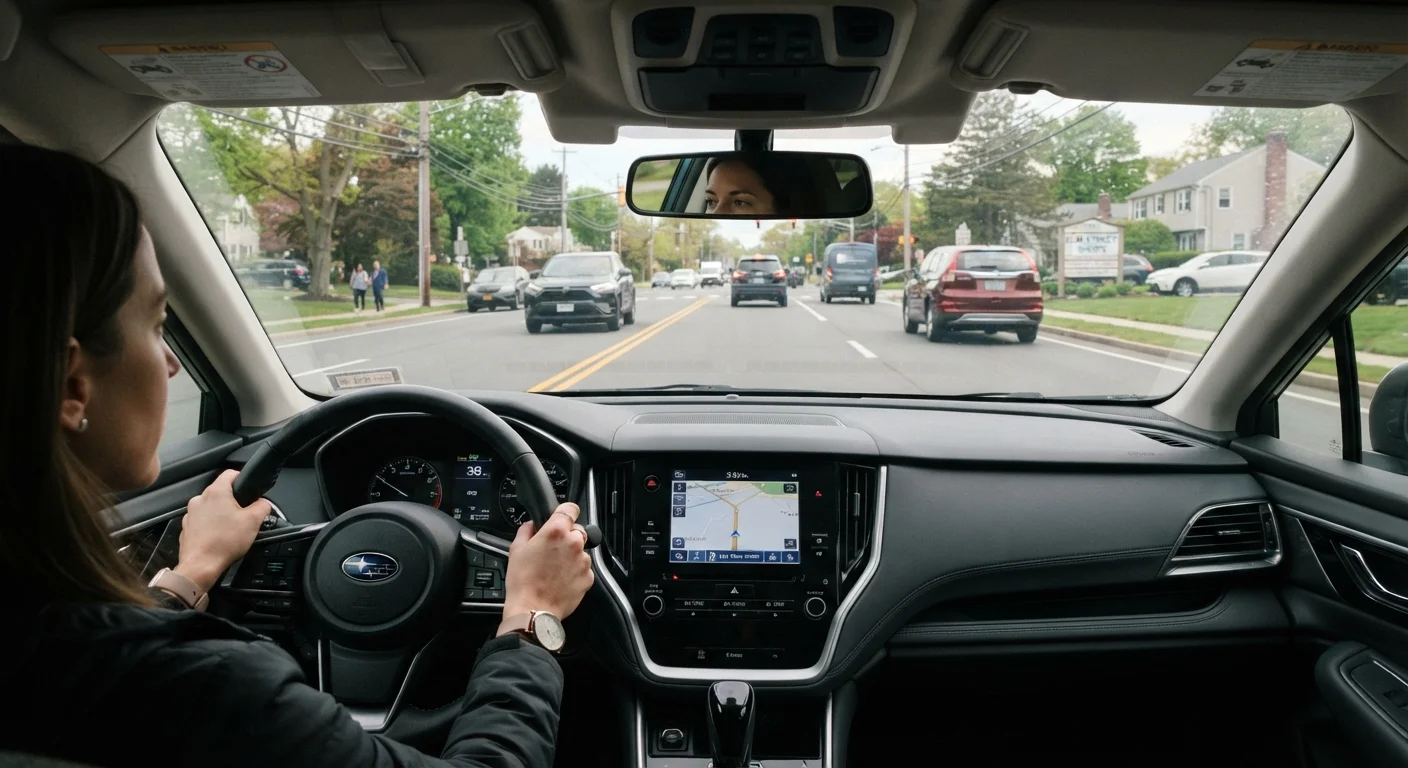
The gap between knowing defensive driving principles and actually using them is habit. Habits form through repetition, so the goal is to embed small, specific behaviors into every drive - not just the ones that feel risky.
A practical starting point: before you pull into traffic, take one deliberate look left, right, and left again, even when you have right of way. This two-second check catches a surprising number of conflicts that mirrors alone miss.
During the drive, practice what traffic safety educators call commentary driving occasionally - narrate aloud what you see. "Truck merging left," "light changing ahead," "cyclist at the shoulder." It sounds unusual, but it forces your attention to stay active rather than drifting on autopilot.
Also worth noting: fatigue impairs judgment and reaction time in ways that feel invisible until it's too late. If you notice yourself missing exits, blinking heavily, or losing track of time, treat it as seriously as you would any other impairment.
Fatigue Has No Safe Threshold
Unlike hunger or mild stress, drowsiness doesn't announce itself reliably. Studies on sleep deprivation and driving show that people commonly underestimate how impaired they are. If you're questioning whether you're too tired to drive, that uncertainty is itself a signal worth heeding. On longer family trips, sharing driving duties or building in a rest stop can make a meaningful difference.
For situations where another driver's behavior threatens your calm, our companion piece on staying calm when another driver is aggressive offers concrete strategies for de-escalating without putting your family at risk.
Defensive Driving With Kids in the Car
Family vehicles present a specific challenge: children create real distractions, and parents naturally feel pressure to respond to them. A crying toddler or a sibling dispute can pull a driver's attention for several seconds - enough distance at highway speed to cover the length of a football field.
The most practical approach is to handle child needs before moving, not while driving. If something genuinely urgent happens, signal, find a safe spot to pull over, and stop completely before turning around. This is not an overreaction - it's the principle of eliminating distraction applied to the most common source families face.
Realistic planning for family drive time - including regular breaks and age-appropriate in-car activities - reduces the frequency of distracting moments before they start.
Children also learn by watching. Modeling calm, unhurried driving behavior gives them a framework they carry into their own driving years later. Narrating your decisions occasionally - "I'm slowing down because the car ahead is braking" - helps build that foundation naturally.
Common Mistakes That Undermine Safe Driving
Even drivers who consider themselves careful fall into patterns that erode safety over time. A few of the most common:
- Overestimating familiarity. Familiar routes feel lower-risk, so attention drops. Most crashes happen close to home, partly because drivers are on autopilot in known areas.
- Treating yellow lights as green. Accelerating through a late yellow light rather than preparing to stop is a leading cause of intersection crashes.
- Ignoring blind spots during lane changes. Mirrors don't capture everything. A brief head-check over the shoulder before changing lanes takes under a second and catches what mirrors miss.
- Relying on other drivers to yield. Even when you have the legal right of way, assuming the other driver will honor it can be costly. Confirm before proceeding.
Some of these mistakes persist because they're reinforced by common misconceptions about driving. Our article on driving myths that stick around even though they're wrong examines several habits that feel safe but aren't supported by evidence.
Weather adds another layer of complexity. Understanding how forecasts should shape your driving decisions - beyond just slowing down - is covered in detail in how weather forecasts should change how you drive.
Frequently Asked Questions
No. Defensive driving principles apply to drivers at every experience level. In fact, experienced drivers sometimes develop overconfidence that makes practicing these habits even more important for them.
A common guideline is the three-second rule: pick a fixed object, and count three seconds from when the car ahead passes it to when you do. In poor weather or heavy loads, extend that to four or five seconds.
Some insurers offer a discount for completing an approved course, but this varies by provider and state. Check directly with your insurer about any qualifying programs in your area.
Assertive driving means communicating clearly - signaling early, merging decisively - without endangering others. Aggressive driving involves intimidation, speeding, or tailgating, which creates risk for everyone on the road.
Research consistently shows that attentive, anticipatory driving reduces crash involvement. While no approach eliminates risk entirely, defensive habits give you more time and options to avoid collisions.
Plan regular stops every 90 to 120 minutes. Set rules about in-car noise levels before you leave, and use hands-free navigation so your eyes stay on the road. See our <a href="/family-travel/road-trip-planning/what-drive-time-really-means-when-kids-are-in-the-car">guide to realistic drive time with a family</a> for more.
The content provided on our blog site traverses numerous categories, offering readers valuable and practical information. Readers can use the editorial team’s research and data to gain more insights into their topics of interest. However, they are requested not to treat the articles as conclusive. The website team cannot be held responsible for differences in data or inaccuracies found across other platforms. Please also note that the site might also miss out on various schemes and offers available that the readers may find more beneficial than the ones we cover.