

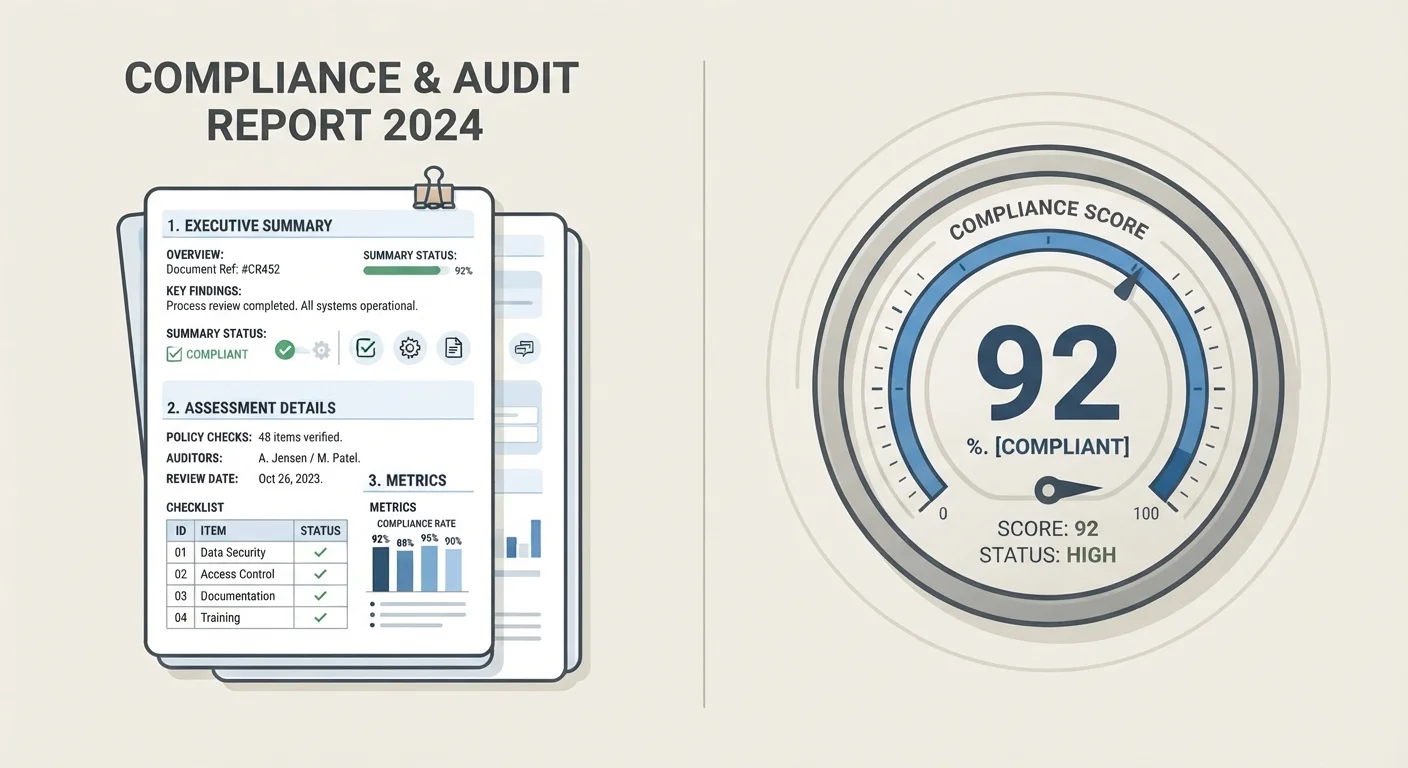
Option A
Credit Report
The full financial history behind your credit.
Best for: Spotting errors, understanding what's driving your credit standing, and reviewing your complete borrowing history.
Option B
Credit Score
The single number lenders use to size you up quickly.
Best for: Getting a fast read on your creditworthiness and tracking improvement over time.
Two Different Tools That Work Together
Many families use the phrases "credit score" and "credit report" as if they mean the same thing. They don't - and mixing them up can lead to real confusion when you're trying to improve your financial picture or prepare for a big purchase.
Think of your credit report as a detailed transcript of your borrowing life. It lists every credit card, loan, and line of credit you've opened, along with your payment history, balances, account ages, and any collections or public records tied to your name. Three major credit bureaus - Equifax, Experian, and TransUnion - each maintain their own version, which means you actually have three reports, and they can differ slightly from one another.
Your credit score, on the other hand, is a three-digit number - typically ranging from 300 to 850 - that a scoring model calculates using the data inside your report. FICO and VantageScore are the two most widely used models. The score compresses a long financial history into a single figure lenders can compare across applicants in seconds. To learn exactly what that number measures, see what your credit score actually measures.
| Criterion | Credit Report | Credit Score |
|---|---|---|
| What it is | Detailed written history of your credit accounts | Single three-digit number summarizing credit risk |
| Who produces it | Equifax, Experian, TransUnion (three bureaus) | Scoring models (FICO, VantageScore) |
| What it contains | Accounts, balances, payment history, inquiries, public records | A numeric rating derived from report data |
| How many you have | Three (one per bureau, may differ) | Multiple versions depending on model and bureau used |
| Free access | Yes - AnnualCreditReport.com by federal law | Often free through card issuers; may not match lender score |
| Best used for | Finding errors, understanding history, disputing inaccuracies | Quick creditworthiness snapshot, lender pre-screening |
Where Each One Comes From - and How to Access It
Your credit report data flows from lenders and creditors to the bureaus. Most lenders report your account activity - balances, payments, missed due dates - to one or more of the three bureaus each month. The bureaus compile that information but don't score it themselves.
Scoring models like FICO license their algorithms to lenders, card issuers, and some consumer platforms. When a lender checks your score, they're typically pulling a score calculated by one of those models using bureau data. Because each bureau holds slightly different data, your score can vary depending on which bureau's report is used.
Accessing your reports: Under federal law, you're entitled to a free credit report from each bureau through AnnualCreditReport.com. Reviewing all three matters because errors at one bureau don't automatically appear at the others. For a deeper walkthrough of what you'll find inside, see our guide on reading your credit report without getting lost.
Accessing your score: Many credit card issuers and financial institutions now provide a free score through your online account. These are often educational scores for monitoring purposes, which may differ slightly from the score a lender pulls. That's normal - and worth understanding before you assume your score is exactly what a lender will see.
Score Versions Can Vary by Lender
Lenders don't all use the same scoring model or the same bureau's data, which is why the score you see on a monitoring app may differ from the one a mortgage lender pulls. FICO alone has dozens of industry-specific versions. Rather than fixating on one exact number, focus on the overall range and the factors driving it. For context on what different score levels mean in practice, see credit score ranges decoded.
Why Reviewing Both Regularly Matters
Your score is only as accurate as the data feeding it. If your report contains an error - a payment incorrectly marked late, an account you don't recognize, a balance that wasn't updated after payoff - your score reflects that mistake. This is why checking your report isn't just a once-a-year chore; it's a core part of protecting your credit health.
1 in 5
Americans with a credit report error
A Federal Trade Commission study found that approximately one in five consumers had an error on at least one of their three credit reports.
3
Separate credit bureau reports per consumer
Equifax, Experian, and TransUnion each maintain an independent report, and not all lenders report to all three bureaus.
Common report errors include wrong account statuses, duplicate entries, and accounts belonging to someone with a similar name. Each bureau has a dispute process you can use to challenge inaccurate information. Correcting even one significant error has the potential to shift your score meaningfully.
If you're preparing to apply for a mortgage, car loan, or any major financing, reviewing both your report and your score beforehand is essential. Lenders often use the score to screen applicants initially, then pull the full report before making a final decision. Catching problems early gives you time to address them. Our credit health checklist before applying for a loan walks through exactly what to look for. You may also want to understand how hard and soft inquiries affect your score differently when lenders check your file.
This article is for general informational and educational purposes only and does not constitute personalized financial or legal advice. Consult a qualified financial professional for guidance specific to your situation.
The content provided on our blog site traverses numerous categories, offering readers valuable and practical information. Readers can use the editorial team’s research and data to gain more insights into their topics of interest. However, they are requested not to treat the articles as conclusive. The website team cannot be held responsible for differences in data or inaccuracies found across other platforms. Please also note that the site might also miss out on various schemes and offers available that the readers may find more beneficial than the ones we cover.