

Start here
Why Canada Works So Well for US Families
Next
Entry Requirements and Documents You'll Need
Then
Best Regions for Families and What Each Offers
Plan around
Seasons, Weather, and When to Visit
Before you go
Practical Tips for Budgeting and Getting Around
Why Canada Works So Well for US Families
Canada is one of the most underrated first international destinations for US families - and that's largely because it feels just familiar enough to be comfortable while offering genuine cross-border novelty. English is widely spoken across most provinces, driving distances from border states are manageable, and the country's infrastructure is reliable and family-oriented.
That said, Canada is emphatically not just "America but colder." The cultural differences - French-language immersion in Quebec, Indigenous heritage sites in British Columbia, the sheer scale of wild space - give kids and parents alike real perspective. As international travel with kids goes, Canada removes a lot of the logistical anxiety while keeping the sense of discovery intact.
NEXUS Card
A trusted traveler card issued jointly by the US and Canada that allows pre-screened, low-risk travelers to cross the border more quickly. Requires a background check and interview to obtain.
CBSA
Canada Border Services Agency - the Canadian government body responsible for managing who and what enters Canada at the border.
Consent Letter
A notarized document from an absent parent or legal guardian giving permission for a child to travel internationally with another adult. Recommended when a child travels without both parents.
CAD
The Canadian dollar, Canada's official currency. It trades separately from the US dollar and the exchange rate changes daily.
Metric System
Canada measures distance in kilometers, speed in km/h, temperature in Celsius, and fuel in liters - different from the US customary system most American families are used to.
Entry Requirements and Documents You'll Need
Every member of your family - including infants and toddlers - needs a valid US passport to enter Canada by air. At land and sea crossings, a US passport card or NEXUS card (a trusted traveler program for frequent US-Canada crossers) may be accepted, but a full passport book is the safest choice for most families.
Passport Rules Apply to Every Family Member
There are no age exemptions for passport requirements when flying into Canada. Even newborns need a valid US passport. Applying for a child's passport can take several weeks under standard processing, so start the paperwork well before your travel date. Expedited processing is available but carries additional fees.
One situation many families overlook: if a child is traveling with only one parent, or with a grandparent or other non-parent guardian, Canadian border agents may ask for a notarized consent letter from the absent parent or legal guardian. This is particularly relevant for families navigating shared custody arrangements. Preparing this letter in advance prevents unnecessary delays at the border.
Always verify entry requirements directly with the CBSA (Canada Border Services Agency) and U.S. Customs and Border Protection before your trip, as policies can change.
Best Regions for Families and What Each Offers
Canada's regions are diverse enough that "Canada" is really several destination types bundled under one flag. Here's a practical breakdown:
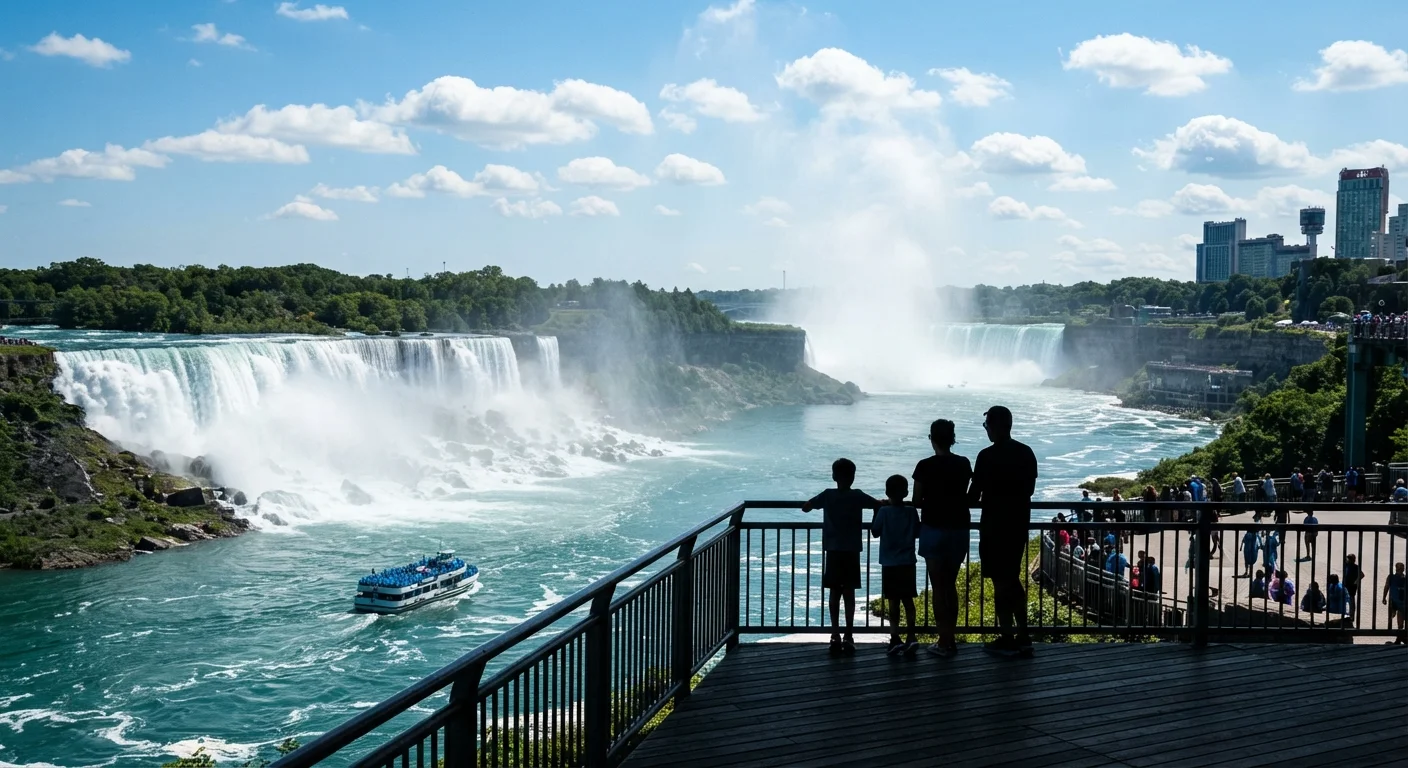
- Ontario - Home to Niagara Falls, Toronto's world-class science and natural history museums, and Ottawa's family-friendly national capital sites. Easily accessible from the US Midwest and Northeast by car.
- Quebec - Montreal and Quebec City offer a genuinely different cultural experience, with French as the primary language and a European urban feel. Quebec City's old walled district is walkable and endlessly photogenic.
- British Columbia - Vancouver combines urban conveniences with immediate access to mountains, ocean, and Stanley Park's 1,000 acres of green space. Vancouver Island adds whale watching and outdoor adventure.
- The Maritimes - Nova Scotia, New Brunswick, and Prince Edward Island reward families who appreciate slower-paced coastal scenery, seafood, and the literary heritage of Anne of Green Gables.
- Alberta - Banff and Jasper National Parks offer some of the most dramatic mountain scenery in North America, with family hiking trails and wildlife viewing that genuinely wows kids of all ages.
If your family tends to thrive on outdoor exploration, pairing a Canada trip with road trip planning strategies is especially worthwhile - many Canadian regions reward driving.
Build in a 'slow day' for wilderness regions
In places like Banff or Jasper, the temptation is to pack every hour with hikes and wildlife spotting. But kids - especially younger ones - often need an unscheduled afternoon to fully absorb where they are. A picnic by Lake Louise or time at a hotel pool can be just as memorable. See how to build an itinerary kids won't dread for pacing guidance.
Seasons, Weather, and When to Visit
Canada's size means that seasonal timing varies dramatically by region. Generally speaking, late June through early September is the sweet spot for most families: warmest temperatures, longest daylight hours, and the broadest access to outdoor attractions. National parks are fully operational, boat tours are running, and provincial fairs are in season.
Shoulder seasons - May and October - offer thinner crowds and potentially lower costs, but some attractions scale back hours or close entirely. If you're drawn to Quebec or Alberta in winter, ski season runs roughly December through March, with Quebec City's Winter Carnival providing one of the continent's most spectacular cold-weather family events.
One practical note: Canada's interior and Prairie regions can experience significant temperature swings even in summer. Pack layers regardless of season, and check regional forecasts specifically - not just national averages.
Practical Tips for Budgeting and Getting Around
Canada uses the Canadian dollar (CAD), which fluctuates against the US dollar. Notify your bank before traveling to avoid transaction flags, and consider using a debit card at Canadian ATMs for competitive exchange rates rather than airport currency kiosks.
Canada's metric system means speed limits are in kilometers per hour and temperatures in Celsius - a small adjustment that's worth discussing with kids before you arrive so road signs don't cause confusion. Gas prices are listed per liter, not per gallon.
Getting around varies by region. Urban centers like Toronto and Vancouver have excellent public transit. Rural and wilderness regions - particularly Alberta's national parks - are best navigated by rental car. If you're thinking about overall trip costs, our family travel budget hub has strategies for keeping expenses manageable, and the pre-trip budget checklist is worth running through before you pack.
Compared to some international alternatives - see how Canada stacks up against Mexico's coastal regions or US coastal beach destinations - Canada's straightforward entry process and English-language accessibility make it a strong contender for families taking their first step beyond US borders.
Healthcare Coverage May Not Transfer
US health insurance plans generally do not cover medical care received in Canada. Before traveling, check whether your plan includes any international emergency coverage and consider purchasing a short-term travel insurance policy that covers medical expenses abroad. This is especially worth doing when traveling with young children.
Frequently Asked Questions
Yes. US citizens - including children - are required to present a valid passport when entering Canada by air. At land and sea borders, a passport card or NEXUS card may also be accepted, but a full passport is the most reliable option. Always verify current requirements with U.S. Customs and Border Protection before your trip.
Canada consistently ranks among the world's safest countries for travelers. Major cities like Toronto, Vancouver, and Ottawa have well-developed infrastructure, reliable emergency services, and family-friendly public spaces. Standard travel precautions apply, as they would in any destination.
Late June through early September offers the warmest weather and the widest range of outdoor activities across most of Canada. Shoulder seasons like May and October can mean thinner crowds and lower costs, though some attractions have reduced hours. Winter is ideal for ski-focused trips to destinations like Whistler or Quebec City.
Most major US carriers offer Canada as part of their international plans or as an add-on, but fees vary significantly. Check with your carrier before departure and consider a temporary international data plan if you'll rely heavily on navigation or communication. Wi-Fi is widely available in hotels and restaurants.
Canada uses the Canadian dollar (CAD), which typically trades at a different rate than the US dollar. You can exchange currency at banks, airports, or use a debit card at Canadian ATMs for a generally competitive rate. Notify your bank before traveling to avoid card blocks on foreign transactions.
All children, including infants, need a valid US passport. If a child is traveling with only one parent or a non-parent guardian, Canadian border officials may ask for a consent letter from the absent parent or legal guardian. This is especially relevant for divorced or separated families.
The content provided on our blog site traverses numerous categories, offering readers valuable and practical information. Readers can use the editorial team’s research and data to gain more insights into their topics of interest. However, they are requested not to treat the articles as conclusive. The website team cannot be held responsible for differences in data or inaccuracies found across other platforms. Please also note that the site might also miss out on various schemes and offers available that the readers may find more beneficial than the ones we cover.