

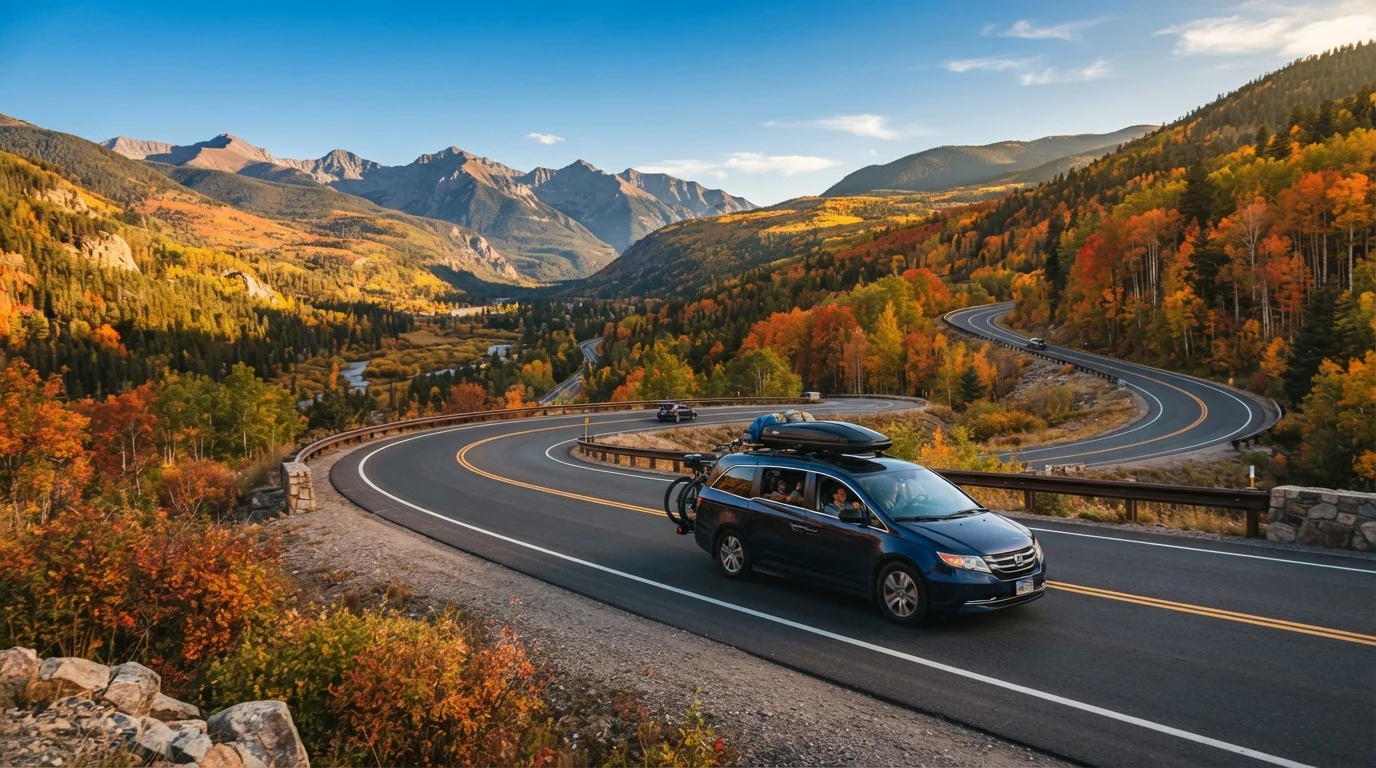
Option A
Scenic Byways
The immersive, experience-first route.
Best for: Families who want the drive to be part of the adventure, with stops, scenery, and spontaneity built in.
Option B
Interstate Highways
The efficient, predictable workhorse.
Best for: Families prioritizing speed, convenience, and consistent amenities — especially with young children or tight schedules.
What You're Actually Choosing Between
When families debate scenic routes versus interstates, they're really weighing two different philosophies of travel: the drive as destination versus the drive as transit. Neither is wrong — but picking the wrong one for your family's situation can quietly derail an otherwise well-planned trip.
Interstates (designated I-roads, like I-90 or I-40) are federally maintained, high-speed corridors designed to move people efficiently. They feature standardized on-ramps, rest areas, and frequent service plazas. Scenic byways, including routes designated under the National Scenic Byways Program and many state-level equivalents, prioritize intrinsic qualities — landscape, history, culture — over speed. Think Route 66, the Blue Ridge Parkway, or the Pacific Coast Highway.
For a broader look at how your overall trip format shapes the experience, see our road trip vs. fly-and-stay comparison.
| Criterion | Scenic Byways | Interstate Highways |
|---|---|---|
| Travel speed | Slower (35–55 mph typical) | Faster (65–80 mph typical) |
| Service availability | Sparse; plan ahead | Frequent and consistent |
| Scenery & experience | High — often the point of the trip | Low — utilitarian by design |
| Navigation complexity | Moderate to high | Low; straightforward |
| Best for ages | School-age kids and teens | All ages, especially under 5 |
| Fuel cost predictability | Variable; fewer options | Consistent; competitive pricing |
| Spontaneous stops | Common and encouraged | Limited to planned exits |
The Real Tradeoffs for Families
The honest case for interstates is reliability. Every 20–50 miles, you'll typically find fuel, fast food, restrooms, and often lodging. For families traveling with toddlers or kids prone to carsickness, that predictability is genuinely valuable. Interstates also tend to be better lit, more consistently maintained, and easier to navigate in unfamiliar territory.
Scenic byways, by contrast, can go long stretches without services — sometimes 60 miles or more in rural areas. Cell service can be patchy. But that's often precisely what makes them special. A drive through Shenandoah Valley or along the Enchanted Circle in New Mexico offers the kind of sensory richness that no highway median can replicate.
154
National Scenic Byways in the US
The Federal Highway Administration's National Scenic Byways Program designates routes based on archaeological, cultural, historic, natural, recreational, or scenic qualities.
~48,000 mi
Total US Interstate Highway System length
The Dwight D. Eisenhower National System of Interstate and Defense Highways spans approximately 48,000 miles across all 50 states.
3–4 hrs
Recommended max daily drive time for families with young kids
Travel behavior research and family travel experts generally suggest limiting continuous driving to 3–4 hour blocks when traveling with children under 10.
Age matters enormously here. Children under five generally do better on interstates, where stops are frequent and predictable. School-age kids often thrive on scenic routes, especially when you involve them in map-reading or spot wildlife along the way. Common planning missteps — like underestimating how much slower scenic routes actually are — account for much of the frustration families report.
Practical Planning: Blending Both Route Types
Many experienced family road-trippers use a hybrid strategy: take the interstate to cover ground efficiently, then pivot to a scenic route for a day or final leg of the journey. This approach keeps drive times manageable while still delivering the exploratory feel that makes road trips memorable.
When building your route, a few practical questions help clarify the call:
- How many miles per day can your family realistically cover? Scenic routes typically add 30–50% more time per mile than interstates due to lower speed limits and stop opportunities.
- What's your fuel and food strategy? Download offline maps and locate fuel stops in advance if you're venturing onto byways in remote regions.
- What do your kids actually enjoy? A child who loves spotting wildlife or visiting roadside historical markers will thrive on a byway. One who needs consistent movement and screen time may not.
Our complete family road trip planning guide walks through packing, rest stop timing, and keeping kids engaged on long drives regardless of route type. And if you're scouting specific corridors, our state-by-state route reference covers notable family-friendly options across the country.
Check Road Conditions Before You Go
Scenic byways — particularly those through mountain passes or remote desert regions — can be subject to seasonal closures, weather-related hazards, or construction delays. Always verify current conditions through your state's department of transportation website or the Federal Highway Administration's road condition resources before departure. Cell coverage gaps on byways also make downloading offline maps a smart precaution.
The content provided on our blog site traverses numerous categories, offering readers valuable and practical information. Readers can use the editorial team’s research and data to gain more insights into their topics of interest. However, they are requested not to treat the articles as conclusive. The website team cannot be held responsible for differences in data or inaccuracies found across other platforms. Please also note that the site might also miss out on various schemes and offers available that the readers may find more beneficial than the ones we cover.