

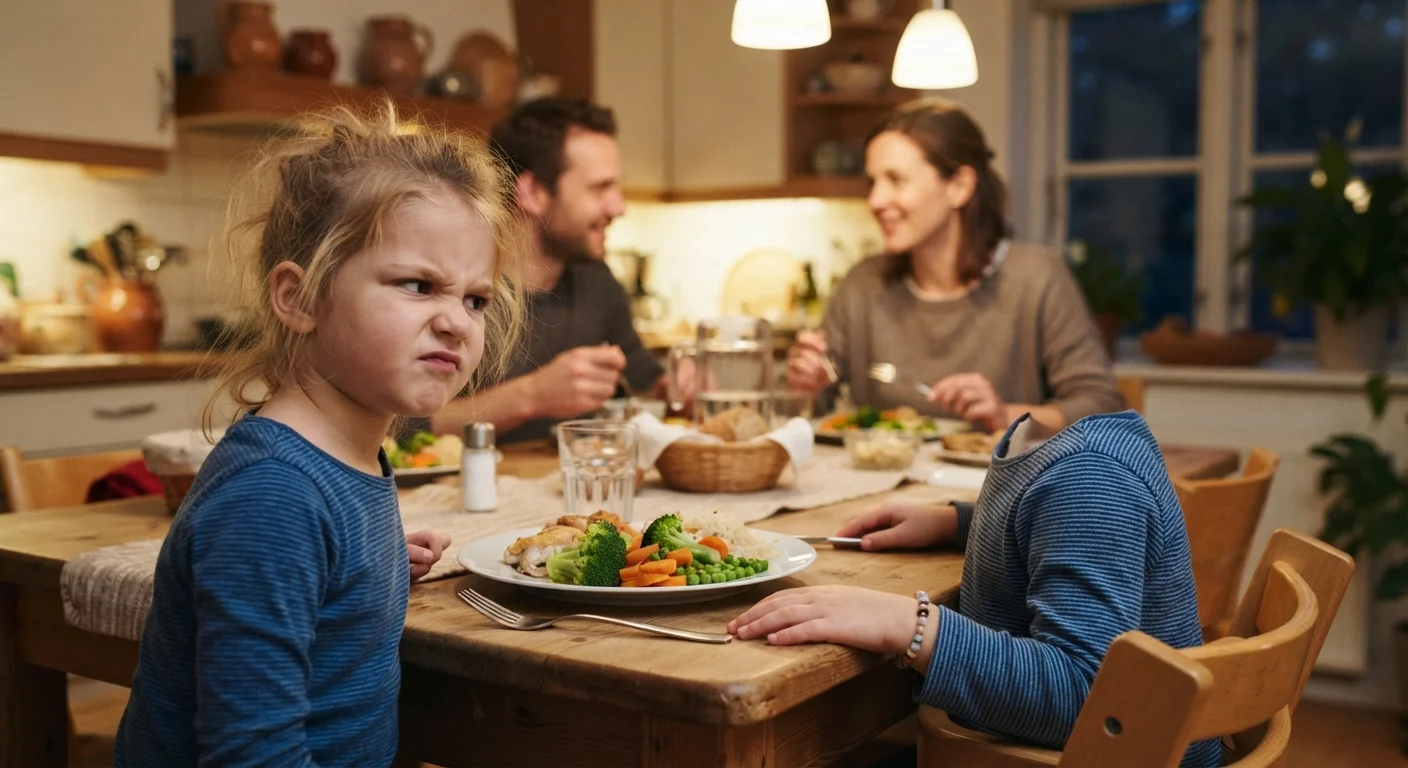
The Biology Behind the Battle
When a child pushes broccoli to the edge of the plate, most parents assume it's a willpower problem. Research tells a different story. Children have more taste buds per square inch than adults, making bitter compounds in vegetables — called glucosinolates and phenols — genuinely more intense for young palates. This isn't pickiness; it's physiology.
There's also an evolutionary explanation. Young children's hardwired caution about unfamiliar plant foods likely served as a protective mechanism when identifying safe versus toxic plants was a survival skill. The brain's threat-detection system responds to novel tastes with suspicion, not enthusiasm.
~60–70%
Heritability of food neophobia in children
Twin studies published in peer-reviewed nutrition journals suggest a significant genetic contribution to how strongly children resist unfamiliar foods.
10–15
Exposures often needed before a child accepts a new food
Multiple feeding studies indicate repeated, low-pressure encounters — not forced tasting — are the most effective path to increasing vegetable acceptance.
Ages 2–6
Peak window for food neophobia
Research consistently identifies the toddler and preschool years as the period when reluctance to try new foods is most pronounced in most children.
Sensory sensitivity adds another layer. Some children experience textures — mushiness, stringiness, crunch — far more acutely than others. What feels like an acceptable bite to an adult can feel genuinely unpleasant to a child with heightened sensory processing. Understanding this framing helps parents approach mealtimes with empathy rather than frustration.
What Food Neophobia Really Means
Food neophobia — the reluctance to try new foods — is one of the most studied phenomena in pediatric nutrition. It typically intensifies between ages two and six, then gradually moderates for most children. Twin studies suggest heritability plays a meaningful role, which explains why one child in a family may be far more restrictive than a sibling raised in the same household.
Neophobia is distinct from general pickiness, though the two overlap. A neophobic child may happily eat a familiar vegetable but flatly refuse one they've never seen before. The issue isn't dislike — it's unfamiliarity itself. This distinction matters for how parents respond.
When Picky Eating Becomes a Clinical Concern
Most childhood food refusal falls within normal developmental variation. However, Avoidant/Restrictive Food Intake Disorder (ARFID) is a recognized condition where food limitation is severe enough to affect growth, nutrition, or daily functioning. If your child's diet is extremely limited — fewer than 20 foods, for example — or if meals are causing significant family or emotional distress, speak with your pediatrician. ARFID responds well to specialized therapeutic support.
For a broader look at how children's nutritional needs shift across different ages, see Family Nutrition Through Every Age, which covers how appetite and food preferences evolve from toddlerhood through the teen years.
Strategies With Evidence Behind Them
The most consistently supported approach in nutrition research is repeated exposure without pressure. Studies indicate children may need between 10 and 15 non-coercive encounters with a food before acceptance increases. These exposures can be visual — putting a vegetable on the plate without requiring a taste — or sensory, such as letting a child touch or smell it.
Let Kids Interact With Food Before Tasting It
Allowing children to touch, smell, or help prepare a vegetable counts as an exposure — it doesn't have to end in a bite. Food play (within reason) at the table reduces the threat response and builds familiarity over time. Studies show that children who engage with food in a hands-on way are more likely to eventually taste it.
Giving children some control over meals is also associated with better outcomes. Offering two vegetable options rather than one, allowing children to serve themselves, or involving older kids in simple food preparation have all shown promise in small studies. Autonomy reduces the power struggle that often makes mealtimes worse.
Pairing an unfamiliar vegetable with a food a child already enjoys — a dip, a familiar grain, a sauce — can ease initial resistance without disguising the vegetable entirely. Research suggests that associating a new taste with a positive experience is more effective than hiding it. See common nutrition myths dietitians address for more on what the evidence actually supports around feeding children.
What Tends to Make Things Worse
Pressure — in any form — is one of the clearest findings in feeding research: it backfires. Strategies like "you can't leave the table until you finish your vegetables" or "just one more bite" are associated with increased food aversion over time, not reduced pickiness. Children who are repeatedly pressured at mealtimes tend to develop stronger negative associations with the foods in question.
Praise for eating vegetables can also be counterproductive when it's contingent or excessive. Research by developmental psychologists has found that rewarding a child for eating a food with something unrelated — dessert, screen time — can inadvertently signal that the vegetable itself is undesirable enough to require a prize.
Consistency matters more than any single tactic. Families who quietly keep offering a varied plate over months and years — even when most of it comes back untouched — tend to see gradual improvement. Subtle mealtime habits that erode family nutrition explores other patterns worth watching for at the family table.
If vegetable restriction is severe or causing nutritional gaps, it's worth reviewing which nutrients may need extra attention — nutrients American kids most commonly fall short on offers a useful reference point.
This article provides general health information for educational purposes only and is not a substitute for advice from a qualified healthcare professional. If you have concerns about your child's eating habits, growth, or nutrition, please consult your pediatrician or a registered dietitian.
Frequently Asked Questions
Yes, this is very common and is often linked to a developmental surge in food neophobia around ages two to three. Children who previously accepted a food may reject it as their autonomy grows. Continuing to offer the food without pressure is generally the most effective approach.
Research suggests it can take anywhere from 10 to 15 exposures to a new food before a child's acceptance increases. These exposures don't always require tasting — simply seeing, smelling, or handling the food counts. Patience and consistency matter more than forcing a bite.
It can increase vegetable intake in the short term, but it doesn't help children learn to like vegetables. Some researchers suggest pairing hidden vegetables with clearly visible ones works better, building both intake and gradual familiarity. Hiding alone doesn't address the underlying neophobia.
If your child's food refusal is extreme, affects growth, causes significant mealtime distress, or is limited to very few foods overall, it's worth discussing with your pediatrician. Some children have a condition called Avoidant/Restrictive Food Intake Disorder (ARFID) that benefits from professional support.
Many children do become more adventurous eaters as they move into middle childhood and adolescence, though this isn't guaranteed. Consistent, supportive exposure — without pressure — is associated with better outcomes than either forcing or giving up entirely.
The content provided on our blog site traverses numerous categories, offering readers valuable and practical information. Readers can use the editorial team’s research and data to gain more insights into their topics of interest. However, they are requested not to treat the articles as conclusive. The website team cannot be held responsible for differences in data or inaccuracies found across other platforms. Please also note that the site might also miss out on various schemes and offers available that the readers may find more beneficial than the ones we cover.