

Our Verdict
Backyard composting delivers genuine value — free soil amendment, reduced waste, and a more sustainable yard — but only when families can commit to consistent maintenance. The learning curve is manageable, and the long-term rewards are real, yet the process does require patience and some physical effort that not every household can sustain.
Composting is best suited to families with active gardens, outdoor space, and the time to tend a bin a few minutes each week.
What Composting Actually Involves
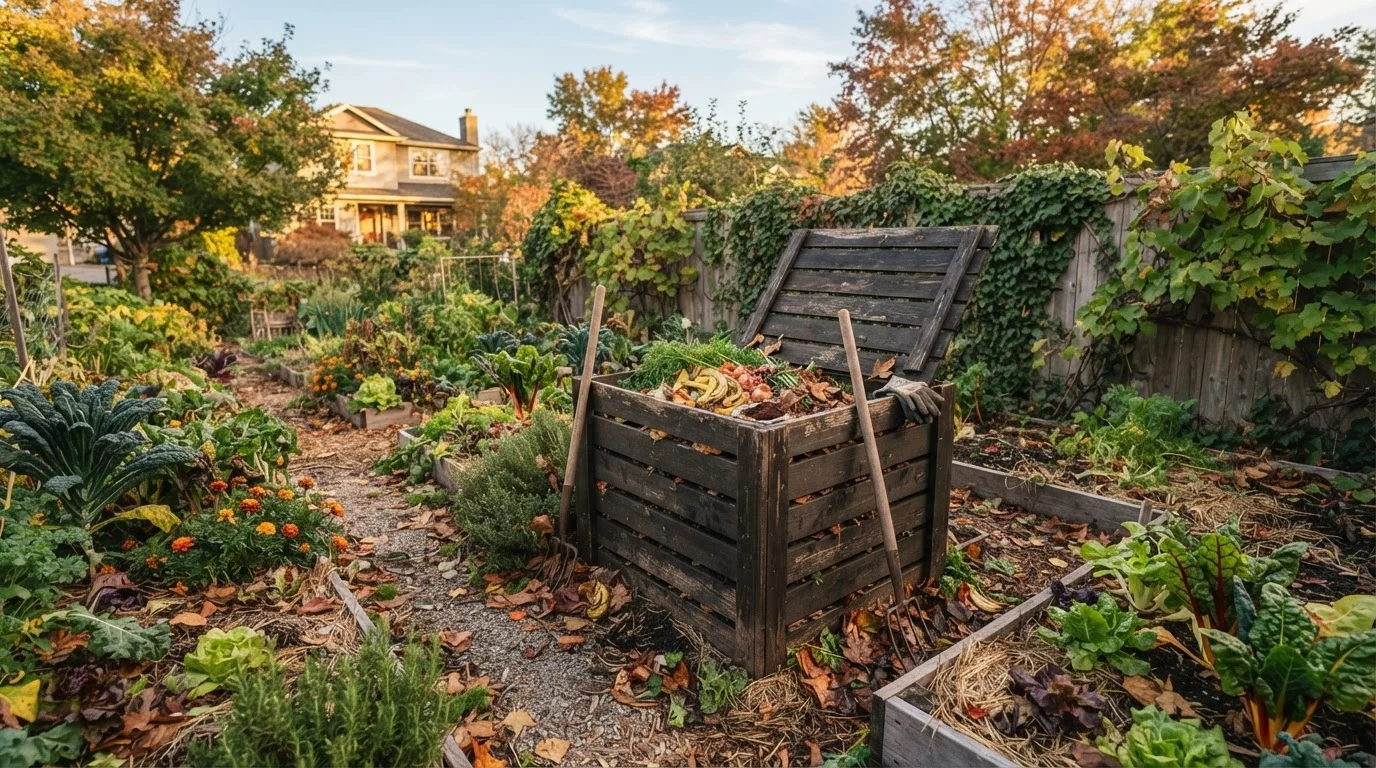
Backyard composting is the process of collecting organic materials — vegetable scraps, fruit peels, coffee grounds, grass clippings, dry leaves — and allowing microorganisms, insects, and moisture to break them down into a dark, crumbly soil amendment called humus. It sounds simple, and in principle it is, but a consistent routine is what separates a thriving bin from a neglected pile.
A functional setup typically involves layering greens (nitrogen-rich materials like food scraps and fresh grass) with browns (carbon-rich materials like dried leaves and cardboard), keeping the pile moist but not waterlogged, and turning it regularly to introduce oxygen. Understanding that balance is the main learning hurdle for most families just starting out. For a practical walkthrough of getting started, see our guide to composting kitchen scraps.
The Real Advantages for Families
The most tangible payoff is free, high-quality soil amendment. Finished compost added to garden beds or containers improves drainage in clay-heavy soils, boosts moisture retention in sandy soils, and feeds plants slowly without the risk of chemical over-fertilization. Families who already grow vegetables or tend flower beds will find the most immediate return on their effort.
Creates free, high-quality soil amendment
Finished compost improves soil structure, water retention, and nutrient availability without the recurring cost of bagged fertilizers or conditioners.
Reduces household waste sent to landfill
Fruit scraps, vegetable peels, coffee grounds, and yard trimmings make up a significant share of household waste; diverting them cuts what your family sends to the curb each week.
Teaches children practical environmental habits
Involving kids in sorting scraps and checking the bin builds an early understanding of natural cycles and resource stewardship in a hands-on way.
Supports healthier garden plants over time
Compost-amended soil tends to support stronger root development and more resilient plants compared to unamended or heavily fertilized ground.
Low ongoing cost after initial setup
Beyond a bin or a simple designated area, composting relies on materials you already generate, keeping long-term costs minimal.
Beyond the garden, composting meaningfully reduces what your household sends to the landfill each week. If your family is already exploring plant-forward eating habits, the volume of compostable material in your kitchen will be substantial — making the two habits a natural pairing.
Where Composting Can Fall Short
The most honest thing to say about composting is that it rewards patience and consistency — and penalizes neglect. Families expecting quick results or those with irregular routines often find the bin sitting dormant, smelly, or attracting pests.
Requires consistent, ongoing effort
A compost bin needs regular turning, moisture management, and balanced inputs; without attention it becomes slow, smelly, or attractive to pests.
Results take months, not days
Depending on method and climate, usable compost typically takes anywhere from two to six months to mature — a timeline that can feel discouraging for newcomers expecting quick results.
Can attract unwanted pests if mismanaged
Meat, dairy, or oily scraps added incorrectly — or an uncovered bin — can draw rodents, flies, and raccoons into your yard.
Cold climates slow the process significantly
Microbial activity that breaks down organic matter slows dramatically in freezing temperatures, meaning winter composting in northern states may produce little progress for months.
Requires outdoor space and a suitable location
A functional compost setup needs a spot that is accessible, level, and away from the home's foundation and neighbors' property lines — a real constraint for small lots or apartments.
Learning curve around what can be composted
Families must learn which materials are appropriate (and in what ratio), as improper inputs can create imbalances that slow decomposition or produce unpleasant odors.
Climate also plays a real role. In colder northern states, decomposition can stall entirely during winter months. If you're counting on compost for spring planting, you may need to start a bin in late summer or fall to have usable material in time. And if your outdoor space is limited, siting a bin that's convenient to use but not disruptive to your family — or your neighbors — can require some creative problem-solving. Check common assumptions about what helps and hurts garden soil by reading our guide to garden myths.
Apartment or Small-Lot Families: There Are Alternatives
If a traditional backyard bin isn't feasible, countertop vermicomposting (using worms in a sealed bin) and municipal green-bin programs are widely available alternatives. Many cities accept food scraps through curbside organics collection — check your local waste management program before assuming composting requires a yard. For families who do garden in limited space, our container gardening guide covers how to make small spaces thrive.
Deciding Whether It's Worth It for Your Household
The honest calculus comes down to three things: how much you garden, how much organic waste your kitchen produces, and how much time you're willing to invest weekly. For a family with active beds and a vegetable garden, composting is a near-certain net gain. For a household with a small lot and inconsistent outdoor time, a municipal organics program or vermicomposting bin may deliver similar environmental benefits with far less friction.
~30%
Household waste that could be composted
The U.S. Environmental Protection Agency estimates that food and yard waste together make up roughly 30% of what Americans throw away.
2–6 months
Typical time to finished compost
University cooperative extension programs generally cite this range for backyard bin composting under active, well-managed conditions.
~1 billion tons
Food waste landfilled in the U.S. annually
The EPA's food waste estimates consistently place landfilled food among the largest single categories of municipal solid waste.
If your household is already trying to reduce waste and build a more sustainable outdoor space, composting fits naturally alongside efforts like attracting pollinators without pesticides — both reflect a commitment to working with natural systems rather than against them. Whatever you decide, the goal is a yard that works for your family's actual life, not an idealized version of it.
The content provided on our blog site traverses numerous categories, offering readers valuable and practical information. Readers can use the editorial team’s research and data to gain more insights into their topics of interest. However, they are requested not to treat the articles as conclusive. The website team cannot be held responsible for differences in data or inaccuracies found across other platforms. Please also note that the site might also miss out on various schemes and offers available that the readers may find more beneficial than the ones we cover.