

Why Getting the Diagnosis Right Matters
A wet basement wall feels urgent, and the instinct is to act fast. But homeowners who skip diagnosis and move straight to solutions often find themselves spending hundreds — sometimes thousands — of dollars on the wrong fix. Waterproofing paint applied over a condensation problem peels within a season. A dehumidifier running 24 hours a day can't stop groundwater pushing through a crack.
The good news: distinguishing between condensation and seepage doesn't require special tools or professional help at the outset. It requires a small amount of patience and a piece of plastic sheeting. Getting this step right is the foundation — no pun intended — of everything that follows.
For a broader look at how misdiagnosis leads to wasted repairs, see our article on common home improvement myths that cost homeowners time and money.
~60%
U.S. homes with below-grade moisture problems
The American Society of Home Inspectors has estimated that a substantial majority of homes with basements experience some form of moisture intrusion over their lifespan.
Top cause
Improper grading and drainage near foundation
Industry waterproofing professionals commonly identify poor exterior grading and clogged or short downspouts as the leading contributors to basement seepage in residential homes.
The Plastic Sheet Test: Your First Diagnostic Step
Cut a roughly 12-inch square of plastic sheeting — a section of a garbage bag works fine. Dry the wall surface as thoroughly as you can with a towel, then tape the plastic firmly over the damp area, sealing all four edges completely with waterproof tape. Leave it in place for 48 hours without disturbing it.
- Moisture on the room side of the plastic: Warm, humid interior air is hitting the cool wall surface and condensing. The wall itself may be perfectly intact.
- Moisture between the plastic and the wall: Water is migrating through the masonry from the exterior. This is seepage.
- Moisture on both sides: You likely have both problems occurring simultaneously — not uncommon in older homes.
Run this test in multiple locations if dampness appears in different spots. A corner near the floor may behave differently than a mid-wall patch.
Run the Test Before Buying Anything
Home improvement stores carry a wide range of waterproofing paints, crack fillers, and drainage products — many of which solve only one type of moisture problem. Complete the plastic sheet test first and save yourself from purchasing a product that won't address your actual issue. The test costs nothing and takes less than two minutes to set up.
Understanding Condensation: Causes and Fixes
Condensation happens when warm, moisture-laden interior air contacts a basement wall or floor that is cooler than the air's dew point — the temperature at which the air can no longer hold its water vapor. Basements are naturally cool, making them prone to this effect, especially in summer when outdoor humidity is high and air conditioning pulls warm air downward.
Common contributors include:
- Unvented clothes dryers exhausting into the basement
- Poorly sealed crawl spaces allowing ground moisture in
- Inadequate fresh-air circulation
- Single-pane or uninsulated basement windows
Solutions are largely about humidity control and thermal management. A properly sized dehumidifier, exhaust fan, or improved ventilation can eliminate condensation in many cases. Insulating basement walls and pipes reduces the cold surface area where moisture collects. These are manageable weekend-level projects for most homeowners.
Understanding Seepage: Causes and What to Do
Seepage occurs when water outside the foundation finds a path inward. This can happen through hairline cracks in poured concrete, through the mortar joints of block foundations, or through the porous concrete itself under sustained hydrostatic pressure — the force water exerts when it saturates the surrounding soil.
Key indicators of seepage include:
- Dampness that appears or worsens during or after heavy rain
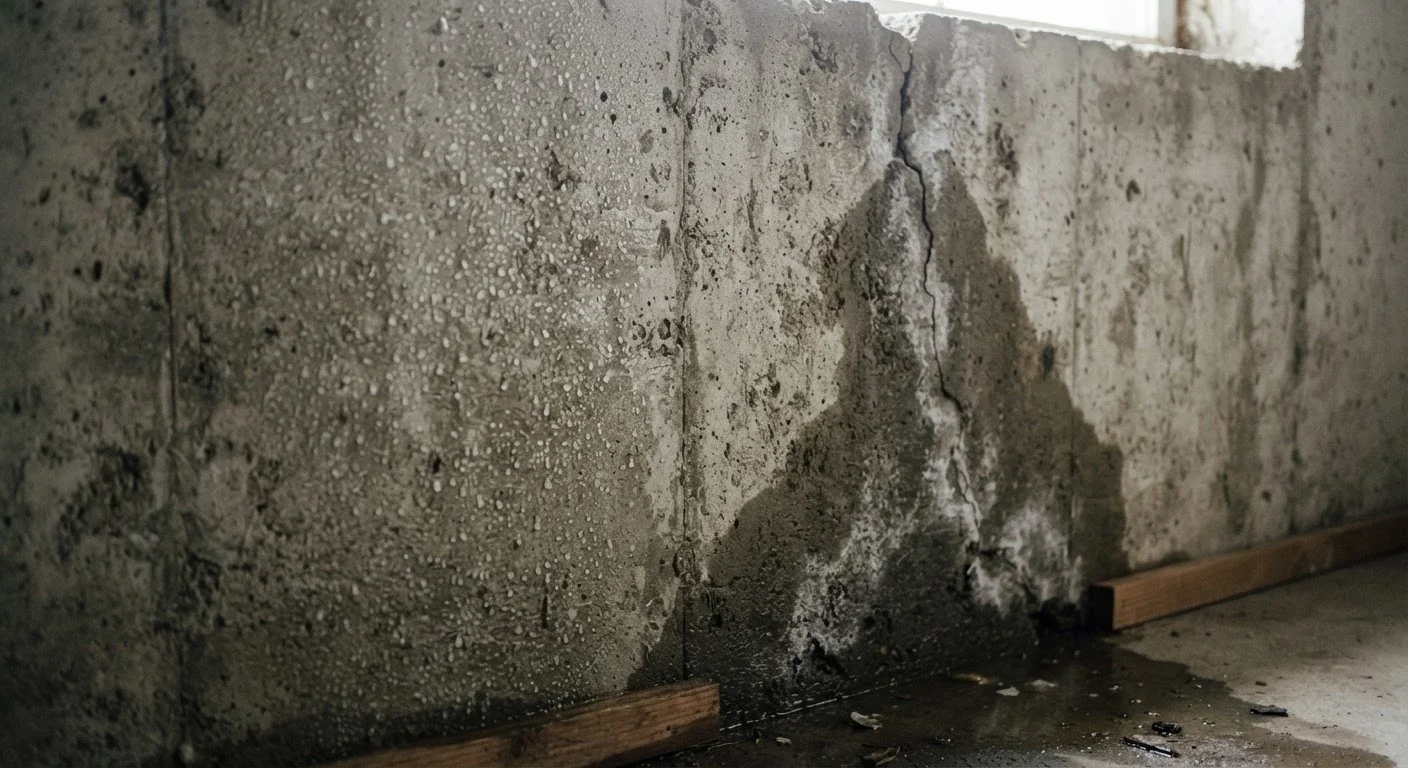
- White chalky deposits (efflorescence) on walls — a sign mineral-laden water has been moving through the masonry over time
- Water visible at the base of the wall, especially at the wall-floor joint
First-line solutions for seepage focus on directing water away from the foundation: improving the soil grade around the home so it slopes away, cleaning gutters and extending downspouts, and addressing any surface pooling near the foundation. More involved solutions — interior drainage channels, sump pump installation, exterior waterproofing membranes — are typically professional-level work and may require permits. Always verify local code requirements before undertaking waterproofing projects.
When to Involve a Licensed Professional
Interior drainage systems, sump pump installation, and exterior foundation waterproofing are typically regulated work in most U.S. jurisdictions. Permits and inspections may be required. A licensed waterproofing contractor or structural engineer should evaluate any situation involving active water flow, wall cracking, or bowing before work begins. Verify your local requirements with your municipality.
Building Long-Term Moisture Confidence
Once you've identified the source and addressed the immediate issue, a few habits help keep basement moisture in check year-round. Run a dehumidifier during humid months and aim to keep interior relative humidity below 60 percent. Check gutters and grading each spring. Inspect basement walls after significant rainstorms to catch new seepage entry points early.
A systematic approach to your home's envelope can prevent moisture problems from developing in the first place. Our weekend weatherproofing audit walks through a room-by-room checklist designed to catch moisture gaps before they worsen. For homes where window wells or basement window frames show deterioration, proper sealing is also worth reviewing — the guidance in our article on caulking windows and doors the right way applies here.
Basement moisture rarely resolves itself, but it's far less overwhelming once you understand what you're actually dealing with. Accurate diagnosis is the skill that separates a smart repair from an expensive guessing game.
Frequently Asked Questions
Tape a square of plastic sheeting tightly to the damp wall and seal all four edges. Leave it for 24–48 hours. If moisture appears on the room-facing side of the plastic, it's condensation from interior air. If moisture appears between the plastic and the wall, water is coming through from outside.
Yes. Persistent condensation keeps wall surfaces and nearby materials damp long enough for mold to establish, especially on wood framing, drywall, or stored items. Reducing humidity with a dehumidifier and improving air circulation are key preventive steps.
No. A dehumidifier removes airborne moisture and can help manage condensation, but it does nothing to stop water entering through cracks or porous concrete from outside. Seepage requires addressing the water source at or beyond the foundation.
Seepage alone is not automatically a structural problem, but it should not be ignored. Ongoing water intrusion can erode mortar joints, promote mold growth, and eventually compromise wood framing or finished spaces. Chronic seepage warrants professional evaluation.
Call a professional if you see active water flowing through cracks, if the same area stays wet after heavy rain, if you notice wall bowing or cracking, or if the source of moisture remains unclear after your own testing. Some waterproofing work also requires permits.
The content provided on our blog site traverses numerous categories, offering readers valuable and practical information. Readers can use the editorial team’s research and data to gain more insights into their topics of interest. However, they are requested not to treat the articles as conclusive. The website team cannot be held responsible for differences in data or inaccuracies found across other platforms. Please also note that the site might also miss out on various schemes and offers available that the readers may find more beneficial than the ones we cover.