

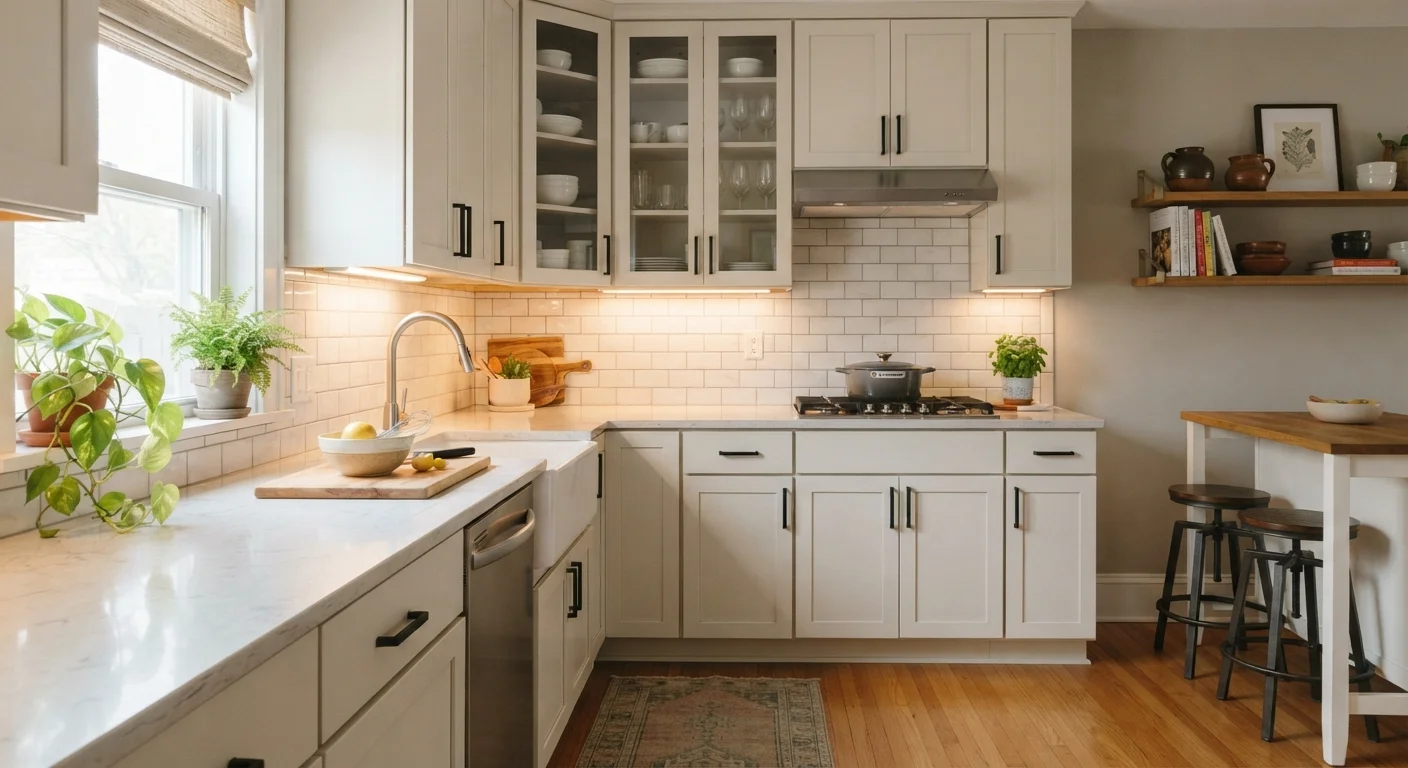
Why Small Changes Add Up in a Kitchen
A full kitchen remodel is one of the most expensive home projects a family can undertake. But an older kitchen doesn't have to stay dated while you save up — or forever. A handful of well-chosen, targeted upgrades can meaningfully shift how a kitchen looks, feels, and functions without requiring permits, contractors, or weeks of disruption.
The upgrades below focus on impact per dollar and effort. They're designed for everyday homeowners, not professional tradespeople. Some are pure cosmetic improvements; others address real functional gaps that make cooking and cleaning harder than it needs to be. If you're also thinking about how your kitchen's layout contributes to clutter and chaos, our guide to kitchen disorganization is a useful complement to these physical upgrades.
Replace Cabinet Hardware
Cabinet knobs and pulls are among the smallest components in a kitchen, but they're among the most noticed. Brass hardware that was fashionable decades ago can make an otherwise clean kitchen feel instantly dated. Swapping handles and knobs requires only a screwdriver in most cases, and the process typically takes a few hours for an average-sized kitchen.
When selecting new hardware, measure the existing hole spacing (called the center-to-center distance) before purchasing, as mismatched dimensions mean new drilling or patching. Brushed nickel, matte black, and warm bronze finishes tend to complement a wide range of cabinet colors and are widely available at home improvement stores in standard sizing.
Replacing cabinet hardware takes a few hours and no special tools — one of the highest-impact low-effort kitchen upgrades.
Add Under-Cabinet Lighting
Many older kitchens rely entirely on a single overhead fixture, leaving countertops — where most food prep happens — in shadow. Under-cabinet lighting corrects this directly. LED strip lights or puck lights mounted beneath upper cabinets illuminate the work surface, reduce eye strain, and make the kitchen feel significantly brighter and more modern.
Plug-in LED strip kits don't require any electrical work and are a reasonable DIY option for most homeowners. Hardwired installations provide a cleaner look but involve working with your home's electrical system; those should be handled by a licensed electrician. Always confirm what your local code requires before proceeding with wired lighting projects.
Under-cabinet lighting eliminates countertop shadows and is one of the most practical functional upgrades in any kitchen.
Install a Backsplash
A bare painted wall behind the stove and sink is both functionally vulnerable (paint absorbs grease and moisture) and visually plain. Adding a backsplash addresses both problems. Peel-and-stick tile panels have improved significantly in recent years and are a genuinely manageable weekend project for homeowners without tiling experience.
If you're comfortable with basic tiling, grouted ceramic or porcelain subway tile offers greater durability and a more finished appearance. Either way, prepare the wall surface carefully — clean, smooth walls are essential for adhesion. Grout and caulk joints around outlets and edges properly to prevent moisture infiltration behind the tile over time.
A backsplash protects your walls and transforms the kitchen's look — and peel-and-stick options make it a realistic weekend project.
Upgrade the Range Hood or Ventilation
Older kitchens frequently have undersized or purely recirculating range hoods that don't effectively remove cooking smoke, steam, or odors. Poor ventilation leads to grease buildup on cabinets, lingering smells, and elevated indoor humidity — all of which accelerate wear on the kitchen's surfaces and materials.
Replacing a range hood with a properly vented unit (one that exhausts air outdoors rather than filtering and recirculating it) makes a noticeable difference in air quality. This project typically involves ductwork connection and possibly electrical work, so assess your skill level honestly. If new ductwork is needed, a licensed contractor is the appropriate choice. Check local building codes, as some jurisdictions require permits for ventilation modifications.
Effective ventilation isn't cosmetic — it protects cabinets, surfaces, and indoor air quality from the effects of daily cooking.
Swap the Kitchen Faucet
A worn, dripping, or poorly designed faucet is both a daily frustration and a slow water waster. Replacing a kitchen faucet is a plumbing task that many homeowners can handle with basic tools — an adjustable wrench, basin wrench, and plumber's tape — in a few hours. The process generally involves shutting off the supply valves under the sink, disconnecting the old unit, and connecting the new one.
Choose a faucet that matches your sink's existing hole configuration (single-hole vs. three-hole) to avoid extra work. Pull-down spray heads and high-arc spouts improve daily usability for families who cook frequently. If you discover corroded supply lines or valves that won't shut off fully during the project, stop and call a licensed plumber rather than proceeding.
A new kitchen faucet improves daily usability and is one of the more approachable plumbing tasks for a careful DIY homeowner.
Refresh Cabinet Faces with Paint or New Doors
If your cabinet boxes are structurally sound but the doors look worn or dated, you have two good options: paint the existing doors or replace just the door fronts. Painting cabinets is labor-intensive but cost-effective. Proper prep — cleaning, light sanding, and priming — is what separates a lasting paint job from one that chips within months. Use a paint formulated for cabinetry rather than standard wall paint.
Replacing door fronts while keeping the existing boxes is sometimes called a cabinet refacing approach and can dramatically change a kitchen's appearance at a fraction of full replacement cost. Measure carefully and confirm hinge compatibility before ordering. For organization ideas that work well with refreshed cabinet layouts, see our kitchen organization strategies.
Sound cabinet boxes don't need replacing — a careful paint job or new door fronts can completely transform their appearance.
Making Smart Upgrade Decisions
Before you start purchasing materials, take stock of what bothers you most about your kitchen on a daily basis. A change that solves a real frustration — poor lighting that makes it hard to chop safely, a faucet that sprays sideways — will feel far more rewarding than a purely decorative one. Prioritize upgrades that address function first, then layer in cosmetic improvements.
Start with a Frustration Audit
Before buying anything, spend a week noting the specific moments when your kitchen annoys or slows you down. Is it a dim counter where you're chopping? A faucet that sprays unpredictably? Grease-stained walls behind the stove? Starting from real friction points — rather than aesthetics alone — ensures each upgrade genuinely improves your daily experience. A phased approach, tackling one upgrade at a time, also makes it easier to manage costs and avoid project fatigue.
It's also worth thinking about upgrades in the context of your broader home goals. If reducing household spending is a priority, our saving and goals resources can help you plan a phased approach rather than tackling everything at once. And if you're weighing whether a larger structural change might make more sense down the road, see our balanced look at open-plan renovation tradeoffs before committing.
The content provided on our blog site traverses numerous categories, offering readers valuable and practical information. Readers can use the editorial team’s research and data to gain more insights into their topics of interest. However, they are requested not to treat the articles as conclusive. The website team cannot be held responsible for differences in data or inaccuracies found across other platforms. Please also note that the site might also miss out on various schemes and offers available that the readers may find more beneficial than the ones we cover.