

The Real Reason Your Kitchen Keeps Falling Apart
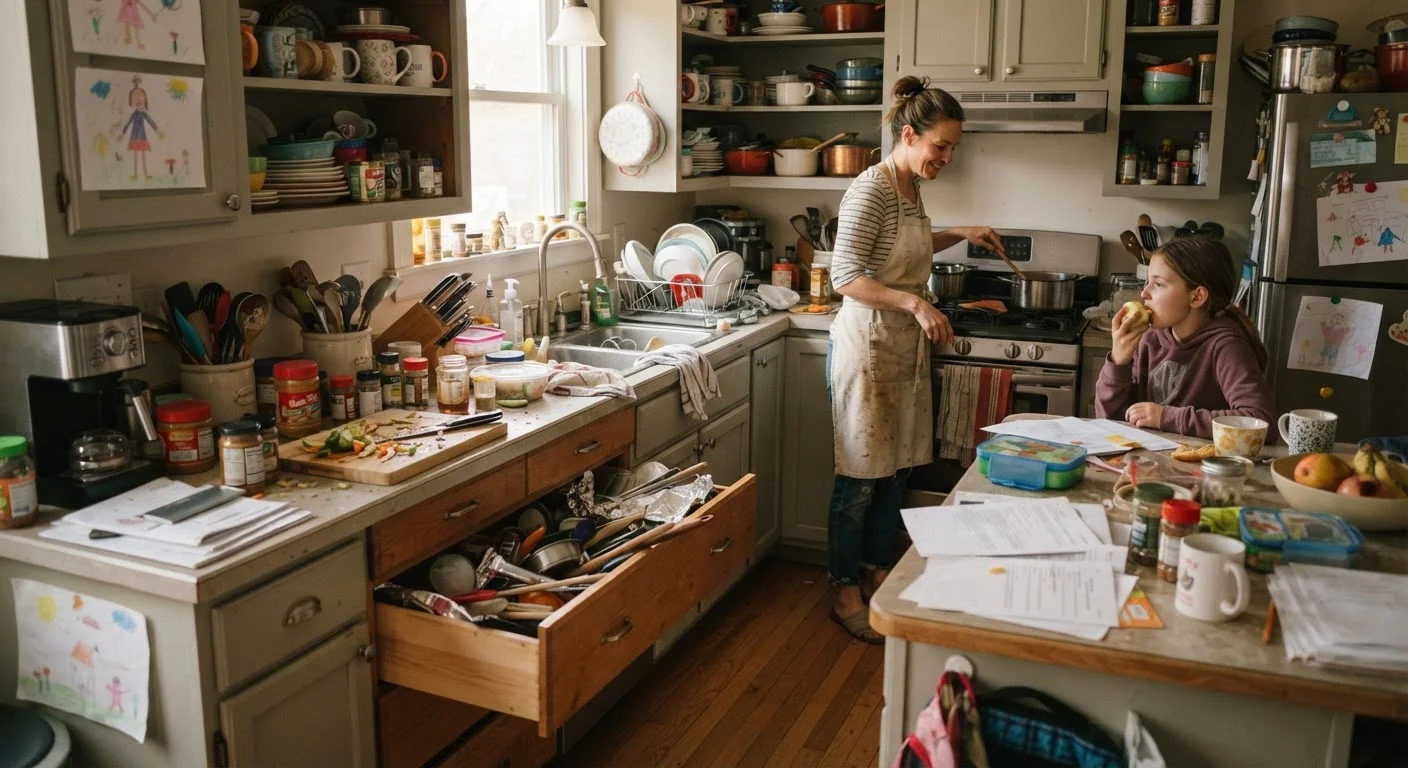
Most families assume a disorganized kitchen is a motivation problem — that if they just tried harder or found the right bins, things would stay tidy. In reality, kitchens fall back into chaos because the systems put in place don't match how the household actually uses the space. Good intentions run into poor structure every time, and structure wins.
This matters because the kitchen is the most trafficked room in most homes. Multiple people use it, at different times, for different purposes. A system designed for one calm adult cooking one meal a day will collapse under the reality of school-morning breakfast rushes, after-school snack raids, and weeknight dinner prep happening simultaneously.
Understanding why the disorganization keeps returning is the first step to actually fixing it. The mistakes below are the most common culprits — and each one has a practical solution. For a broader look at which organizational beliefs may be holding you back, see home organization myths worth questioning.
Common Mistakes That Undermine Kitchen Organization
These aren't failures of character — they're predictable structural errors that even tidy, motivated households make repeatedly. Recognizing them is how you stop repeating them.
Organizing for how you wish you cooked, not how you actually cook.
Why it happens: Reorganization often happens during a burst of motivation, when idealized routines feel achievable. The result is a system built for a calmer, more consistent household than actually exists.
Buying storage products before decluttering first.
Why it happens: New containers feel like a solution, and shopping is more appealing than the slow work of deciding what to keep. The result is neatly organized clutter that still overwhelms the space.
Creating a system only one person understands.
Why it happens: The person doing the organizing intuitively knows where everything goes, but never communicates the logic to others. Everyone else defaults to wherever is fastest.
Ignoring the countertop as prime real estate.
Why it happens: Counters are the path of least resistance for everything that enters the kitchen — mail, bags, appliances, produce. Over time, surface clutter becomes background noise that's easy to stop seeing.
Restocking without editing.
Why it happens: Groceries come in regularly, but items are rarely removed as the pantry fills. Expired goods, duplicates, and impulse purchases accumulate until the space becomes unusable.
30%
of kitchen items used daily
Home organization researchers have observed that roughly 30% of kitchen items account for the vast majority of daily use, yet most storage systems treat all items equally.
~8 min
Average daily time lost to kitchen disorganization
Studies on household efficiency suggest that disorganized kitchens contribute meaningfully to daily time loss, with small search-and-retrieve tasks adding up across a family's routine.
Building a System That Actually Holds
Once you've identified which mistakes are driving your kitchen's chaos, the path forward is straightforward: redesign the system around real behavior, not ideal behavior.
Start by watching how your household actually moves through the kitchen for two or three days without changing anything. Note where items naturally get set down, which drawers get opened most, and where bottlenecks form during busy periods. That observation tells you more than any organizational guide can.
Avoid Reorganizing Everything at Once
Overhauling your entire kitchen in a single session is exhausting and often leads to half-finished systems that are harder to maintain than what you started with. Tackle one zone — a single drawer, the pantry, one cabinet — and live with that change for a week before moving on. This approach builds sustainable habits rather than one-time results.
Next, apply the principle of proximity to use: items should be stored where they are first reached for, not where they look tidiest. Coffee mugs near the coffee maker. Kids' snack items at a reachable height. Cutting boards adjacent to the prep area. This single shift eliminates most counter clutter, because things get put back where they belong without conscious effort.
Finally, loop in the people who share your kitchen. Systems only hold when everyone understands the logic behind them. For practical guidance on making that happen, getting the whole family on board with organization offers concrete approaches. And once your kitchen is running smoothly, habits like the one-in, one-out rule will help you keep it that way long-term. If children are part of the equation, decluttering with kids in the house addresses the specific challenges that come with a family household.
The content provided on our blog site traverses numerous categories, offering readers valuable and practical information. Readers can use the editorial team’s research and data to gain more insights into their topics of interest. However, they are requested not to treat the articles as conclusive. The website team cannot be held responsible for differences in data or inaccuracies found across other platforms. Please also note that the site might also miss out on various schemes and offers available that the readers may find more beneficial than the ones we cover.