

What a Building Permit Actually Is
At its core, a building permit is your local government's way of saying: we've reviewed your plan, and you may proceed safely. It's not a revenue grab or unnecessary red tape — it's a safety system. Permits create a documented record that licensed inspectors verified your project met structural, electrical, fire, and plumbing codes at critical stages of construction.
When a permit is issued, your jurisdiction typically schedules one or more inspections — sometimes at framing, rough-in stages, and project completion. Inspectors check that the work matches the approved plans and complies with local building codes. Think of it as a series of professional second opinions on work that affects your family's safety.
Permit requirements are set locally, which is why they can differ so much from one town or county to the next. Your city or county building department is always the authoritative source for what your specific project requires.
Your Jurisdiction Sets the Rules
There is no single national standard for what requires a building permit in the United States. A project that needs a permit in one county may not in the neighboring one. Always contact your local building department — most have websites with permit checklists — before beginning any significant home project. Do not rely solely on what a neighbor, contractor, or online forum says applies to your area.
Projects That Almost Always Require a Permit
While local rules vary, certain categories of work are broadly regulated across most U.S. jurisdictions. If your project falls into any of these areas, assume a permit is likely required and verify with your building department before starting:
- Structural work: Adding or removing load-bearing walls, building additions, decks, or garages
- Electrical work: Installing new circuits, upgrading service panels, or adding outlets beyond simple replacements
- Plumbing: Relocating pipes, adding fixtures, or connecting to main supply or drain lines
- HVAC: Installing new heating or cooling systems, adding ductwork, or replacing equipment beyond straightforward like-for-like swaps
- Roofing: Full roof replacements in many jurisdictions (not always patch repairs)
- Fences and retaining walls: Above certain height thresholds, often 6 feet for fences
See our framework for deciding when to DIY vs. hire a contractor — permit complexity is one of the key factors in that decision.
Ask Your Contractor for Permit Documentation
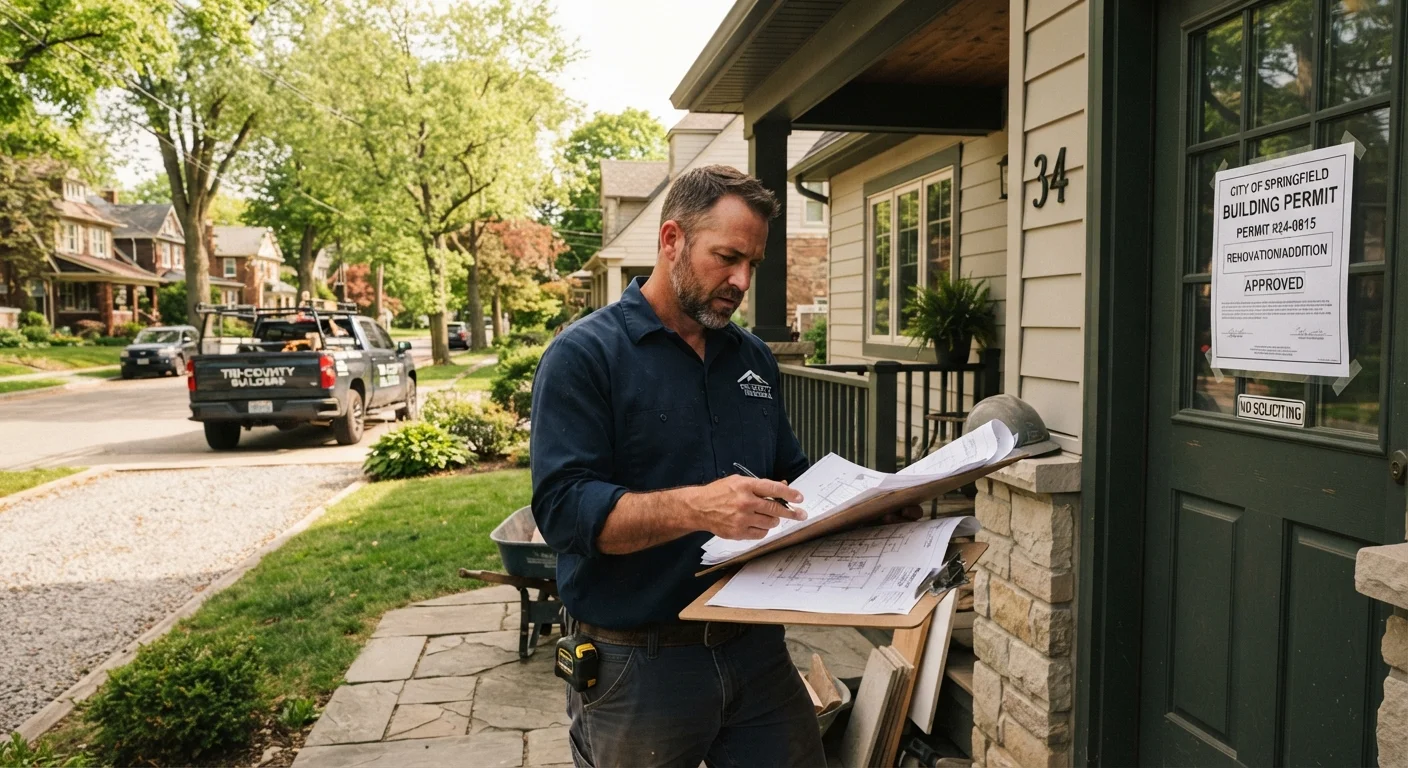
Before any significant work begins, ask your contractor to confirm in writing whether a permit is required and who will obtain it. Request a copy of any permit issued and keep it with your home records. Posted permits (typically required to be displayed at the job site) are a sign the process is being handled correctly. This documentation is valuable when you eventually sell your home.
Projects That Typically Don't Require a Permit
Not every home improvement project triggers a permit requirement. Most jurisdictions allow homeowners to handle cosmetic and minor maintenance work without going through the permitting process. Common examples that generally don't require a permit include:
- Interior painting and wallpaper
- Replacing flooring (carpet, hardwood, tile) without subfloor changes
- Cabinet and countertop replacements that don't involve plumbing or electrical relocation
- Minor repairs like patching drywall or replacing fixtures in-kind
- Landscaping that doesn't involve grading changes or retaining walls above local thresholds
Even within these categories, there can be exceptions. A kitchen remodel that appears cosmetic may cross into permitted territory the moment plumbing or electrical work is involved. When in doubt, a quick call to your local building department takes only minutes and can save months of headaches.
Staying informed about your home's systems is part of smart maintenance. Our weekend weatherproofing audit is a good example of the kind of assessment you can do confidently without triggering permit requirements.
~$15,000
Estimated average cost to remediate unpermitted additions
Industry estimates from remodeling and real estate professionals suggest unpermitted work remediation commonly runs into the tens of thousands of dollars when demolition and rebuild are required.
Varies by city
Permit processing time across U.S. jurisdictions
Processing times range from same-day approval for minor projects to several weeks for complex plans; many building departments now offer online submission to speed up review.
The Real Risks of Skipping a Required Permit
Some homeowners skip the permitting process hoping to save time or money. It's worth understanding what's actually at stake when that happens.
Insurance complications: If unpermitted work is involved in a fire, flood, or structural failure, your homeowner's insurance may deny or reduce the claim. Insurers can argue that non-code-compliant work contributed to the loss.
Sale complications: Real estate transactions increasingly involve thorough inspections and permit history reviews. Unpermitted work must typically be disclosed, and buyers may demand remediation or price reductions. In some cases, lenders won't approve mortgages on homes with significant unpermitted improvements.
Forced removal: Local authorities discovering unpermitted work can require you to demolish it — even completed, functional additions — and redo it with proper permits and inspections.
These aren't worst-case scare scenarios; they're documented, common outcomes. The home improvement myths that cost homeowners money article explores similar misunderstandings that lead to expensive mistakes.
“The permit process is essentially a consumer protection system for homeowners. Inspections catch mistakes before walls are closed up and problems become invisible — and expensive.”
— National Association of Home Inspectors, Professional organization representing certified home inspectors
Frequently Asked Questions
Unpermitted work can create serious problems down the line. When you sell your home, buyers' inspectors may flag it, potentially requiring you to tear out and redo the work. Insurance companies may also deny claims for damage related to unpermitted improvements. In some cases, local authorities can require you to bring the work up to code at your own expense.
In most jurisdictions, licensed contractors are expected to obtain permits for the work they perform. However, as the homeowner, you are ultimately responsible for ensuring permitted work has the required permits. Always confirm with your contractor before work begins and request copies of any permits issued.
Permit fees vary widely by location and project scope. Simple permits may cost under $100, while large additions or complex structural projects can run several hundred dollars or more. Your local building department can provide a fee schedule for your specific project type.
It depends on your jurisdiction and the scope of the replacement. Simple like-for-like window replacements may not require a permit, but projects involving structural changes to openings typically do. Always check with your local building department before starting.
You can often still sell a home with unpermitted work, but it typically must be disclosed to buyers. It may reduce your sale price, complicate financing, or require remediation before closing. Consulting a real estate attorney in your area is advisable if you have unpermitted improvements.
Processing times range from same-day approval for minor projects in some jurisdictions to several weeks for complex plans requiring full review. Many building departments now offer online applications that can speed up the process. Contact your local office early to avoid project delays.
The content provided on our blog site traverses numerous categories, offering readers valuable and practical information. Readers can use the editorial team’s research and data to gain more insights into their topics of interest. However, they are requested not to treat the articles as conclusive. The website team cannot be held responsible for differences in data or inaccuracies found across other platforms. Please also note that the site might also miss out on various schemes and offers available that the readers may find more beneficial than the ones we cover.