

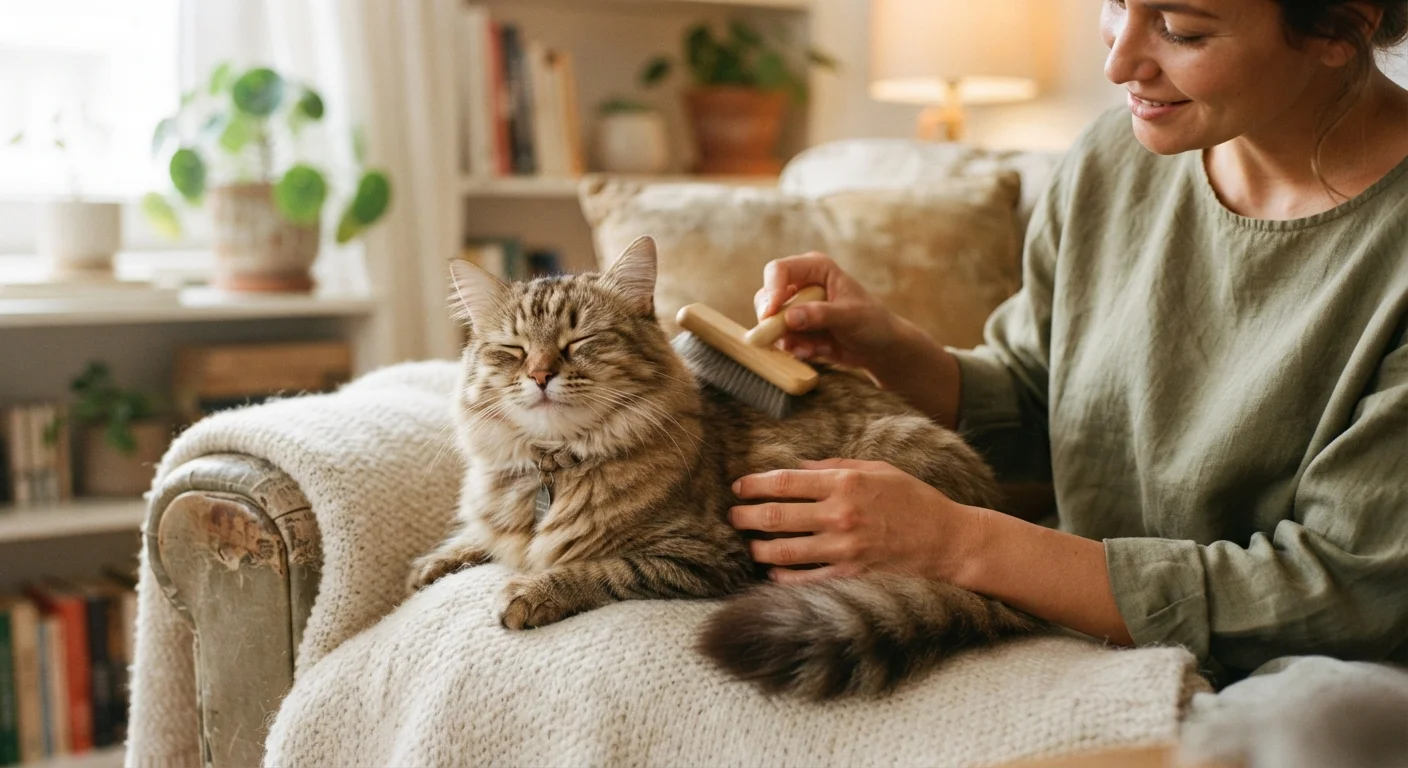
Why Grooming Matters Beyond Appearances
Cats are famously self-sufficient groomers, but that doesn't mean they have everything covered on their own. Regular human-assisted grooming removes loose fur before it becomes hairballs, distributes natural skin oils, and gives you a chance to spot early signs of health changes. Think of it less as a chore and more as a health check wrapped in bonding time.
If you're just getting started with a new feline family member, our guide to bringing home your first cat covers the basics of what to have ready before grooming routines even begin.
Match brushing frequency to your cat's coat length and shedding pattern.
Short-haired cats accumulate far less loose fur than long-haired breeds, so over-brushing can irritate the skin unnecessarily. Matching frequency to coat type keeps grooming effective without causing stress.
Introduce grooming tools gradually, especially with young or rescue cats.
Cats that are rushed into grooming often develop lasting resistance that makes every session a battle. A slow introduction — letting the cat sniff the brush, then touching it briefly before a full session — builds positive associations over time.
Use grooming sessions as a routine skin and coat health check.
Running your hands through your cat's fur lets you feel for lumps, sore spots, fleas, ticks, or dry patches that might otherwise go unnoticed. Early detection gives you more options for addressing issues before they worsen.
Trim nails every two to three weeks to prevent overgrowth and household damage.
Nails that grow too long can snag on fabric, grow into paw pads, or alter the way a cat walks. Regular trimming is far easier than dealing with an overgrown nail that has already caused injury.
Reserve baths for situations where they're genuinely needed rather than routine.
Unnecessary bathing disrupts the skin's natural balance and can make cats anxious and resistant over time. Keeping baths infrequent means your cat is less likely to dread them when one is truly necessary.
Brushing by Coat Type
How often you brush depends almost entirely on your cat's coat length and texture. Short-haired cats — like American Shorthairs or Siamese — typically do well with brushing once a week. This is enough to reduce shedding and keep the coat sleek without overstimulating the skin.
Medium- and long-haired cats — including Maine Coons, Persians, and Ragdolls — need brushing three to five times per week, or even daily during heavy shedding seasons. Their fur mats quickly, especially around the neck, armpits, and belly. A mat left untreated can pull at the skin and become painful.
Choose tools suited to your cat's coat: a fine-toothed comb works well for silky long fur, while a rubber grooming mitt often suits short-haired cats who find bristle brushes overstimulating. Always brush in the direction of hair growth and stop before your cat shows signs of stress. Our article on reading your cat's body language can help you recognize when your cat has had enough.
Make Grooming a Positive Experience
Keep early grooming sessions short — just two to five minutes — and always end on a calm note before your cat becomes visibly agitated. Pairing sessions with a small treat or gentle praise helps your cat associate brushing with something rewarding. Over weeks, most cats will learn to tolerate, and some even enjoy, the routine.
Bathing: When It's Needed and How to Keep It Calm
Most indoor cats don't need regular baths. Their own grooming instincts handle the job well, and frequent bathing can strip the coat of natural oils that protect skin health. That said, there are situations where a bath makes sense: if your cat gets into something sticky or toxic, has a flea infestation your vet has recommended treating with a wash, or has a skin condition that calls for medicated shampoo.
When a bath is necessary, keep water lukewarm — not hot. Use a shampoo specifically formulated for cats; human shampoos have a different pH and can irritate feline skin. Work quickly and calmly, minimize the water in their face and ears, and have a warm towel ready. Keeping the experience brief and pairing it with a treat afterward helps your cat associate it with something tolerable, if not pleasant.
Senior Cats May Need Extra Grooming Help
Older cats often groom themselves less thoroughly due to arthritis, dental discomfort, or reduced flexibility. If you've noticed your senior cat's coat looking dull or unkempt, that's a cue to step up your assistance — and potentially a reason to mention it at their next vet visit. Our article on caring for a senior cat covers how needs evolve with age.
Nail Trimming Without the Drama
Overgrown nails can curl into a cat's paw pads, causing discomfort or infection. Trimming every two to three weeks is a reasonable rhythm for most indoor cats. Outdoor cats often wear their nails down naturally and may need less frequent trims, though it's worth checking regularly.
Use nail clippers designed for cats — human nail clippers can crush rather than cut cleanly. Clip only the clear, curved tip of the nail, well away from the pink quick. Cutting into the quick causes bleeding and pain, which can make future trims much harder. If you can see the quick clearly, aim to leave a comfortable margin.
If your cat resists strongly, try trimming one paw per session rather than all four at once. Wrapping your cat loosely in a towel (sometimes called a "purrito") can reduce squirming safely. For cats that remain very difficult to trim, a groomer or veterinary technician can handle it without stress to either of you.
Changes in grooming behavior — like a cat suddenly over-grooming or stopping altogether — can be early health signals. Our article on signs your cat may be sick outlines what to watch for between vet visits.
The content provided on our blog site traverses numerous categories, offering readers valuable and practical information. Readers can use the editorial team’s research and data to gain more insights into their topics of interest. However, they are requested not to treat the articles as conclusive. The website team cannot be held responsible for differences in data or inaccuracies found across other platforms. Please also note that the site might also miss out on various schemes and offers available that the readers may find more beneficial than the ones we cover.