

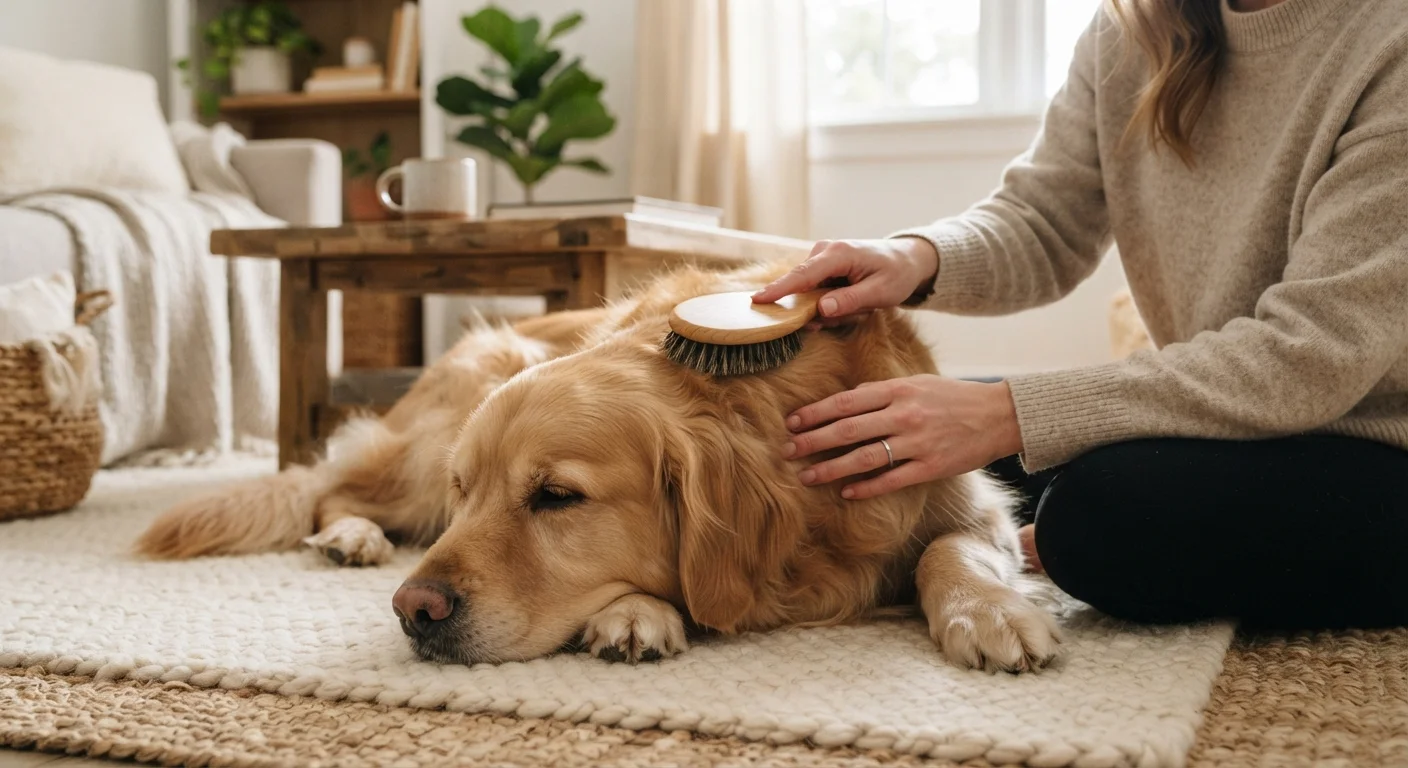
Why Home Grooming Is Worth the Effort
Regular grooming does far more than keep your dog looking tidy. Brushing stimulates circulation and distributes natural skin oils; nail trims prevent joint strain from altered gait; ear checks catch early signs of infection before they become painful. Beyond the health benefits, grooming sessions are an opportunity to notice lumps, skin changes, or tenderness that might otherwise go undetected until a vet visit.
Many dogs are initially nervous about being handled in these ways — and that's completely normal. The goal isn't a perfectly still dog on the first try. It's a gradual process of building trust through short, predictable, reward-rich experiences. Families with children can involve kids in calm, supervised ways, which also helps dogs become more comfortable with being touched. See our guide on helping dogs stay calm around children for related tips.
Make Tools Familiar Before You Use Them
Let your dog sniff the brush, clippers, or dryer before the first grooming session. Place the tools near their resting area for a day or two. Familiarity with the look and smell reduces the startle response when you actually begin using them.
What You'll Need Before You Start
Having the right tools on hand makes each task safer and more efficient. Below are the essentials — use the checklist to gather everything before your first session so you never have to leave your dog unattended mid-groom.
Slicker brush or deshedding comb
Removes loose fur, tangles, and debris from the coat without pulling.
Dog-formulated shampoo
Cleanses the skin and coat safely without stripping natural oils.
Dog nail clippers or grinder
Trims nails to a safe length to prevent discomfort and posture issues.
Cotton balls and dog ear-cleaning solution
Gently removes wax and debris from the outer ear canal.
Non-slip mat or rubber tub liner
Keeps the dog steady during bathing and reduces slip-related anxiety.
Styptic powder
Stops minor bleeding quickly if a nail is accidentally cut too short.
What you will need
Step-by-Step: The Full Grooming Routine
Work through these steps in order. You don't need to complete every task in a single sitting — especially at first. Bathing and nail trimming on the same day can be a lot for a nervous dog. Split tasks across two sessions if needed.
Set the stage for a calm session
Choose a time when your dog is relaxed — after a walk, not before meals when they're energetic or distracted. Keep sessions short at first: five to ten minutes is plenty for a new or anxious dog. Gather all your tools beforehand so you're not fumbling mid-session, and speak in a soft, steady voice throughout.
Brush the coat before bathing
Always brush before a bath — water tightens mats and makes them much harder to remove. Work in sections, moving in the direction of hair growth. For dogs prone to tangles, use a detangling spray and tease knots apart with your fingers before the brush. Reward calm behavior with a treat every minute or two to reinforce the positive association.
Bathe with lukewarm water and dog-safe shampoo
Place a non-slip mat in the tub or sink. Wet your dog's coat thoroughly with lukewarm water — never hot — then apply a dog-formulated shampoo, working from neck to tail and avoiding eyes and ears. Rinse completely, as shampoo residue can cause skin irritation. Towel dry gently, or use a low-heat hair dryer on the lowest setting if your dog tolerates the noise.
Trim nails gradually and carefully
Hold your dog's paw firmly but gently. Clip only the tip of each nail — the translucent outer curve — to avoid the quick (the blood vessel running through the nail). On dark nails where the quick is invisible, trim in small increments and look for a gray or pinkish oval center, which signals you're close. If your dog resists, trim one or two nails per session rather than forcing all at once.
Clean ears gently and only the outer canal
Fold back the ear flap and apply a small amount of veterinarian-recommended ear-cleaning solution to a cotton ball. Wipe the visible inner ear surface gently — never insert anything into the ear canal. Healthy ears should be light pink with no strong odor. If you notice redness, dark discharge, or a yeasty smell, skip home cleaning and consult your veterinarian.
End every session on a positive note
Finish with praise, a treat, and a few minutes of calm affection. Even if the session was cut short because your dog became restless, end before stress peaks — this preserves the positive association for next time. Over multiple sessions, gradually extend duration as your dog's comfort grows. Teaching your dog to stay calm in various situations follows similar principles of positive reinforcement and patient repetition.
Stress Signals to Watch For
Yawning, lip-licking, turning away, tucking the tail, or freezing are all signs your dog is uncomfortable. If you see these, pause immediately, give your dog space, and try again in a shorter, easier session. Pushing through visible distress can create lasting negative associations with grooming and erode trust.
Building Grooming Into Your Family's Routine
Consistency is the most powerful tool in reducing grooming stress. When dogs learn that grooming happens regularly and always ends well, anticipatory anxiety fades. Aim for a brushing session two to three times a week, baths every four to six weeks (or as needed for active or outdoor dogs), nail trims every three to four weeks, and ear checks monthly.
Tying grooming to an existing habit — after the Saturday morning walk, for example — makes it easier to maintain. Our guide to building a dependable daily routine explores how structure supports your dog's overall wellbeing and helps keep a mentally stimulated dog even on hectic days.
Know When to Call a Professional
Severely matted coats, extremely overgrown nails that curl under, or signs of skin infection should be handled by a professional groomer or veterinarian — not attempted at home. Trying to remove tight mats yourself can cause skin tears or serious discomfort. When in doubt, ask your vet before proceeding.
The content provided on our blog site traverses numerous categories, offering readers valuable and practical information. Readers can use the editorial team’s research and data to gain more insights into their topics of interest. However, they are requested not to treat the articles as conclusive. The website team cannot be held responsible for differences in data or inaccuracies found across other platforms. Please also note that the site might also miss out on various schemes and offers available that the readers may find more beneficial than the ones we cover.