

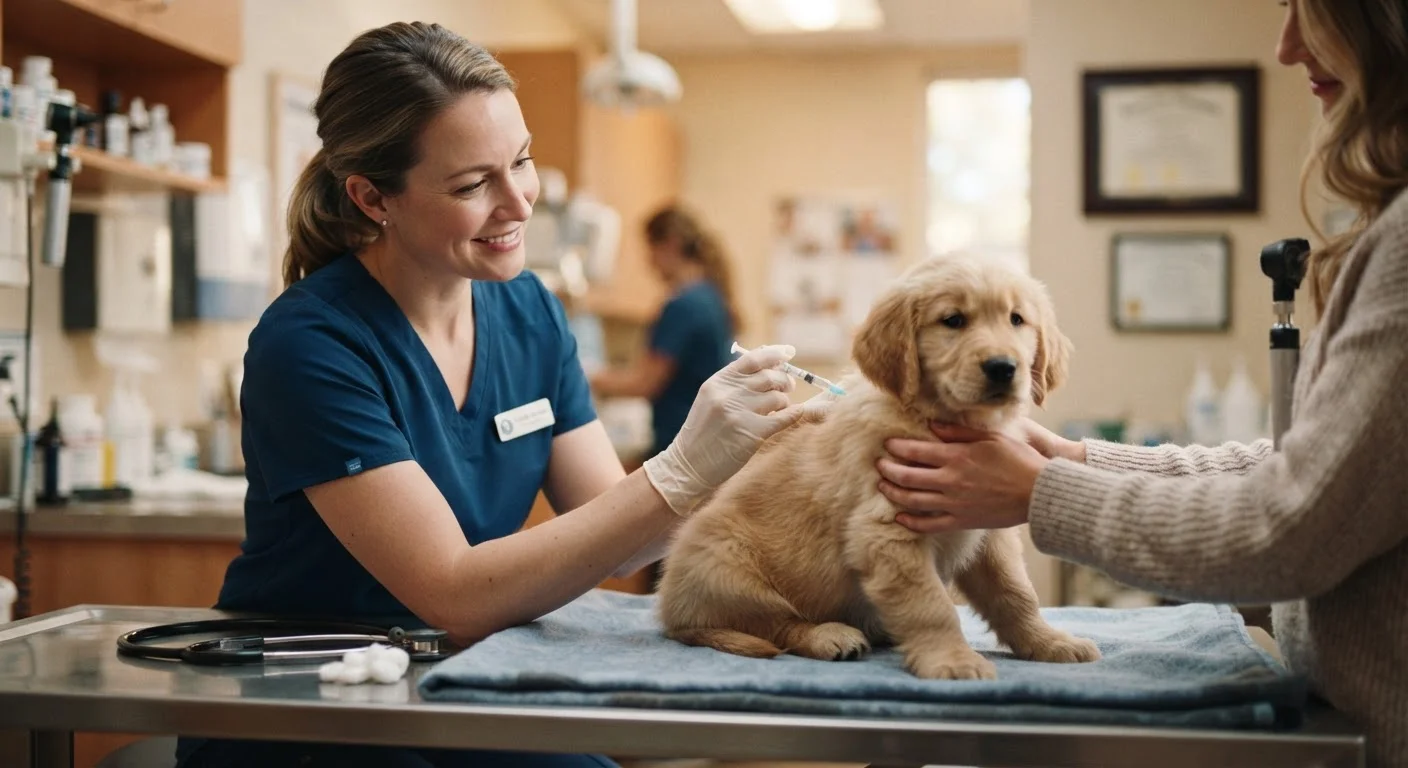
Core vs. Non-Core Vaccines: What's the Difference?
Dog vaccines fall into two categories: core and non-core. Core vaccines are recommended for every dog, regardless of lifestyle, because they protect against diseases that are widespread, severe, or transmissible to humans. Non-core vaccines are given based on a dog's individual risk — where they live, how much time they spend outdoors, and whether they interact with other animals.
| Rabies vaccine legal status | Required by law in most U.S. states (Requirements vary by state and municipality) |
| Core vaccine set | DHPP + Rabies (American Animal Hospital Association (AAHA) guidelines) |
| Puppy series start age | 6–8 weeks (General veterinary consensus) |
| Adult DHPP booster frequency | Every 1–3 years (Varies by vaccine formulation and vet recommendation) |
| Common non-core vaccines | Bordetella, Leptospirosis, Lyme, Canine influenza (Risk-based; discuss with your veterinarian) |
Understanding this distinction helps you have a more informed conversation with your veterinarian, especially as your dog moves through different life stages. For example, a dog that spends most of its time indoors may have different non-core vaccine needs than one with regular outdoor exposure — a distinction explored in depth in the indoor vs. outdoor dog care guide.
This article is for general educational purposes only and is not a substitute for veterinary advice. Always consult a licensed veterinarian for guidance specific to your dog's health and circumstances.
The Typical Puppy Vaccination Timeline
Puppies receive a series of vaccines in their first months of life because their immune systems are still developing. The schedule generally follows this pattern:
- 6–8 weeks: First DHPP combination vaccine (Distemper, Hepatitis, Parvovirus, Parainfluenza)
- 10–12 weeks: Second DHPP booster; Bordetella (kennel cough) if applicable
- 14–16 weeks: Third DHPP booster; Rabies vaccine (required by law in most U.S. states)
- 12–16 months: DHPP and Rabies boosters to transition from puppy to adult schedule
The interval between doses matters — spacing allows each dose to properly stimulate the immune response. Missing or delaying boosters can leave gaps in protection during a vulnerable period.
Core vaccine
A vaccine recommended for all dogs regardless of lifestyle or location. Core vaccines protect against diseases considered highly dangerous or transmissible, such as rabies and parvovirus.
Non-core vaccine
A vaccine given based on a dog's individual risk factors, such as geographic location, environment, or frequency of contact with other animals. Examples include Lyme disease and Bordetella vaccines.
DHPP
A combination vaccine protecting against four diseases: Distemper, Hepatitis, Parvovirus, and Parainfluenza. It forms the backbone of most puppy vaccine series.
Titer test
A blood test that measures the level of existing antibodies in a dog's system. Veterinarians may use titer tests to determine whether a booster vaccine is currently necessary.
Booster
A follow-up dose of a vaccine given to maintain or strengthen immunity over time. Boosters are given at intervals determined by the vaccine type and veterinary guidelines.
As your puppy grows, vaccination needs shift alongside other health considerations. The dog life stage guide explains how your dog's overall care should evolve from puppyhood through the senior years.
Adult and Senior Dog Vaccine Schedules
Once a dog completes its puppy series, vaccines move to a less frequent schedule. DHPP is typically given every one to three years depending on the vaccine formulation and your veterinarian's recommendation. Rabies boosters follow a one-year or three-year cycle, depending on local law and the specific vaccine used.
Non-core vaccines for adult dogs are reassessed annually. Common ones include:
- Leptospirosis — recommended for dogs with outdoor or water exposure
- Bordetella (kennel cough) — often required for dogs that visit groomers, boarding facilities, or dog parks
- Lyme disease — advised in tick-endemic regions
- Canine influenza — considered for dogs with frequent social contact
Senior dogs may have adjusted recommendations based on their overall health status. A veterinarian may titer-test — measuring existing antibody levels — before automatically re-administering certain vaccines. This is a good topic to raise at your dog's annual checkup; our annual vet visit readiness checklist can help you prepare the right questions.
~5,000
Rabies cases reported in U.S. wildlife annually
According to the CDC, rabies remains present in U.S. wildlife populations, underscoring the importance of canine vaccination.
1 in 3
Dogs estimated to visit a vet only when sick
Veterinary industry surveys suggest many dogs miss routine preventive care, including scheduled vaccine boosters.
What to Watch for After Vaccination
Most dogs tolerate vaccines well, but mild side effects are possible and generally resolve within a day or two. These can include slight lethargy, reduced appetite, or mild swelling at the injection site. More serious reactions — such as facial swelling, vomiting, difficulty breathing, or collapse — are rare but require immediate veterinary attention.
Keep an eye on your dog for several hours after any vaccination and avoid strenuous exercise that same day. If your dog seems unusually unwell or symptoms persist beyond 24–48 hours, contact your veterinarian promptly.
Staying on top of your dog's vaccine records is also practical for daily life. Many boarding, grooming, and training facilities require proof of current vaccinations — another reason to keep documentation organized alongside your broader daily care routine.
The content provided on our blog site traverses numerous categories, offering readers valuable and practical information. Readers can use the editorial team’s research and data to gain more insights into their topics of interest. However, they are requested not to treat the articles as conclusive. The website team cannot be held responsible for differences in data or inaccuracies found across other platforms. Please also note that the site might also miss out on various schemes and offers available that the readers may find more beneficial than the ones we cover.