

Option A
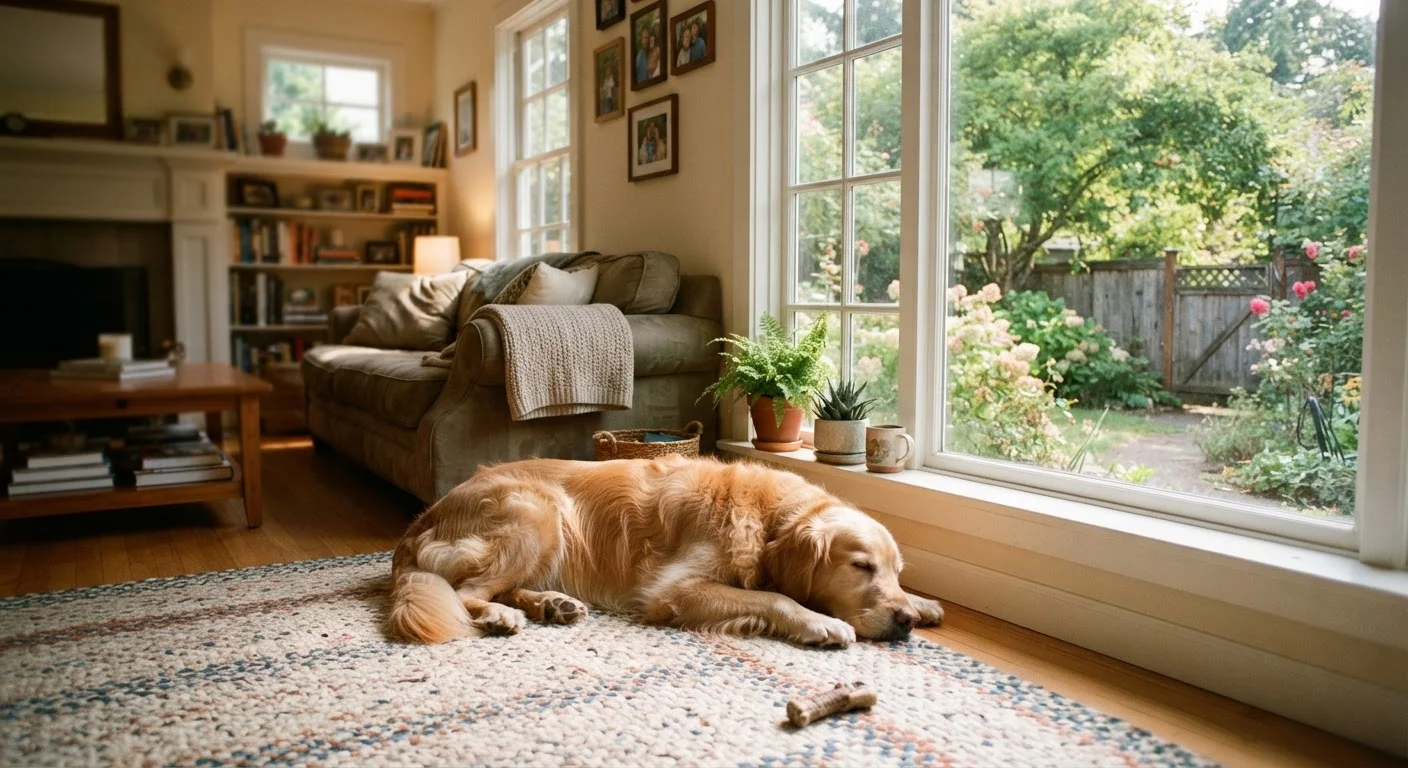
Indoor Dog
The home-integrated companion who lives alongside the family.
Best for: Families who want a dog deeply woven into daily household life, sharing living spaces and sleeping areas.
Option B
Outdoor Dog
The yard-based dog with more time spent outside than in.
Best for: Households with secure outdoor space and working or high-energy breeds that thrive with more room to roam.
The Distinction Is Real — But Often Misunderstood
Ask ten dog owners what an "indoor dog" or "outdoor dog" means, and you'll get ten different answers. In practice, very few dogs live exclusively in one environment. Most American family dogs move between house and yard throughout the day. What the distinction really describes is where a dog primarily sleeps, spends unsupervised time, and forms its social world.
That framing matters because it shapes nearly every aspect of care: how you manage temperature and weather, how you structure training, how you monitor health, and how much mental stimulation you need to provide. Understanding the difference isn't about judging one arrangement as superior — it's about making sure whichever setup your family uses actually meets your dog's needs.
It's also worth noting that this conversation looks quite different for cats versus dogs. Dogs are pack animals with much stronger social dependency on their human family, which changes the stakes of keeping them primarily outdoors.
| Criterion | Indoor Dog | Outdoor Dog |
|---|---|---|
| Primary living space | Inside the home | Yard or outdoor shelter |
| Socialization exposure | High — daily family contact | Varies — requires deliberate effort |
| Temperature risk | Lower — climate controlled | Higher — weather-dependent |
| Parasite exposure | Lower, but not zero | Higher — ticks, fleas, wildlife |
| Exercise space | Requires scheduled outdoor time | More natural roaming available |
| Mental stimulation | Rich — household sensory variety | Can be limited without enrichment |
| Health monitoring ease | Easier — close daily observation | Harder — changes can be missed |
| Best suited breeds | Most companion and toy breeds | Some working, herding, sporting breeds |
Health and Safety: Different Risks, Not Fewer
A common misconception is that indoor dogs are automatically healthier. In reality, each environment carries its own risk profile.
Indoor dogs may get less natural exercise, have more exposure to household allergens, and — if under-stimulated — develop anxiety-related behaviors. They tend to have less exposure to parasites like ticks, but they're not immune. Flea prevention remains essential regardless of where a dog sleeps.
Outdoor dogs face greater exposure to temperature extremes, wildlife encounters, parasites, and accidental ingestion of yard hazards. A dog left outside without adequate shelter in winter or summer can develop hypothermia or heat stroke quickly — conditions that veterinary professionals consistently flag as preventable emergencies.
No Dog Should Be Left Alone Outdoors Long-Term
The American Veterinary Medical Association and humane organizations broadly agree that dogs are social animals who require regular human interaction for psychological wellbeing. Tethering or confining a dog outdoors without adequate shelter, water, and social engagement is considered inhumane in many jurisdictions and is associated with increased aggression and anxiety. Even breeds historically kept as working dogs benefit from meaningful daily contact with their handlers.
As dogs age, their tolerance for environmental stress shifts considerably. The changes dogs go through at each life stage include reduced thermoregulation and increased joint sensitivity — both of which make primarily outdoor arrangements harder to sustain safely for senior dogs.
Training, Behavior, and Mental Stimulation
Where a dog spends most of its time has a direct effect on training outcomes. Indoor dogs are exposed to the rhythms of family life — meal times, movement, guests, sounds — which creates more natural opportunities for socialization and reinforcement of household manners.
Outdoor dogs may miss these daily micro-interactions. Without deliberate effort, they can become under-socialized, which sometimes shows up as reactivity or fearfulness around unfamiliar people or environments. This isn't inevitable, but it requires intentional daily engagement: structured play, training sessions, and meaningful time indoors with the family.
For large-breed dogs, outdoor access is often a genuine behavioral benefit — they may simply need more physical space than a small apartment provides. But physical space alone doesn't replace mental enrichment. Puzzle feeders, obedience work, and play sessions matter equally.
90%+
US dogs kept primarily indoors
According to the American Pet Products Association, the vast majority of American pet dogs live inside the home as part of the family unit.
2–3x
Higher heat stroke risk outdoors in summer
Veterinary emergency data consistently shows outdoor dogs are disproportionately represented in warm-weather heat exhaustion cases, particularly flat-faced breeds.
Daily Routines and What Actually Needs to Change
Regardless of where your dog primarily lives, certain care standards don't move: fresh water always available, at least two exercise sessions daily, regular veterinary visits, and consistent flea, tick, and heartworm prevention.
What shifts based on indoor vs. outdoor arrangement:
- Temperature management: Outdoor dogs need insulated shelter with a raised floor in cold climates, shade and ventilation in heat. Indoor dogs need regulated home temperatures, particularly for short-nosed breeds sensitive to air quality.
- Feeding logistics: Outdoor dogs may need slightly higher caloric intake in cold months due to thermoregulation demands, but this should always be guided by a veterinarian, not assumed. Diet quality matters in either case — see the broader debate around dog food approaches for context.
- Grooming frequency: Outdoor dogs often accumulate more dirt, burrs, and moisture — requiring more frequent brushing and paw checks.
- Social time: This is non-negotiable. No dog thrives in isolation. If a dog spends most of its time outside, deliberate daily interaction isn't optional — it's a welfare requirement.
This article is for general informational purposes only and is not a substitute for professional veterinary advice. Always consult a licensed veterinarian for guidance specific to your dog's health, breed, and living situation.
The content provided on our blog site traverses numerous categories, offering readers valuable and practical information. Readers can use the editorial team’s research and data to gain more insights into their topics of interest. However, they are requested not to treat the articles as conclusive. The website team cannot be held responsible for differences in data or inaccuracies found across other platforms. Please also note that the site might also miss out on various schemes and offers available that the readers may find more beneficial than the ones we cover.