

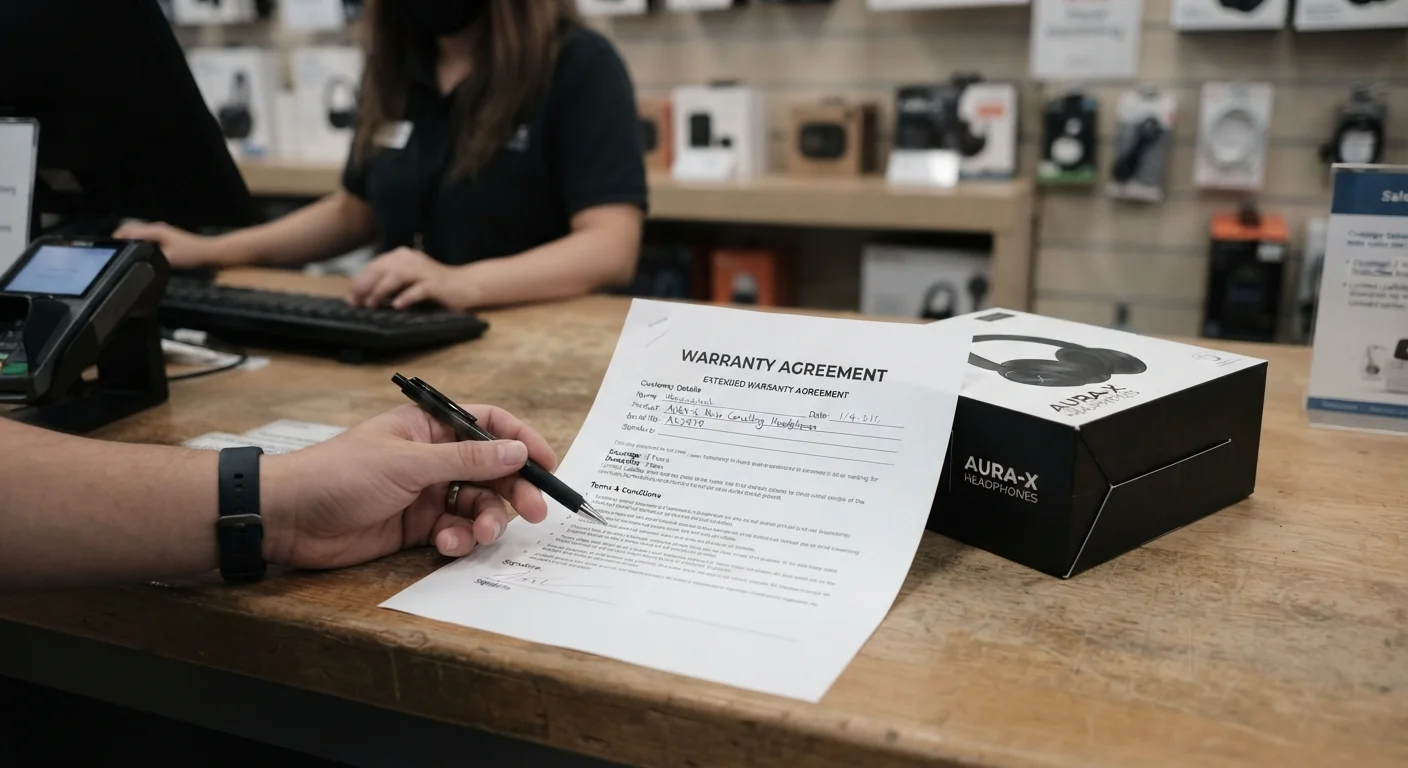
Why the Pitch Happens at the Register
Extended warranties are rarely afterthoughts. Retailers train staff to offer them at the point of sale because service contracts often carry profit margins of 50 to 70 percent or more — far higher than the product itself. A store may earn more from a $150 protection plan than from the appliance it covers.
That business reality shapes how the pitch is delivered. Sales scripts tend to emphasize worst-case repair scenarios without discussing the probability of those scenarios occurring, the length of coverage you already have for free, or the exclusions buried in the contract. Understanding the structure of the pitch helps you respond to it more clearly.
State Protections Vary Significantly
Extended warranties sold by third parties are classified as service contracts rather than insurance in most states, which means consumer protections differ from state to state. Some states mandate cancellation rights and disclosure requirements; others have minimal rules. If a plan provider goes out of business, your contract may become worthless. Purchasing through the manufacturer or a large established retailer reduces — but does not eliminate — this risk.
For a parallel look at how promotional terms can obscure real value, see our guide on decoding fine print on promotional offers.
How Coverage Terms Are Usually Written
Extended warranty contracts are legal documents, and their structure tends to favor the seller. Here are the patterns that appear most consistently:
- Overlap with the free warranty. Many extended plans begin on the purchase date, not after the manufacturer's warranty ends. That means you are paying for months of coverage you already have at no cost.
- Exclusion-heavy language. Words like 'accidental,' 'cosmetic,' 'consumable,' and 'normal wear' do a lot of work in these contracts. A cracked screen, a worn keyboard, or a battery that holds less charge — common real-world problems — are frequently excluded.
- Claim friction. Contracts often require original receipts, pre-authorization calls, and approved repair facilities. Some require the product to be mailed in, leaving families without the item for weeks.
- Replacement caps. If a product is replaced rather than repaired, the replacement may be a refurbished unit of equivalent value rather than a new item — and the contract often terminates once a replacement is issued.
Reading the fine print on return policies uses the same careful approach and protects you at a different stage of the purchase.
Ask for the Contract Before You Decide
You are entitled to review the full service contract terms before purchasing. If a retailer won't provide the written document on request, that itself is informative. Take time to check the exclusion list and the claims process before agreeing — the verbal pitch and the written terms often describe different levels of coverage.
What the Math Tends to Show
Consumer research consistently finds that most extended warranties are not redeemed, and when they are, the payout often doesn't exceed the plan cost. Several factors explain why:
50–70%
Typical retailer margin on service contracts
Industry analysts and consumer finance researchers have long noted that service contracts carry significantly higher margins than the products they cover, making them a key revenue driver for retailers.
~55%
Extended warranties never redeemed
Consumer advocacy research has consistently found that a majority of purchased extended warranties go unused, meaning the plan cost is a net loss for most buyers.
- Products are most likely to fail early (manufacturing defects, covered free) or very late (after the extended plan expires). The period the plan actually covers is often a product's most reliable phase.
- Repair costs for consumer electronics have declined as device prices have fallen. A $200 repair plan on a $300 item may exceed the replacement cost in a few years.
- Inflation in replacement parts and labor doesn't always offset the declining value of the covered product over time.
This doesn't mean extended coverage is never worthwhile. For major appliances with complex components, or in households where a breakdown would create genuine financial strain, the calculus is different. The point is that the math deserves scrutiny before you say yes.
If you're evaluating big-ticket vehicle purchases where warranty math also matters, our new car vs. used car financial comparison walks through how manufacturer warranties factor into total ownership cost.
Coverage You May Already Have
Before purchasing an extended warranty, it's worth checking what's already in place:
- Credit card benefits. Many cards automatically extend the original manufacturer's warranty by one additional year on eligible purchases. This benefit is free and often overlooked.
- Homeowners or renters insurance. Depending on your policy, certain high-value items may be covered against theft or sudden damage. Check your personal property coverage limits and deductibles.
- Manufacturer programs. Some manufacturers offer their own extended service agreements at lower margins than retailer-sold plans. These are worth comparing if you want coverage.
For larger purchases involving financing — where warranty decisions intersect with loan terms — our piece on leasing vs. buying a family vehicle illustrates how to think about built-in protections versus paid add-ons.
This article is for general consumer education purposes only and does not constitute legal or financial advice. Contract terms, state regulations, and product categories vary. Review the specific contract language and consult a qualified professional for guidance on your situation.
Frequently Asked Questions
It depends on the product, price, and specific contract terms. For many consumer electronics, repair costs have dropped while product prices have too, making the math unfavorable. For high-cost appliances with known reliability issues, coverage may occasionally pay off — but you need to read the exclusions carefully before deciding.
Common exclusions include accidental damage, cosmetic damage, normal wear and tear, consumable parts (like batteries), and damage from improper use. Some contracts also exclude pre-existing conditions or require specific maintenance records. The exclusion list is often longer than the coverage list.
A manufacturer's warranty is included in the purchase price and covers defects in materials or workmanship for a set period. An extended warranty is a separate paid contract — often from a third party — that kicks in after the manufacturer's coverage ends. There is frequently a gap or overlap between the two periods.
Most service contracts include a cancellation window — often 30 to 60 days — for a full refund, and prorated refunds after that. Check your specific contract for terms. Some states require minimum cancellation rights by law, so your protections may be stronger than the contract states.
Many major credit cards automatically extend the manufacturer's warranty by one year on eligible purchases made with that card. Check your card's benefits guide — this free benefit is frequently overlooked and may eliminate the need for a purchased plan on shorter-term electronics.
Service contracts are regulated primarily at the state level, and rules vary significantly. Unlike insurance, they don't have the same mandatory reserve requirements, which means a provider can go out of business and leave contracts unfulfilled. Buying through a financially stable retailer or manufacturer reduces — but doesn't eliminate — that risk.
The content provided on our blog site traverses numerous categories, offering readers valuable and practical information. Readers can use the editorial team’s research and data to gain more insights into their topics of interest. However, they are requested not to treat the articles as conclusive. The website team cannot be held responsible for differences in data or inaccuracies found across other platforms. Please also note that the site might also miss out on various schemes and offers available that the readers may find more beneficial than the ones we cover.