

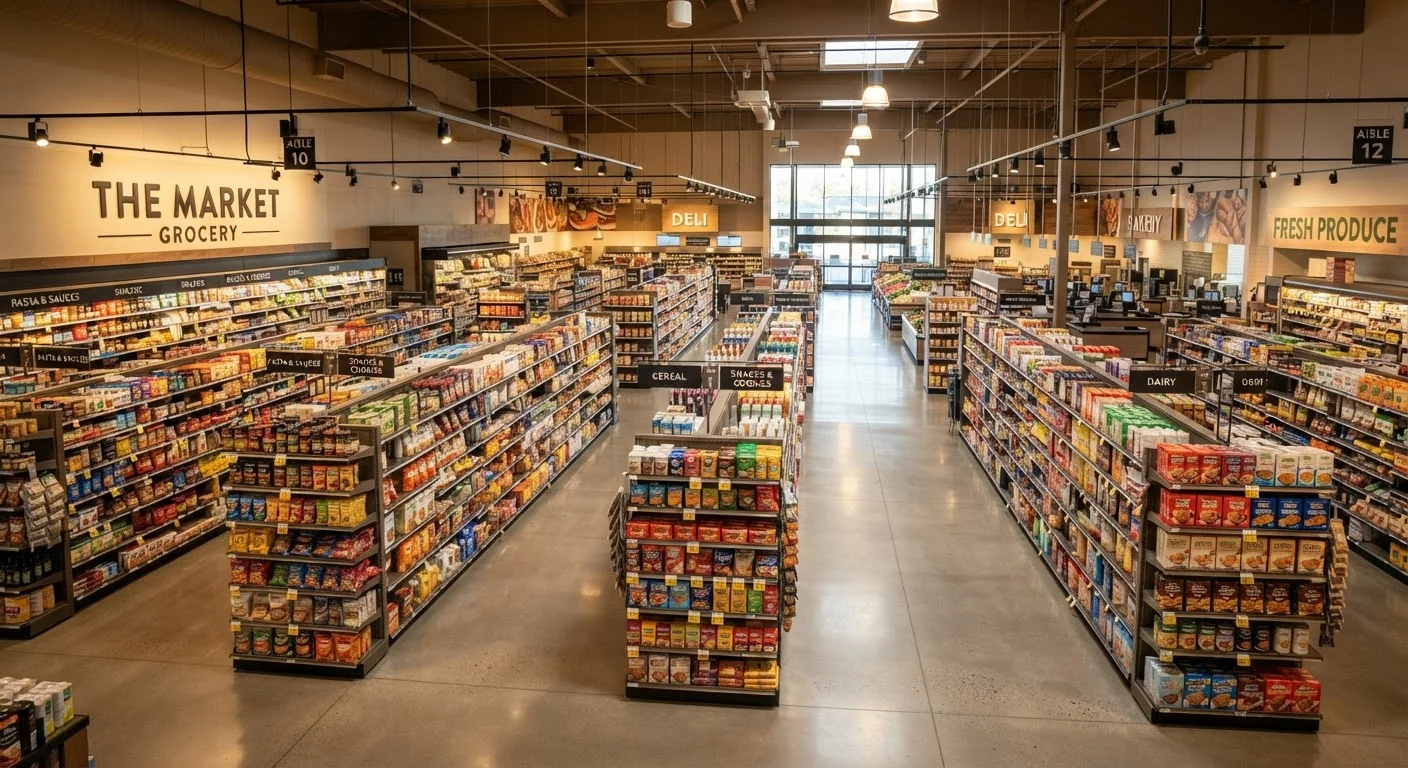
The Store Is Telling You Where to Go
Walk into almost any large grocery store in the United States and the experience follows a familiar pattern: fresh produce and flowers greet you at the entrance, prepared foods tempt you midway through, and the milk is somewhere near the very back wall. None of this is accidental.
Grocery store layouts are the result of decades of research into how people move through physical spaces, what catches their attention, and what triggers unplanned purchases. Understanding these patterns doesn't require a degree in consumer psychology — it just requires knowing what to look for.
For families trying to manage a food budget, recognizing these cues is practical knowledge. It won't make you immune to them, but it gives you a fighting chance to shop on your own terms. For a deeper look at the habits that quietly drain grocery budgets, see why families overspend on groceries.
~70%
Of grocery purchases made on impulse
Research published in consumer behavior journals consistently estimates that a large share of grocery store purchases are unplanned, with in-store environment cited as a primary driver.
2–3x
Higher sales lift for eye-level products
Retail merchandising studies indicate products placed at eye level can outsell the same items placed on lower shelves by a factor of two to three, depending on category.
Key Layout Tactics and What They're Designed to Do
Staples at the Back
Milk, eggs, and bread — items that appear on almost every shopping list — are routinely placed at the far end of the store. The logic is simple: to reach them, you walk past everything else. The more products in your field of vision, the more likely you are to add something unplanned to your cart.
Eye-Level = High-Margin
Shelf space isn't allocated randomly. The most visible position — roughly between waist and shoulder height — is where retailers place products they most want you to buy. These are often higher-margin items, and in many cases, manufacturers pay significant placement fees to land there. Lower shelves frequently hold store-brand or value alternatives that are equally functional but less visually promoted.
End-Cap Illusions
The displays at the end of each aisle, called end-caps, feel like deal zones. They look like promotional displays. Often, they aren't — the products may be at full price, simply placed in a more prominent position. The visual cue of a featured display is enough to trigger a perception of value in many shoppers.
Checkout Lane Temptations
The checkout area is deliberately stocked with small, low-cost, high-impulse items: snacks, batteries, magazines, and candy. You're stationary, often a bit fatigued from shopping, and the items are priced low enough that the internal justification is easy. These items carry strong margins relative to their size.
The Bottom Shelf Is Worth a Look
For pantry staples — canned goods, pasta, dried beans, cooking oils — make a habit of scanning the bottom shelf before selecting a product. Store brands and value alternatives are frequently positioned there and often offer comparable quality at a lower unit price. It takes an extra five seconds and can add up meaningfully over a month of shopping.
Shopping More Deliberately Without Overhauling Your Routine
The goal here isn't to turn every grocery run into a combative exercise. Most of these design choices are legal, standard industry practice, and widely understood by retailers and consumer advocates alike. What matters is that you can make more intentional choices once you recognize the architecture around them.
A few approaches that hold up in practice:
- Use a list and a loose route. Decide before you enter what you need and roughly which sections of the store you actually need to visit. You don't have to walk every aisle.
- Check the bottom shelves. For shelf-stable goods like canned goods, cereals, and cleaning products, the lower shelves frequently hold better-value options.
- Verify end-cap prices. If something on an end-cap looks appealing, walk into the corresponding aisle and compare. The unit price tag — the small per-ounce or per-unit figure on the shelf label — is your most reliable comparison tool. More on that in unit pricing decoded.
- Shop the perimeter first. Fresh produce, proteins, and dairy are typically around the store's edges. Filling your cart there first leaves less room — literally and mentally — for impulse additions from interior aisles.
These Tactics Are Legal and Widespread
Shelf placement, store layout, and atmospheric design are standard retail practice and fully legal. Consumer protection concerns arise when pricing is deceptive (such as a false 'sale' price), not simply because a store is designed to encourage browsing. The goal of understanding these tactics is informed decision-making, not assuming bad intent from every retailer.
For a broader look at retail tactics beyond the grocery store, retail tricks families encounter most often covers the patterns worth knowing across different shopping environments.
Frequently Asked Questions
Dairy is placed at the back because it's one of the most frequently purchased items. By positioning it far from the entrance, stores ensure shoppers pass many other products on the way there and back, increasing the chance of unplanned purchases.
No — end-cap displays (the shelves at the end of each aisle) often feature products at regular price. The prominent placement creates a psychological impression of a special deal, but checking the unit price tag is the only reliable way to confirm real value.
Eye-level shelves — roughly between waist and shoulder height — are the most visible and most purchased positions. Retailers typically charge manufacturers a premium ('slotting fees') for these spots, so higher-margin products often land there, not necessarily the best-value options.
Shopping with a written list and sticking to it is the most consistently effective approach. Avoiding the store when hungry, using a basket instead of a cart for short trips, and shopping the perimeter for staples can all help reduce unplanned spending.
Yes — research in retail atmospherics shows that bakery aromas near store entrances and slower background music can extend the time shoppers spend in the store. Longer dwell time is consistently associated with higher spending.
The content provided on our blog site traverses numerous categories, offering readers valuable and practical information. Readers can use the editorial team’s research and data to gain more insights into their topics of interest. However, they are requested not to treat the articles as conclusive. The website team cannot be held responsible for differences in data or inaccuracies found across other platforms. Please also note that the site might also miss out on various schemes and offers available that the readers may find more beneficial than the ones we cover.