

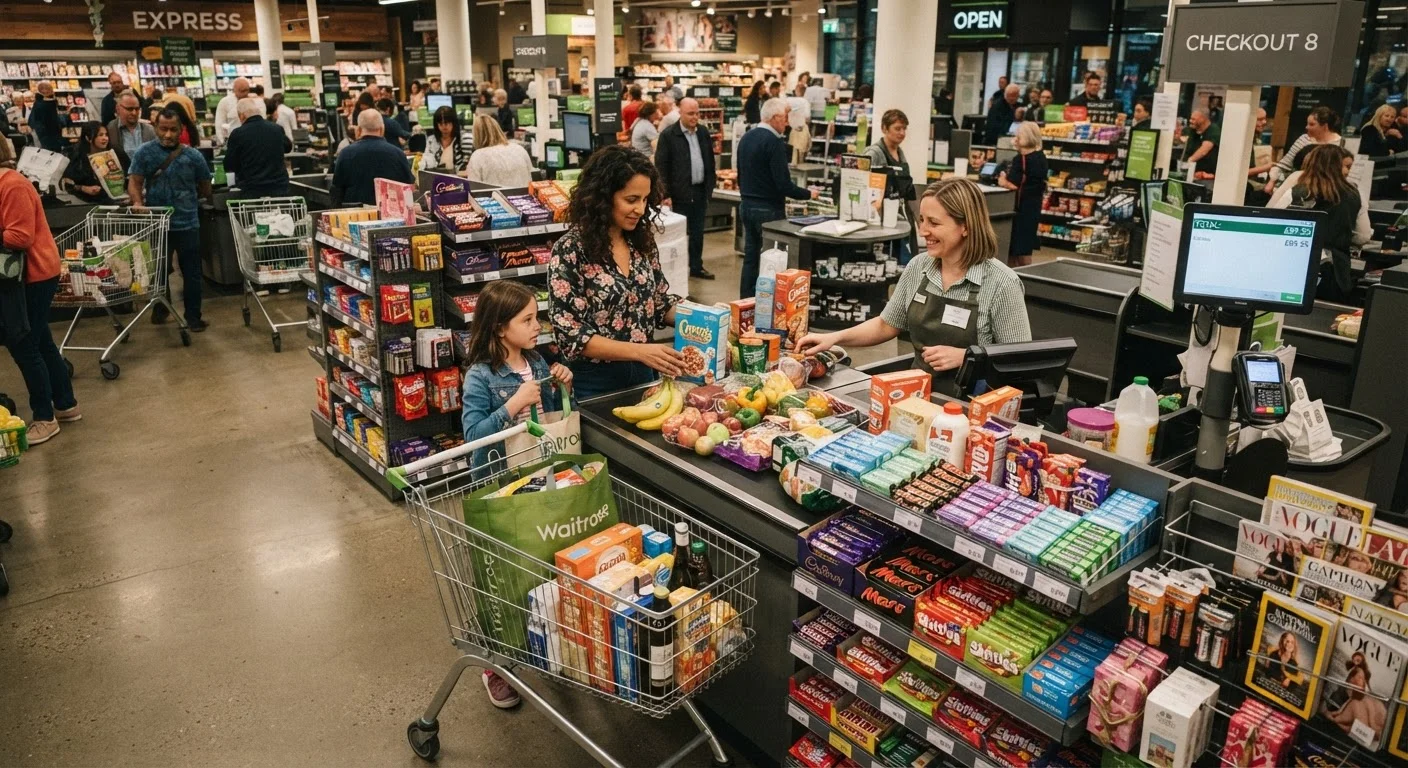
How Checkout Zones Are Built to Work Against You
Whether you're queuing at a big-box store or reviewing your cart before hitting "Place Order," you're inside one of retail's most carefully engineered environments. The products placed at physical checkout lanes, the "Customers also bought" rows online, and the last-step upsell pop-ups all share a common design goal: catch you when your willpower is lowest and your focus is elsewhere.
Decision fatigue is real. Research in consumer psychology consistently shows that the quality of our choices declines after we've made many in a row. A full grocery run means dozens of micro-decisions before you ever reach the register. Retailers know this, and the checkout zone is positioned to take advantage of it. Understanding that dynamic isn't pessimistic — it's the first practical step toward spending more intentionally. For a broader look at how these tactics show up across an entire shopping trip, see how common retail tricks work.
~$5,400
Estimated annual U.S. household impulse spending
Consumer research surveys have consistently found that American adults report spending thousands annually on unplanned purchases, with checkout-zone items among the most frequently cited categories.
Up to 70%
Share of purchase decisions made in-store
Industry research from the Point of Purchase Advertising International association has long found that a substantial majority of retail purchase decisions occur at or near the point of sale rather than before entering the store.
Common Mistakes Families Make at Checkout — and How to Avoid Them
The following mistakes are not signs of carelessness. They're predictable responses to a system designed to produce exactly these outcomes. Recognizing each pattern is what lets you opt out.
Treating checkout items as automatically affordable because they're small.
Why it happens: Low unit prices — $2, $4, $6 — don't trigger the same mental "stop and think" response as larger purchases. The cumulative effect across a month of shopping trips is invisible in the moment.
Accepting urgency framing at face value — phrases like "while supplies last" or "today only" online.
Why it happens: Scarcity and time pressure are among the most reliably effective psychological triggers in retail. Even shoppers who intellectually recognize the tactic often still feel pulled by it.
Adding checkout-suggested items simply because they seem related to what's already in the cart.
Why it happens: "Customers also bought" and cashier add-on scripts feel like personalized recommendations. They create the impression that someone with knowledge is advising you — when the prompt is automated or scripted for everyone.
Shopping hungry, rushed, or with multiple distracted family members at checkout.
Why it happens: These conditions maximize decision fatigue and minimize the mental bandwidth available to evaluate unplanned purchases. Retailers have no reason to discourage them.
Confusing a checkout discount with a good deal on something you needed.
Why it happens: "30% off" at checkout feels like savings, but savings only occur when the item was already on your list at its regular price. A discounted item you wouldn't otherwise buy is just spending less than you could have spent, not saving.
Online Checkouts Use the Same Playbook
Digital checkout flows are engineered with the same principles as physical lanes: last-step add-ons, timed offers, and "frequently bought together" prompts all appear when your cart is nearly complete and your attention is on finishing. The absence of a physical queue doesn't reduce the pressure — for many shoppers, the one-click simplicity of online checkout makes unplanned additions even easier to rationalize. Apply the same list-based discipline you would in a store.
Building a Checkout Habit That Sticks
One-time awareness isn't enough — checkout pressure resets every shopping trip. The families who consistently hold the line tend to share a few low-effort habits.
- Finish your list before you shop, not during. A written or app-based list creates a psychological contract with your pre-shopping self, who wasn't hungry or tired.
- Use a cart-review pause online. Before checkout, scroll your cart once and remove anything added since you opened the page that isn't on your original list.
- Assign a "checkout budget" if you shop with kids. A fixed small amount removes negotiation and teaches decision-making without shame or conflict.
- Treat upsell prompts as questions, not offers. When a cashier or pop-up suggests an add-on, mentally ask: "Was I going to buy this an hour ago?" If not, decline by default.
These habits reinforce each other over time. For a fuller framework on pre-purchase decision-making, a pre-purchase checklist can help you catch hidden costs before you commit. And if checkout-line upsells are a recurring pressure point, understanding how last-minute upsells are designed gives useful context for evaluating them in the moment.
Impulse spending at checkout isn't a character flaw — it's a designed outcome. Pushing back effectively just requires knowing what's happening and having a simple rule ready before the moment arrives. For families looking to build on these habits more broadly, smarter consumer habits for cutting through retail noise offers practical next steps.
Subscription Add-Ons Deserve Extra Scrutiny
Some checkout upsells — particularly online — are not one-time purchases but recurring subscriptions billed monthly. These are often presented in small print alongside a primary item. Before accepting any checkout add-on, confirm whether it involves ongoing charges. Canceling forgotten subscriptions is a documented source of household budget leakage that can persist for months before being noticed.
The content provided on our blog site traverses numerous categories, offering readers valuable and practical information. Readers can use the editorial team’s research and data to gain more insights into their topics of interest. However, they are requested not to treat the articles as conclusive. The website team cannot be held responsible for differences in data or inaccuracies found across other platforms. Please also note that the site might also miss out on various schemes and offers available that the readers may find more beneficial than the ones we cover.