

What Stacking Actually Means
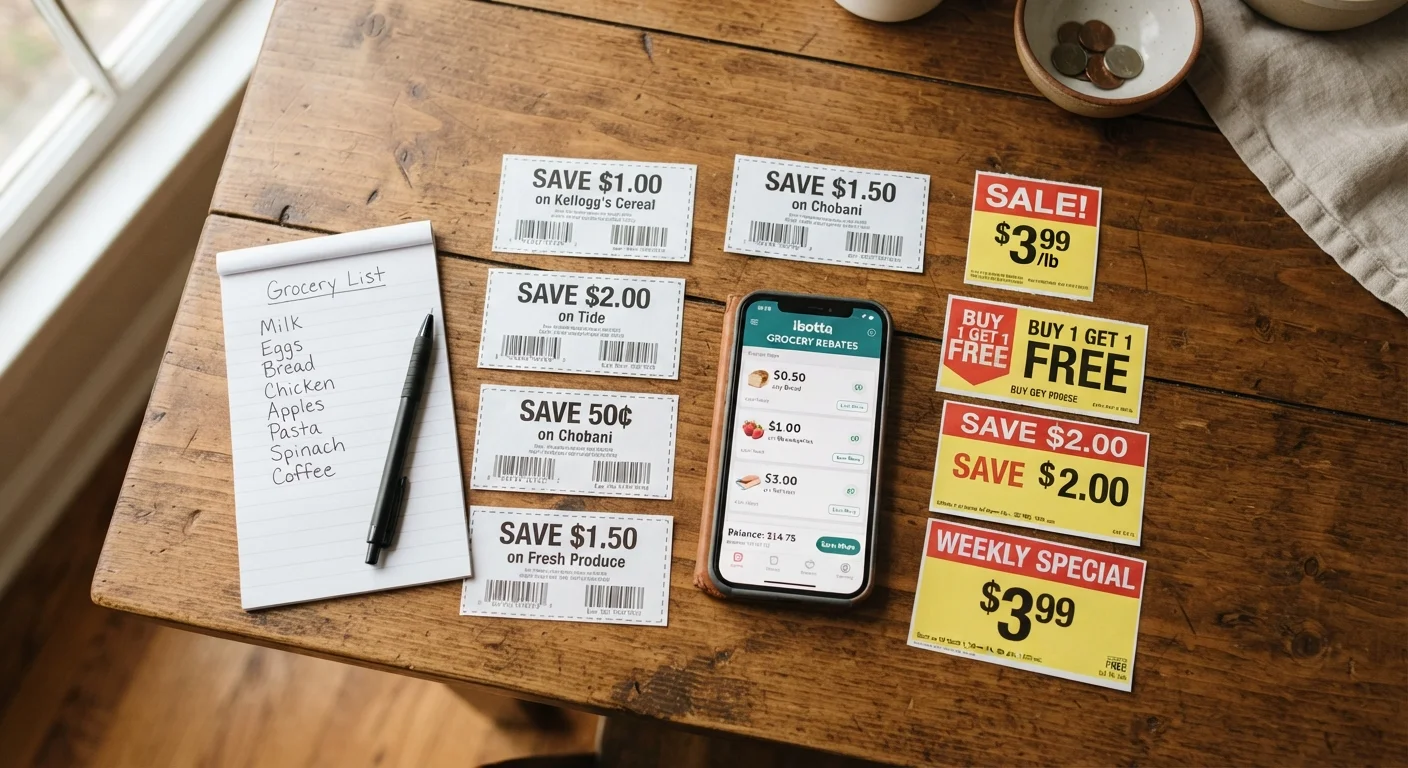
"Stacking" is shorthand for applying more than one type of discount to a single purchase at the same time. A typical stack might look like this: a grocery item is already marked down by the store, you apply a manufacturer's coupon at checkout, and you submit a mail-in or app-based rebate afterward. If all three are permitted simultaneously, the total reduction is cumulative. If only one or two are allowed, the rest are wasted prep time — or worse, the transaction is voided at the register.
The key distinction most shoppers miss is the difference between a manufacturer coupon (issued by the brand, reimbursed through a clearinghouse) and a store coupon (issued and funded by the retailer). Stores almost always permit a manufacturer coupon to stack on top of a sale price, because the cost of that coupon is borne by the brand, not the store. Store coupons layered with sale prices are more retailer-specific and sometimes restricted. Understanding how retail markdowns work helps you recognize when a "sale" is a genuine price reduction versus a repositioned regular price.
Stacking Works Best on Planned Purchases
The families who get the most consistent value from stacking are those who build their shopping list first, then look for discounts that apply — not the other way around. Browsing promotions before you have a list reverses the logic and makes impulse spending more likely. Treat discounts as a reward for items you already need, not a reason to buy something new.
Before You Stack: What to Check First
Preparation happens at home, not in the checkout line. Gather the following information before you commit to any multi-discount strategy.
What you will need
Identify the item's current sale status
Check the store's weekly ad or app to confirm whether the product is genuinely reduced. Note the sale price, the regular shelf price, and the sale end date. A discount that appears during a promotion week may reflect a true markdown or simply a rotational pricing strategy — stores cycle products through promotional slots on predictable schedules.
Confirm the store's stacking policy in writing
Search for the retailer's coupon policy online before you shop. Look specifically for language about combining manufacturer and store coupons, digital versus paper coupon rules, and any exclusions for items already on sale. Screenshot or print the relevant section. Policies change, and having documentation protects you if there is a register dispute.
Match your coupons to eligible products precisely
Manufacturer coupons specify exact product sizes, varieties, or UPC codes. Applying a coupon to a slightly different size or flavor — even unintentionally — will cause a register error or coupon rejection. Read the coupon terms line by line before you shop, not while your cart is being rung up.
Note every rebate deadline and submission method
If a rebate is part of your stack, record the submission deadline, the required proof of purchase (receipt, UPC barcode, or both), and whether submission is digital or physical. Set a calendar reminder for at least one week before the deadline — not on the deadline itself — to give yourself recovery time if something goes wrong.
Calculate the honest net price before checkout
Add up every element: sale price minus coupon value, minus any expected rebate amount. Then ask whether that net price is genuinely worthwhile for an item you intended to purchase anyway. If the answer is yes, proceed. If you're only buying because the stacked number looks attractive, the promotional structure has done its job — and your budget absorbs the cost.
Submit your rebate and document everything
Immediately after purchase, photograph your receipt and any required packaging. Submit the rebate through the specified channel — app, website, or mail — and save the confirmation number or tracking information. If using physical mail, send materials via a method that provides delivery confirmation. Rebate processors occasionally lose submissions; documentation is your only recourse.
Common Pitfalls That Make Stacking Backfire
The most frequent mistake is buying something solely because the stacked discount makes it look attractive. If the item wasn't already on your list, any "savings" is actually spending. Retailers understand this, which is why promotional timing is deliberate — a subject explored further in our piece on retail tactics families encounter most often.
"Extreme Couponing" Has Real Limits
Highly publicized examples of dramatic coupon stacking often involve store policies, product quantities, or promotional conditions that are no longer available or were regionally specific. Many retailers have updated their policies precisely to prevent transaction patterns that resulted in near-zero or negative purchase totals. Approach any strategy you see described online by verifying current store policy directly — conditions change frequently and without notice.
Rebates deserve special caution. They require you to act after the purchase — mailing a receipt or submitting through an app — within a specific window. If you miss the deadline, the rebate is forfeit and your actual price was whatever you paid at the register. Always read the rebate fine print before factoring it into your decision.
Cashback apps and reward cards add another layer some families consider stacking. These can genuinely add value, but only when they don't shift your spending patterns to earn them. Our editorial on cashback programs and reward points addresses this tradeoff directly. Similarly, loyalty programs often come with data-sharing and expiration conditions worth knowing.
A Rebate Is Not a Discount Until You Receive It
Rebates are promises, not guaranteed savings. Until you have completed the submission process and the payment has arrived — whether as a check, prepaid card, or account credit — your real price is what you paid at the register. Budget accordingly. If a purchase only makes financial sense after the rebate is applied, you are taking on the risk that the rebate process fails, is delayed, or is denied.
The content provided on our blog site traverses numerous categories, offering readers valuable and practical information. Readers can use the editorial team’s research and data to gain more insights into their topics of interest. However, they are requested not to treat the articles as conclusive. The website team cannot be held responsible for differences in data or inaccuracies found across other platforms. Please also note that the site might also miss out on various schemes and offers available that the readers may find more beneficial than the ones we cover.