

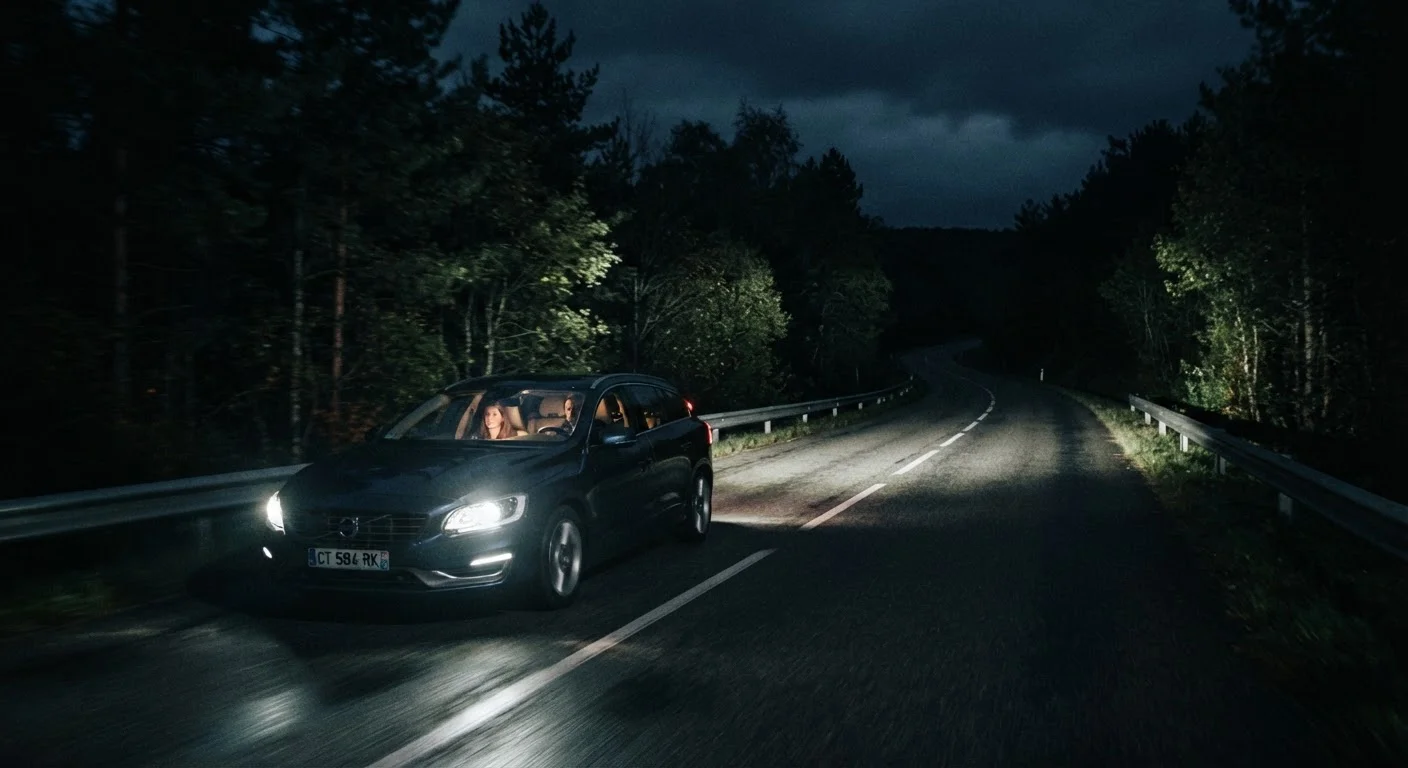
Why Night Driving Is Genuinely More Dangerous
It's not just that the road is darker. Driving after sunset involves a cascade of perceptual changes that affect nearly every judgment call you make behind the wheel: how far ahead you can see, how quickly you detect movement, and how accurately you judge the speed of other vehicles.
Human vision is optimized for daylight. The eye's cone cells - which handle color and fine detail - need substantial light to function well. In low-light conditions, the rod cells take over. Rods are more sensitive to dim light, but they don't distinguish color well and they're clustered away from the center of your visual field. The practical effect: hazard detection slows down, and peripheral vision becomes less reliable for identifying what something actually is.
Night Driving Risk by the Numbers
According to the National Safety Council, traffic fatality rates per mile driven are roughly three times higher at night than during daytime. This elevated risk persists even when controlling for alcohol involvement, suggesting that darkness itself - not just impaired driving - is a significant factor. Rural roads without streetlights are disproportionately represented in nighttime crash data.
This matters particularly for pedestrians and cyclists, who often wear dark clothing and may not be carrying lights. At 40 mph, a driver may have less than two seconds to detect and react to a pedestrian at the edge of a low-beam's reach. That's a narrow margin, and it narrows further at higher speeds. See our guide to stopping distances for a deeper look at how speed and reaction time interact.
Best Practices for Driving After Dark
Adjusting to nighttime conditions isn't complicated, but it does require deliberate habits rather than just defaulting to how you drive during the day. The following practices address the most common failure points: speed, visibility equipment, eye adaptation, and fatigue.
Reduce your speed to match your actual sight distance, not the posted limit alone.
Standard low-beam headlights illuminate approximately 160 feet ahead. At 60 mph, a vehicle travels roughly 88 feet per second, meaning your stopping distance can easily exceed what your headlights reveal. Slowing down gives your eyes and brakes the time they actually need.
Use high beams on open roads and switch down promptly for oncoming traffic.
High beams nearly double your forward visibility on dark roads, but they blind oncoming drivers and can cause accidents if left on. Developing the habit of switching - high beams on, dip early, restore after passing - is one of the most impactful things you can do for nighttime safety.
Clean your headlight lenses and windshield regularly, inside and out.
Oxidized plastic headlight covers can reduce light output dramatically. A film of grease or dust on the inside of your windshield scatters oncoming headlights and streetlights into blinding halos. Both problems are easy to fix and rarely top of mind until they're causing trouble.
Dim your dashboard and avoid interior lights while driving at night.
Bright instrument clusters and overhead lights constrict your pupils, reducing your ability to see outside the vehicle. Most modern cars allow you to dim the instrument panel; using this feature helps your eyes adapt to the dark environment outside.
Watch for eye fatigue and plan breaks on longer nighttime drives.
Your eyes work harder at night, straining to gather information in low contrast. Combined with the body's natural tendency toward drowsiness after dark, this creates a compounding risk. Fatigue behind the wheel impairs reaction time in ways comparable to alcohol impairment - and it can sneak up quickly.
For families driving in variable conditions, these habits pair naturally with broader defensive driving principles. The defensive driving mindset - anticipating rather than reacting - becomes especially valuable when your sight distance is cut in half.
Start Tonight: Simple Steps With Real Impact
You don't need to overhaul your driving routine to meaningfully improve your nighttime safety. A few targeted habits, done consistently, account for the majority of preventable nighttime risk. Night driving is also closely tied to other challenging conditions - slippery surfaces, construction zones, and bad weather can all be worse after dark. Our guide on adjusting for changing road surfaces covers how to layer those skills together.
This article provides general driver education information and is not a substitute for professional instruction or local traffic law. Always follow the regulations and speed limits in your area.
The content provided on our blog site traverses numerous categories, offering readers valuable and practical information. Readers can use the editorial team’s research and data to gain more insights into their topics of interest. However, they are requested not to treat the articles as conclusive. The website team cannot be held responsible for differences in data or inaccuracies found across other platforms. Please also note that the site might also miss out on various schemes and offers available that the readers may find more beneficial than the ones we cover.