

Why Your Snack Strategy Is Part of Your Road Trip Plan
Nobody plans to eat three bags of gas station chips and a fistful of gummy worms by noon — it just happens when you're unprepared and hungry children are asking questions. Smart snacking on a road trip isn't about being a nutrition purist; it's about keeping energy steady, moods manageable, and unplanned stops to a minimum.
Food is genuinely part of the logistics of a long drive. If you're already thinking through routes and packing — the complete family road trip planning guide covers this in full — then snacks deserve a slot on the prep list alongside phone chargers and activity bags. A little planning at home translates directly to fewer frantic detours and a calmer car.
Build a Snack Station, Not a Snack Hunt
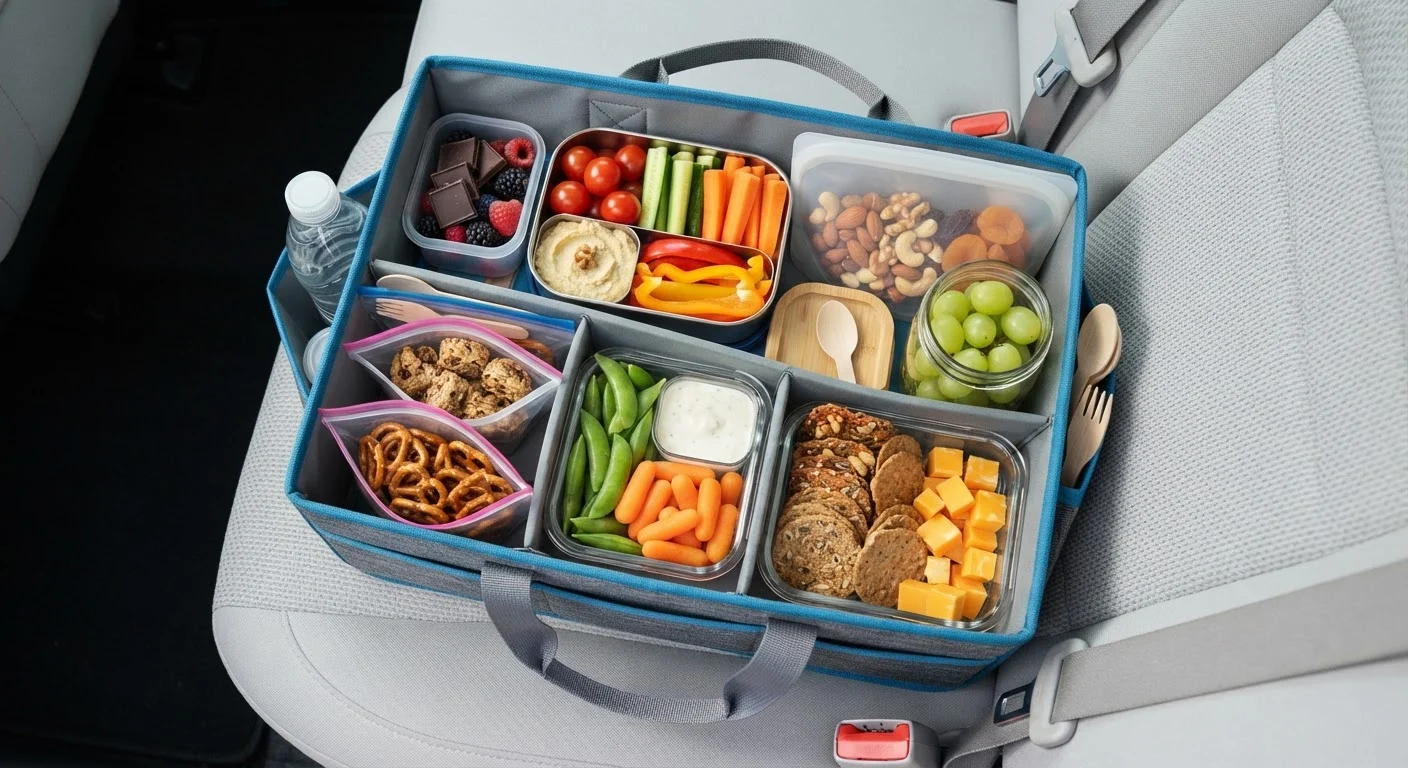
Designate one bag or small bin as the official snack station and keep it within reach of a backseat passenger — not buried in the trunk. Include a small stash of napkins or a pack of wipes in the same spot. When kids know exactly where snacks live, you field far fewer 'can I have a snack?' questions while you're merging onto the interstate.
The snacks below are selected because they travel well in real car conditions: they don't melt into seats, they don't require refrigeration or utensils where noted, and kids will actually eat them.
Seven Snacks That Actually Survive the Drive
Pre-portioned trail mix and nut blends
Trail mix is a road trip classic for good reason: it's calorie-dense, shelf-stable, and infinitely customizable. Mix together nuts, seeds, dried fruit, and a handful of something fun (mini pretzels, dark chocolate chips) before you leave home. Divide it into small zip-lock bags or reusable snack cups — one per person, per leg of the trip.
Pre-portioning does double duty: it prevents the bottomless-bag situation where everyone's eaten all the M&Ms before you've cleared the suburbs, and it gives kids a sense of ownership over their snack. Avoid heavy salt loads, especially on hot days when hydration is already a concern.
Pre-portioning trail mix prevents the 'all the good stuff is gone' meltdown before mile 50.
Cheese sticks and cubed hard cheese
Individually wrapped string cheese is one of the most underrated road trip snacks going. It's tidy, protein-rich, and kids can peel it themselves — which buys you a solid three minutes of quiet. Cubed hard cheeses like cheddar or gouda also hold up well in a cooler for a full day of driving.
Keep cheese in a small insulated bag or dedicated cooler section rather than loose in a warm car. Soft cheeses don't travel as well and can spoil quickly without consistent refrigeration.
String cheese is tidy, protein-packed, and keeps little hands busy — a rare triple win.
Sliced vegetables with individual dip cups
Baby carrots, celery sticks, cucumber rounds, and bell pepper strips travel beautifully and hold up without refrigeration for a few hours in a cool car. Pair them with single-serve hummus cups or small containers of ranch dressing to make the whole thing feel like a treat rather than a health mandate.
Pack veggies in a rigid container rather than a flimsy bag — crushed vegetables are nobody's idea of a good snack. Keep the dip cups in a small cooler or insulated lunch bag alongside the cheese for easy access.
Single-serve dip cups transform plain vegetables into something kids will actually reach for.
Whole grain crackers and nut butter packets
Single-serve nut butter squeeze packets (almond, peanut, or sunflower seed for nut-free families) paired with sturdy whole grain crackers make a surprisingly satisfying snack that straddles the line between salty and filling. Unlike a jar of peanut butter with a knife, there's no utensil required and almost no mess — the squeeze packet dispenses directly onto the cracker.
Store crackers in a rigid container to prevent crumbling. A zip-lock bag of crackers left loose in a backpack produces nothing but expensive dust by lunchtime.
Squeeze-packet nut butter means protein on the go with zero utensils and almost zero mess.
Fresh and dried fruit combinations
Grapes, apple slices (pre-treated with a little lemon juice to prevent browning), and clementines are excellent fresh options that hold up for a day of driving. For longer stretches, dried mango, apricots, or raisins offer concentrated sweetness without refrigeration concerns.
A mix of fresh and dried keeps things interesting across multiple days. Fresh fruit is best consumed on day one; lean on dried options for day two and beyond when the cooler gets less reliable. Avoid overly juicy fruits that can leak and create sticky chaos on car seats.
Fresh fruit on day one, dried fruit on day two — a simple rotation that keeps snacks interesting.
Hard-boiled eggs
Hard-boiled eggs are a protein powerhouse that travel well for several hours in a cooler. Peel them at home and store them in a sealed container so there's no shell-cracking mess in the backseat. Sprinkle a little salt in a tiny container or use a few packets saved from a fast food stop.
Eggs are best consumed within two hours of leaving refrigeration in warm weather, so time them for earlier in the drive or keep them firmly in an insulated cooler. They're particularly useful for managing hunger between big meal stops without resorting to a full fast food detour.
Pre-peeled hard-boiled eggs are a clean, protein-rich fix that actually holds hunger at bay.
Popcorn in reusable containers
Air-popped or lightly seasoned popcorn is a high-volume, low-calorie snack that feels indulgent without derailing anyone's energy. Pop a large batch at home, let it cool completely, and store it in sealed bags or a large reusable container. It's light enough that kids can self-serve without making a disaster.
Avoid heavily buttered varieties in the car — the grease transfers to everything. Lightly salted, kettle-style, or simply seasoned with a little garlic powder or cinnamon sugar are crowd-pleasers that travel cleanly.
A big container of homemade popcorn feels like a treat and barely makes a crumb worth worrying about.
Cooler Placement Matters
A well-packed cooler loses its chill faster when it's buried under luggage with no airflow, or when it's in the hottest part of the trunk. Keep your snack cooler in a shaded spot in the vehicle when possible, and minimize how often you open it. A dedicated small cooler just for snacks — separate from drinks — stays colder longer because it's opened less frequently.
Putting It All Together Before You Leave
The single biggest upgrade you can make to road trip snacking is doing the work at home, not at a convenience store. Spend 20–30 minutes the evening before departure portioning snacks into containers, checking your cooler, and building your snack station. It's the kind of detail that belongs on your pre-departure checklist — the family road trip readiness checklist is a good place to add it.
Keep portions realistic for each child's age and appetite. Older kids can manage mixed snack bags with multiple items; younger kids often do better with one thing at a time to reduce overwhelm (and crumbs). When snacks run low on multi-day trips, a grocery store stop is almost always faster and more cost-effective than a rest stop shop — something worth keeping in mind as part of your broader strategy for feeding a family on vacation without blowing your budget.
Hydration deserves the same attention as food. Pack more water than you think you need — it's the one thing families consistently underestimate on long drives. Sugary drinks accelerate thirst rather than quench it and contribute to the energy spikes and crashes that make the backseat feel very small, very fast.
The content provided on our blog site traverses numerous categories, offering readers valuable and practical information. Readers can use the editorial team’s research and data to gain more insights into their topics of interest. However, they are requested not to treat the articles as conclusive. The website team cannot be held responsible for differences in data or inaccuracies found across other platforms. Please also note that the site might also miss out on various schemes and offers available that the readers may find more beneficial than the ones we cover.