

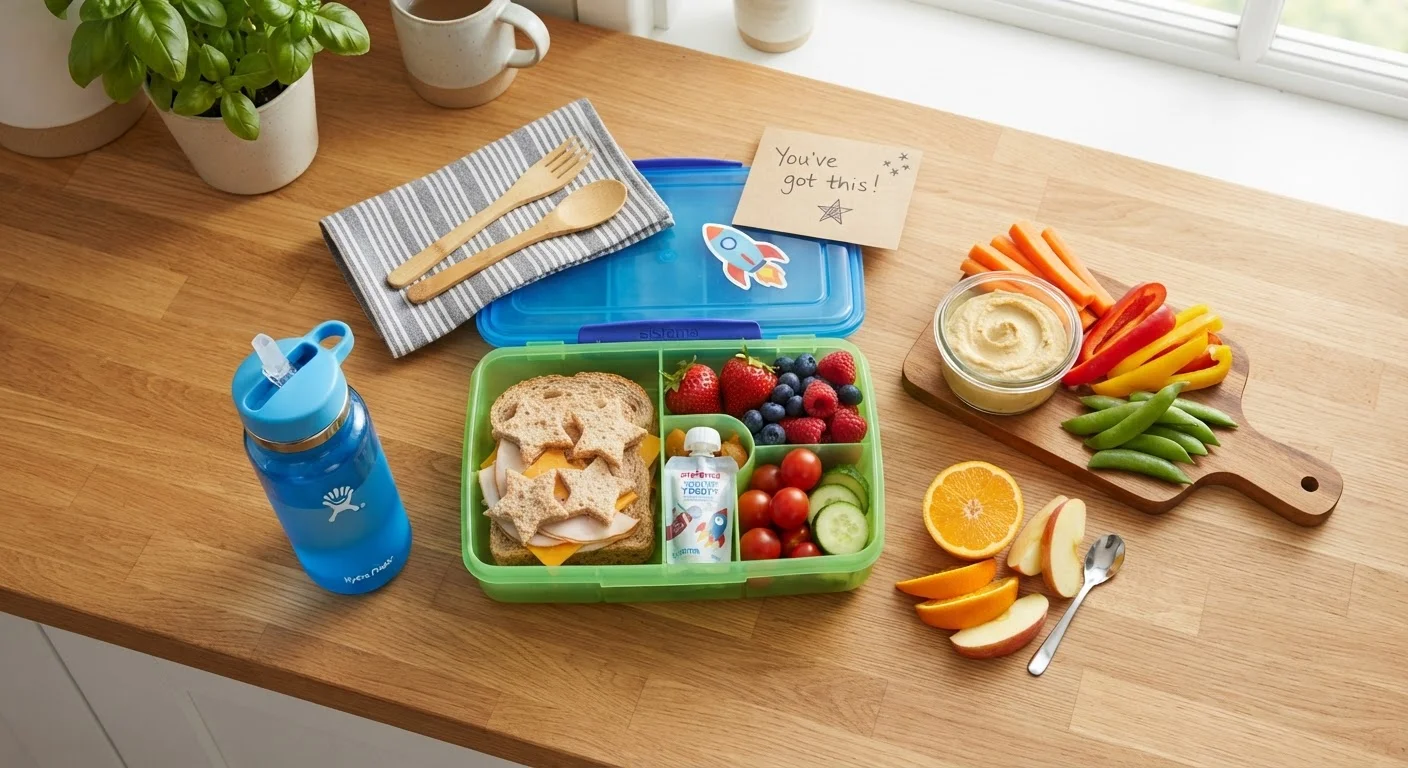
Summary
22 items · 20–35 minutes per week to plan and prep
Why a Weekly Lunch Checklist Pays Off
Packing school lunches every morning without a plan is one of the quieter ways families lose ground on nutrition. When you're rushing to get kids out the door, it's easy to reach for whatever is convenient rather than what's balanced. A short weekly review — done on Sunday evening or Monday morning — changes that dynamic entirely.
This checklist is designed for busy households. It covers nutrition balance, food safety, practical prep, and a few easy ways to get kids invested in what they eat. For a deeper look at building lasting family eating habits, see our guide to nutrition habits that actually stick.
Before diving into the checklist, gather your tools.
Insulated lunch bag or box
Maintains safe food temperature from home to school, essential for any perishable items.
Reusable ice pack
Keeps perishable foods at or below 40°F to prevent bacterial growth.
Leak-proof containers in varied sizes
Separate compartments prevent foods from mixing and make balanced portioning easier.
Insulated water bottle
Encourages adequate hydration throughout the school day without added sugars.
Weekly meal-plan notepad or app
Helps you map out five days of lunches before shopping so nothing is missing mid-week.
The Weekly Packed Lunch Checklist
Work through these groups once per week to set yourself up for five smooth mornings. Many items take only seconds to verify once you've built the habit.
Nutrition Balance
Food Safety
Weekly Planning and Prep
Kid Buy-In and Variety
Nut and Allergen Policies Vary by School
Many schools have strict nut-free or allergen-free zones to protect students with severe allergies. Always confirm your child's school policy before packing nut butters, tree nuts, sesame, or other common allergens. When in doubt, choose seed-based alternatives such as sunflower seed butter and check labels carefully for cross-contact warnings.
If you want to extend this habit beyond lunches, the Saturday morning meal-prep routine pairs well with this checklist — batch-cooking on the weekend can supply ready-to-pack proteins and sides all week long.
Unsure how to evaluate packaged snack options? Our plain-language guide to reading food labels helps parents decode nutrition panels and ingredient lists quickly.
Making It Stick: Tips for Real Households
Even the best checklist falls apart without a few practical anchors. Consider these approaches:
- Rotate proteins weekly. Vary between eggs, beans, cheese, nut or seed butters (check school policies first), and leftover dinner proteins to prevent boredom.
- Let kids choose one item. Research consistently suggests children eat more of what they had a hand in selecting. Offer two or three options for one slot — a fruit, a crunchy vegetable, or a dip — and let them pick.
- Prep in batches. Wash and cut vegetables, portion crackers, or hard-boil eggs on the weekend so weekday assembly takes under five minutes.
- Check the lunch box when it comes home. Uneaten food tells you what's not working before the pattern becomes entrenched. See where families quietly lose the nutrition plot for subtle signs that lunchtime habits may need adjusting.
Perishable Food Safety Is Non-Negotiable
According to the USDA, perishable foods left in the temperature danger zone (40°F–140°F) for more than two hours should be discarded — not saved or sent again the next day. If your child's school does not have refrigerated storage, a quality insulated bag with a frozen ice pack is the single most important food-safety tool you can use. Never assume a lunchroom counter or classroom shelf is cold enough.
This article provides general nutrition information for healthy school-age children and is not a substitute for advice from a qualified healthcare professional or registered dietitian. Families managing food allergies, intolerances, or chronic health conditions should consult a qualified provider before making dietary changes.
The content provided on our blog site traverses numerous categories, offering readers valuable and practical information. Readers can use the editorial team’s research and data to gain more insights into their topics of interest. However, they are requested not to treat the articles as conclusive. The website team cannot be held responsible for differences in data or inaccuracies found across other platforms. Please also note that the site might also miss out on various schemes and offers available that the readers may find more beneficial than the ones we cover.