

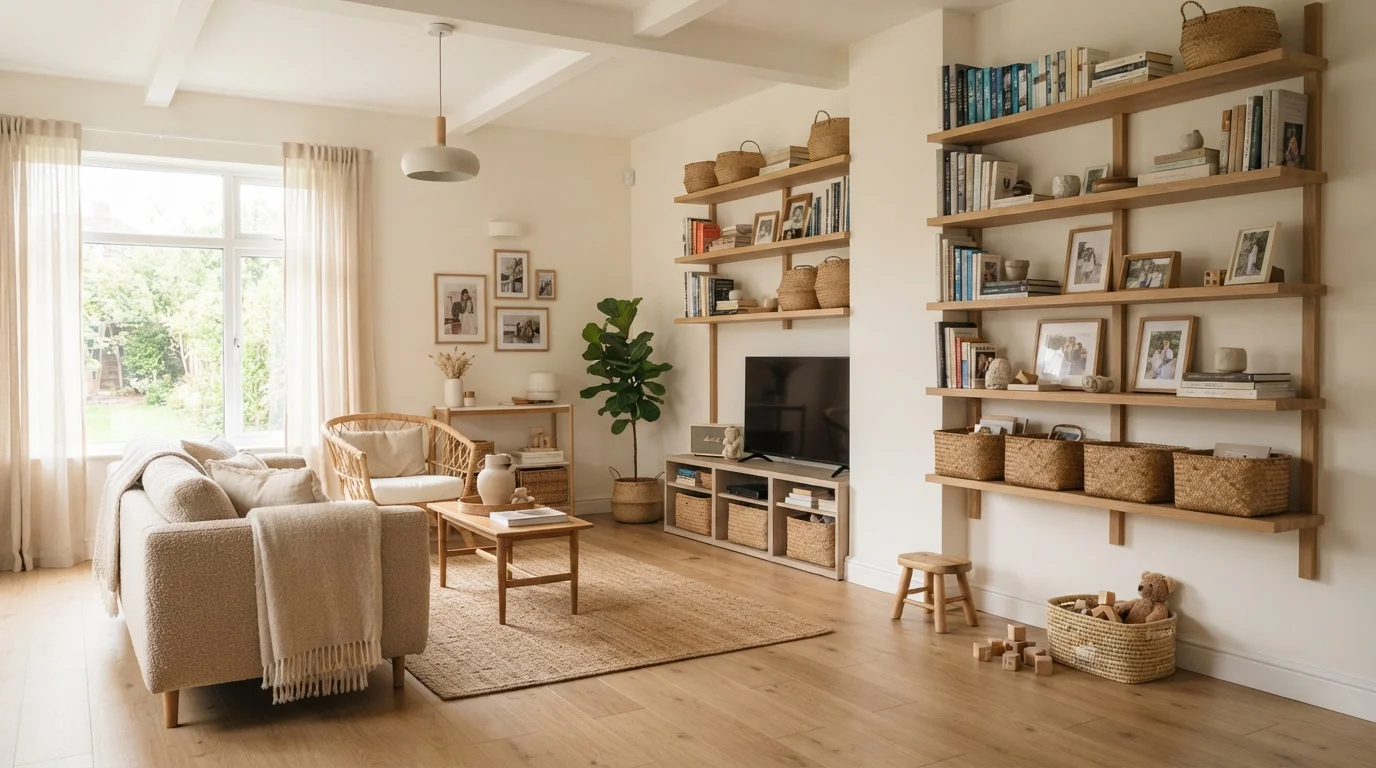
Option A
Vertical Storage
The upward-thinking approach that reclaims wall real estate.
Best for: Homes with limited square footage where floor space is precious and walls are underused.
Option B
Floor Space Storage
The familiar, ground-level approach most families default to.
Best for: Households with ample square footage, young children, or accessibility needs that make low-level access essential.
Why the Default Is Usually Floor Level
Most families organize their homes the way furniture stores display it — everything sitting on the floor, spread across the room. It's intuitive: items are easy to reach, cabinets feel familiar, and floor-level storage doesn't require drilling into walls. But this default comes with a real cost. As belongings accumulate, floor-level storage eats up the walking and living space families actually need.
The result is rooms that feel smaller, pathways that feel cluttered, and that low-grade stress of not quite having enough room. If that sounds familiar, it's worth asking whether the problem is truly a lack of storage — or simply a lack of upward thinking. Our home organization myths guide explores how this and other assumptions can quietly hold families back.
| Criterion | Vertical Storage | Floor Space Storage |
|---|---|---|
| Space used | Wall height, minimal footprint | Floor area, larger footprint |
| Accessibility | Lower for high items; step stool may be needed | Easy reach for most household members |
| Room feel | Opens up floor, can feel airier | Can feel crowded if overused |
| Installation effort | May require wall anchoring and stud-finding | No installation typically needed |
| Best item types | Occasional-use items, books, seasonal gear | Daily-use items, children's belongings |
| Child safety | Requires secure wall anchoring | Naturally lower risk for young children |
| Flexibility | Less flexible; wall-dependent | Easy to rearrange or move |
What Vertical Storage Actually Offers
Vertical storage means deliberately using the height of your walls — from roughly counter height upward to the ceiling — for shelving, hooks, pegboards, stacked units, or cabinetry. The immediate benefit is straightforward: anything stored above eye level no longer occupies the footprint you walk through.
In a kitchen, this might mean open shelving above the counter for everyday items. In a child's bedroom, it could be a tall bookcase anchored securely to the wall. In a garage or laundry room, wall-mounted rail systems can hold tools, supplies, and seasonal gear that would otherwise pile up on the floor.
~8 ft
Average interior wall height in U.S. homes
Standard American homes have 8-foot ceilings, leaving a significant band of wall space above typical furniture that most families leave unused.
50%+
Wall area often left bare in living spaces
Interior design research consistently finds that most households use less than half of their available wall surface for storage or functional purposes.
The tradeoff is accessibility. Items stored above shoulder height require more effort to reach, which means vertical storage works best for things you use occasionally — not the coffee mugs you grab every morning. For frequently accessed items, keeping them within comfortable reach is worth the floor footprint. See our small bedroom storage strategies for room-specific examples of this in practice.
When Floor Space Storage Still Wins
Floor-level storage has genuine strengths that vertical options can't always replicate. It's inherently more accessible for children, older adults, and anyone with limited reach or mobility. Low drawers, baskets, and ottomans with interior storage keep essentials within arm's reach without requiring a step stool.
In large rooms — particularly open-plan living areas — strategically placed floor storage also helps define separate zones. A low sideboard in a combined dining and living room, for example, can act as a visual boundary between spaces. The real upside and hidden downside of open-plan renovations article discusses how furniture placement affects the feel of open spaces more broadly.
Floor storage also tends to be more stable and easier to reconfigure. You're not working around wall studs or worrying about load limits. For families who move frequently or rent, this flexibility matters.
A Note on Wall Anchoring Safety
Any tall or heavy shelving unit — regardless of whether it's marketed as freestanding — should be anchored to wall studs when installed in a home with children. Tip-over incidents involving unsecured furniture are a leading cause of furniture-related injuries in young children. Use a stud finder to locate studs before mounting, and check that hardware is rated for the weight you plan to store. If you're unsure, consult a licensed handyperson or contractor.
Building a Storage Strategy That Uses Both
The most effective home storage plans don't pick one approach and commit fully — they layer both based on the specific function of each room and the habits of the people using it. A practical way to start: walk through each room and identify which walls are genuinely empty above waist height, and which floor areas feel congested. Those two observations will point you toward where each approach should take over.
In a child's bedroom, for example, keep frequently used toys and books low and reachable, while seasonal items or less-used gear move to higher shelves — always anchored securely to wall studs. In a kitchen, free up counter and cabinet space by mounting a pegboard or open shelving on an unused wall. Our room-by-room home organization walkthrough can help you apply this thinking systematically across your whole home.
Storage decisions also shift with the seasons. Items that are essential in summer may be better stored high and out of the way in winter. The seasonal organization guide offers a useful framework for rotating storage setups as your household's needs change throughout the year.
The content provided on our blog site traverses numerous categories, offering readers valuable and practical information. Readers can use the editorial team’s research and data to gain more insights into their topics of interest. However, they are requested not to treat the articles as conclusive. The website team cannot be held responsible for differences in data or inaccuracies found across other platforms. Please also note that the site might also miss out on various schemes and offers available that the readers may find more beneficial than the ones we cover.