

The Mechanics of the Markdown
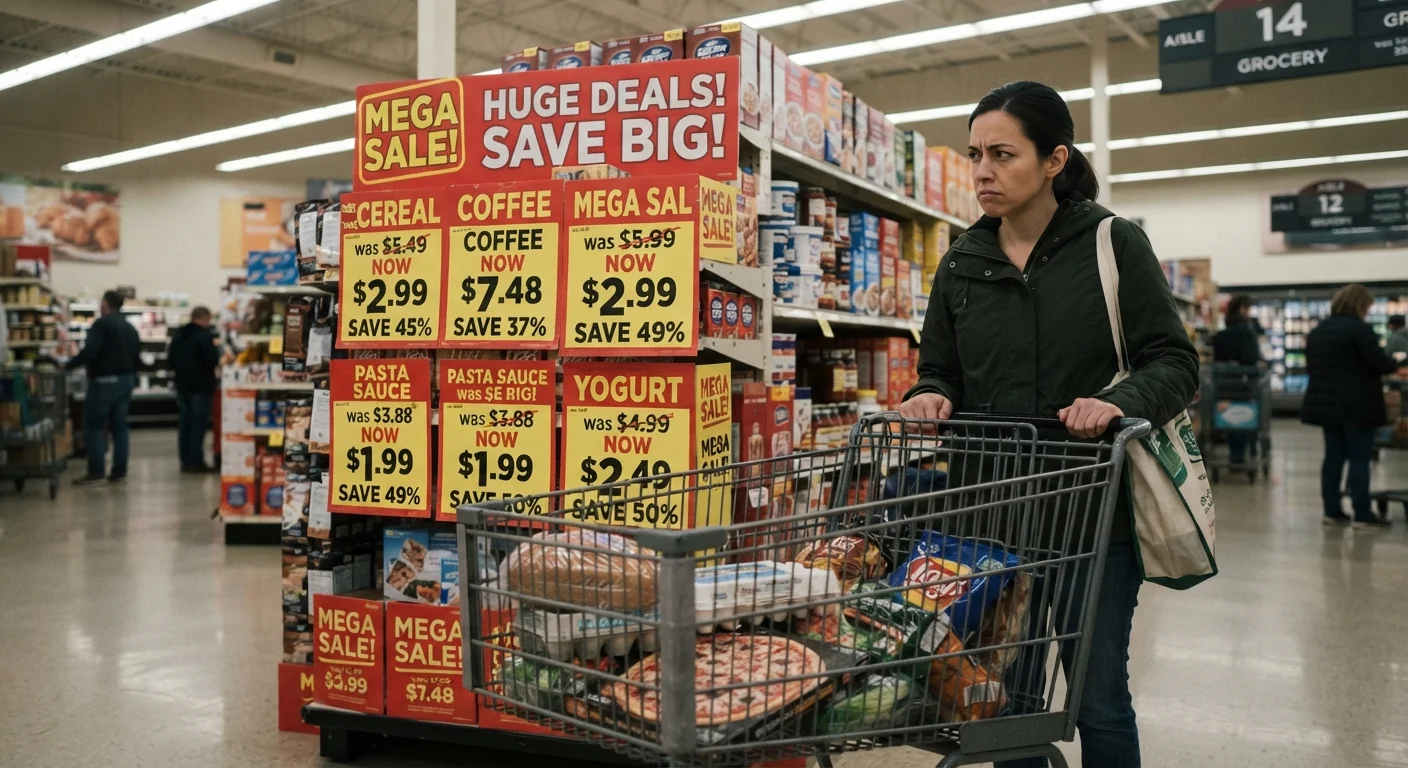
Walk through any major retailer and you'll see the same formula: a crossed-out price, a red tag, and a percentage saved. The implied story is simple — this item used to cost more, and today you're getting it for less. But the crossed-out number often has a complicated history.
Many retailers set a high 'original' or 'list' price at the start of a product's life — sometimes for only a brief window, sometimes only in a limited number of stores — and then mark it down almost immediately. The item spends most of its retail life at the 'sale' price. That makes the 'was' figure less a record of what customers paid and more a number chosen to make the current price feel like a rescue.
This practice is sometimes called reference pricing or comparative price advertising. It works because human judgment about value is relative. When you see $120 crossed out, $59 today, your brain computes a $61 gain — regardless of whether $59 is actually a fair price for that item.
“A 'sale' price is only meaningful if the original price was real. Shoppers owe it to themselves to ask: real compared to what, and for how long?”
— Smarter Shopping Editorial Team, Consumer research and retail analysis desk
Why the Discount Percentage Misleads
A '50% off' label is persuasive precisely because it looks like math. But the percentage is calculated from the reference price — and if that reference price is inflated, the percentage is meaningless as a measure of value.
Consider an item with a posted original price of $100 and a sale price of $50. If every competing retailer sells the same item for $52 every day with no sale, the 'discount' evaporates. You're not saving $50; you're paying roughly market rate, with extra theater. This is why evaluating what you're actually saving requires looking beyond the tag entirely.
The percentage also encourages bigger spending. Shoppers who feel they're getting 40% off often buy more items or trade up to a pricier version than they originally planned — a dynamic retailers understand and design for.
~87%
Products sold at 'sale' price most of the time
Research published in the Journal of Marketing found that a large proportion of items in promotional categories spend the majority of their retail lives at the discounted price rather than the reference price.
2–3x
Typical markup over cost for suggested retail prices
Consumer advocates and retail analysts commonly note that manufacturer-suggested retail prices often reflect significant margin above production cost, giving retailers room to advertise steep discounts while maintaining healthy margins.
How to Spot an Inflated Reference Price
The most direct check is a price history lookup. Tools that track historical pricing on major retail platforms can show you what an item actually sold for over weeks or months — not what it was briefly listed at. Our guide to price history tools walks through how these work and which types of purchases benefit most.
A few other practical checks:
- Compare across retailers. If four stores sell the item at $49 and one store shows it 'on sale' from $89 to $49, the pattern is informative.
- Look at the timing. Prices that drop right before a major shopping holiday — and return to the 'sale' price immediately after — suggest the 'original' was set to be crossed out, not charged.
- Read the fine print. Some tags specify where or when the original price applied. 'Sold elsewhere for...' or 'Comparable value' are legally distinct claims that carry less weight than 'Our regular price.'
Quick Habit: The 48-Hour Rule
When you see a sale price that feels compelling, give yourself 48 hours before purchasing. In that window, check two competing retailers and look up the item's price history if possible. Many of the 'urgency' cues retailers use — limited-time banners, countdown clocks — are designed to shorten exactly this pause. Urgency language rarely reflects genuine scarcity.
The Broader Pattern: Anchoring and Urgency
Reference pricing rarely works alone. Retailers layer it with anchor pricing tactics that make a high reference number feel authoritative, and with urgency signals — countdown timers, 'only 3 left,' limited-time banners — that discourage the pause needed to verify anything. Together, these elements push shoppers toward quick decisions based on the feeling of a deal rather than its reality.
Understanding that these tactics exist doesn't require cynicism about every sale. It simply calls for a moment of independent verification before committing. Check the price elsewhere. Look at history. Ask whether you'd buy this item at this price if the crossed-out tag weren't there.
For families working to stretch a budget, that habit — applied consistently — is worth more than any individual 'deal.' The Smart Budgeting hub covers additional strategies for making purchase decisions based on value rather than marketing signals.
Regulatory Oversight Has Limits
The FTC's guidelines on comparative price advertising set a standard for what qualifies as a genuine 'former price,' but enforcement is complaint-driven and uneven. Some states have stricter rules than others. Shoppers are the most consistent line of defense against misleading reference prices — which is why independent verification matters more than trusting regulatory protection alone.
Frequently Asked Questions
It can be. The FTC and several state attorneys general have taken action against retailers who advertise fictitious 'former prices.' However, enforcement is inconsistent, and many inflated reference prices exist in a legal gray area. Shoppers should not assume a posted original price is genuine.
Check the item's price history using a price-tracking tool, compare the sale price across multiple retailers, and look at the unit price where applicable. If the 'sale' price matches what competitors charge every day, the discount is largely cosmetic.
A fictitious reference price is a 'was' or 'original' price that was never genuinely charged to consumers for a meaningful period. Retailers sometimes set a high list price briefly — or only on paper — before advertising a deep discount from it.
Yes, and often more aggressively. Online platforms can change prices rapidly and use personalized pricing, making it harder to identify a genuine baseline. Price history browser extensions are especially useful for online shopping.
No. Genuine markdowns do exist — clearance sales on seasonal merchandise, end-of-line discounts, and competitive price-matching are all real. The goal is not to avoid sales entirely but to verify a deal before letting the tag make the decision for you.
The content provided on our blog site traverses numerous categories, offering readers valuable and practical information. Readers can use the editorial team’s research and data to gain more insights into their topics of interest. However, they are requested not to treat the articles as conclusive. The website team cannot be held responsible for differences in data or inaccuracies found across other platforms. Please also note that the site might also miss out on various schemes and offers available that the readers may find more beneficial than the ones we cover.