

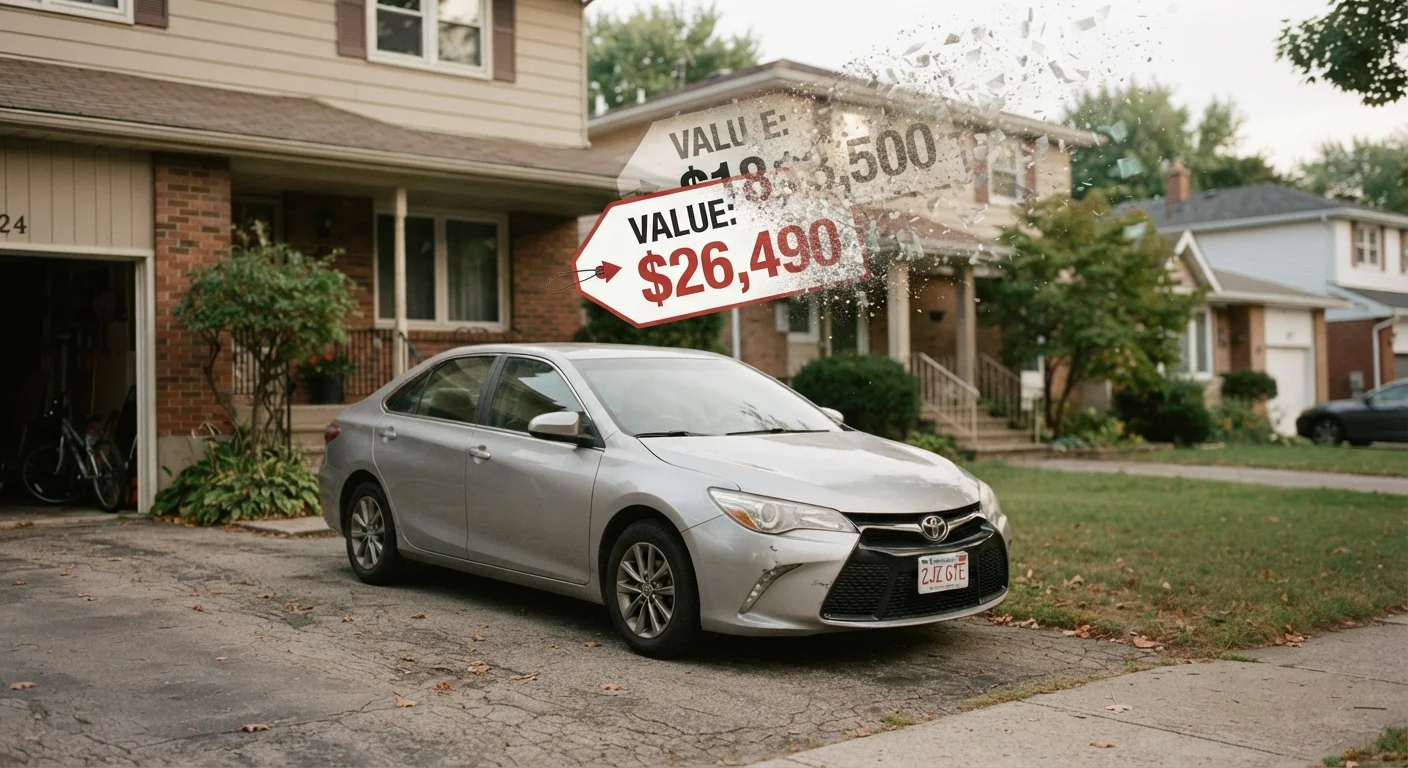
Why Depreciation Hits the Moment You Buy
The instant a new vehicle is registered in your name, its status changes from new to used - and so does its market value. A buyer shopping the same model at a dealership next week can get a new one with full warranty protection, so they're unlikely to pay you the same price you just paid. That gap is the first bite of depreciation.
This isn't a flaw in the system - it's simply how market pricing works. New cars carry manufacturer warranties, dealer-backed assurances, and the psychological premium of being untouched. Once those factors are gone, resale value adjusts accordingly. Understanding this helps families treat a car purchase as a consumption decision, not just an investment.
Depreciation is a major piece of the broader ownership picture. For a full breakdown of what vehicle ownership actually costs, see the true cost of owning a family car.
15-25%
Value lost in the first year of ownership
Industry valuation guides consistently show new vehicles lose this share of their purchase price within 12 months.
40-60%
Typical value lost by year five
Exact figures vary by make, model, and market conditions, but most new vehicles depreciate substantially within five years.
#1
Largest hidden cost of vehicle ownership
Automotive research organizations, including AAA, consistently rank depreciation as the single largest component of annual car ownership costs.
The Depreciation Curve: When Value Falls Fastest
Depreciation doesn't move in a straight line. Value drops steeply in the first one to three years, then gradually levels off. Industry valuation data consistently shows that new vehicles lose roughly 15-25% of their value in year one. By year five, many vehicles have lost 40-60% of their original purchase price - though the exact numbers vary widely by vehicle type and market conditions.
After the initial steep drop, older vehicles depreciate more slowly because they're already priced closer to their long-term floor. A ten-year-old car with 100,000 miles doesn't have much further to fall in percentage terms.
Key Factors That Speed Up or Slow Down Depreciation
Several variables influence how quickly - or slowly - a specific vehicle loses value:
- Mileage: Higher annual mileage shortens the perceived useful life of the vehicle and reduces resale value.
- Condition: Dents, stains, mechanical issues, and a missing service history all push value down faster.
- Brand and model reputation: Vehicles associated with long-term reliability tend to hold value better than those with weaker track records.
- Fuel type and technology: Consumer preferences shift. As electric vehicle adoption grows, certain gasoline models may depreciate faster in some markets.
- Supply and demand: When a particular model is scarce, used prices can stay elevated - sometimes unusually so. The reverse is also true.
- Color and features: Neutral colors and popular option packages tend to attract more buyers, supporting resale prices.
Service Records Are Worth Real Money
Keeping a complete record of every oil change, tire rotation, and repair - whether done at a shop or a dealership - gives future buyers confidence and supports a stronger resale price. Even if you plan to keep the car long-term, organized records protect you if circumstances change and you need to sell sooner than expected.
What Depreciation Means for Your Family's Budget
For families deciding between new and used, or between buying and leasing, depreciation is central to the math. Purchasing a vehicle that's one to three years old means the previous owner absorbed the steepest part of the depreciation curve. You get a lower purchase price while the vehicle may still have meaningful warranty coverage remaining.
On the other hand, leasing insulates you from the depreciation loss on paper - but the leasing company prices that projected depreciation into your monthly payments. You're still paying for it, just indirectly. Our article on leasing vs. buying a family vehicle walks through those trade-offs in detail.
Families who plan to keep a car for eight to ten years generally experience the most favorable total cost per mile, since depreciation is spread over a longer useful life. Those who trade in every three years repeatedly re-enter the steepest part of the curve. Neither approach is universally right - it depends on your financial situation, driving needs, and how much you value reliability versus driving a newer model. For a structured side-by-side, see our new car vs. used car financial comparison.
“Depreciation is the cost that most car buyers never budget for because it doesn't show up as a bill. But over a five-year ownership period, it often exceeds what you paid for fuel, insurance, and maintenance combined.”
— AAA Automotive Research, Annual Your Driving Costs report, a longstanding industry reference on U.S. vehicle ownership expenses
Practical Steps to Protect Resale Value
While you can't stop depreciation, you can manage it. Keeping up with scheduled maintenance is the most direct way to support resale value - a documented service history signals to buyers that the car was cared for. Consistent maintenance habits also reduce the chance of costly repairs that further hurt trade-in offers.
Beyond maintenance, practical steps include keeping mileage reasonable where possible, addressing minor cosmetic damage promptly, and storing service records carefully. When it's time to sell or trade in, buyers and dealers use condition and documentation as key pricing inputs.
Depreciation is often overlooked because it doesn't arrive as a bill - but it's one of the most significant costs your family pays. Treating it as a real line item in your vehicle budget, rather than an invisible background factor, leads to smarter decisions at every stage of ownership. For a comprehensive look at what families typically spend on vehicles each year, the annual vehicle ownership cost tracker provides useful reference data by vehicle category.
Frequently Asked Questions
A new car typically loses somewhere between 9% and 11% of its value the moment it's driven off the lot, simply because it transitions from 'new' to 'used' status. Over the first year, total depreciation often reaches 15-25%, depending on the make, model, and market conditions.
Vehicles with strong reliability reputations, high consumer demand, and limited supply tend to hold value better. Trucks, certain SUVs, and models with loyal followings have historically depreciated more slowly, though market conditions shift. No category is guaranteed to retain value.
Yes. Higher mileage signals more wear to buyers and appraisers, reducing resale value. Most industry valuation guides use mileage as a primary pricing variable alongside age and condition.
Buying a vehicle that's one to three years old allows you to avoid the sharpest early depreciation while still getting a relatively modern car. However, you should weigh warranty coverage and potential repair costs - a used vehicle may come with more risk. See our comparison of new versus used family vehicles for a fuller picture.
Leasing transfers the depreciation risk to the leasing company, but you pay for projected depreciation through your monthly payments. You don't own equity in the vehicle at lease end unless you purchase it. The financial trade-offs are nuanced and depend on your usage and goals.
You can't stop depreciation, but consistent maintenance, low mileage, avoiding accidents, and keeping interior and exterior in good condition all support stronger resale values. Vehicles with full service records typically command higher trade-in offers.
The content provided on our blog site traverses numerous categories, offering readers valuable and practical information. Readers can use the editorial team’s research and data to gain more insights into their topics of interest. However, they are requested not to treat the articles as conclusive. The website team cannot be held responsible for differences in data or inaccuracies found across other platforms. Please also note that the site might also miss out on various schemes and offers available that the readers may find more beneficial than the ones we cover.