Option A
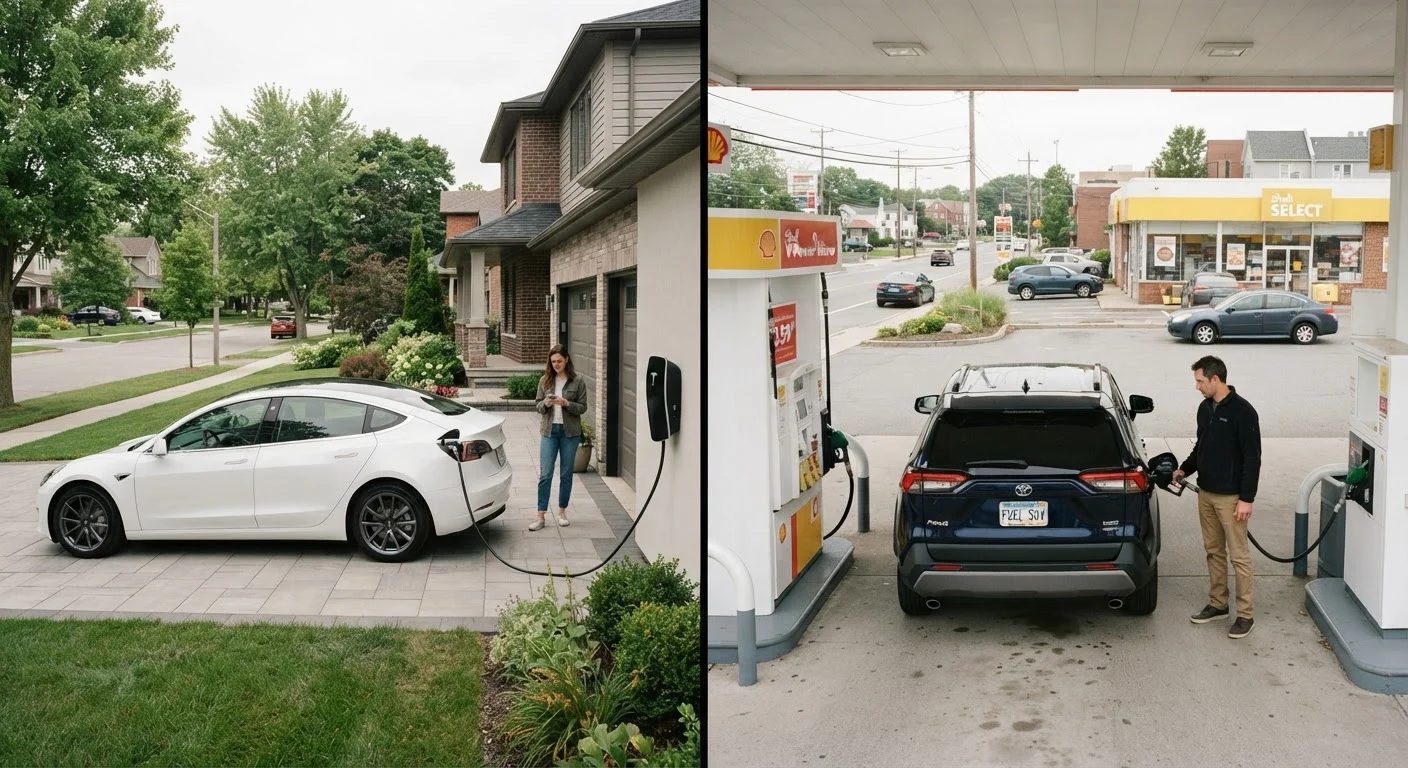
Electric Vehicle (EV)
The lower-running-cost, higher-upfront-price option.
Best for: Families who drive frequently, can charge at home, and plan to keep the vehicle long-term.
Option B
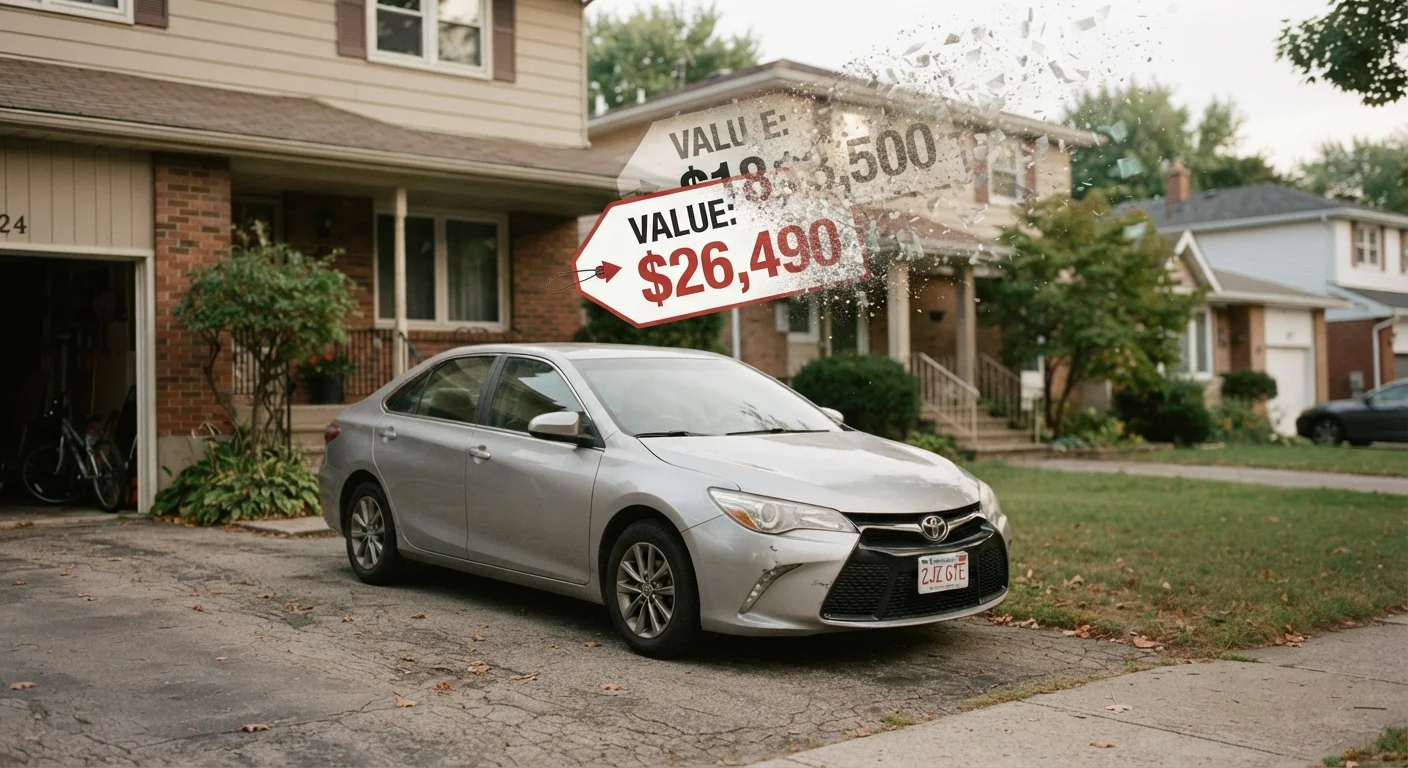
Gas Vehicle
The familiar, flexible, lower-entry-cost choice.
Best for: Families who drive fewer miles, lack home charging access, or need predictable near-term expenses.
Purchase Price and Incentives
The most visible cost difference between EVs and gas vehicles is the purchase price. EVs have historically carried a price premium over comparable gas models, though that gap has narrowed in recent years as production has scaled up. According to Kelley Blue Book data, the average transaction price for a new EV has generally been several thousand dollars higher than the average new gas vehicle, though entry-level EV options have expanded considerably.
Federal tax credits - currently up to $7,500 for qualifying new EVs under the Inflation Reduction Act - can meaningfully reduce that upfront gap for eligible buyers. However, income caps, vehicle price limits, and assembly requirements mean not every buyer or every model qualifies. Always verify current eligibility directly with the IRS or a tax professional before factoring a credit into your budget.
For a fuller picture of every expense that follows a vehicle purchase, see our guide to the true cost of owning a family car.
| Criterion | Electric Vehicle | Gas Vehicle |
|---|---|---|
| Average purchase price | Generally higher upfront | Generally lower upfront |
| Federal tax incentive | Up to $7,500 (if eligible) | Typically none |
| Fuel cost per mile | Lower (especially home charging) | Higher; varies with gas prices |
| Routine maintenance | Lower (no oil changes, etc.) | Higher recurring costs |
| Battery/engine longevity risk | Battery degradation after 8-10+ yrs | Engine wear; predictable schedule |
| Insurance cost | Often slightly higher | Often slightly lower |
| Refueling convenience | Requires home or public charger | Gas stations widely available |
| Depreciation pattern | Variable; model-dependent | More historically predictable |
Fuel and Charging Costs
This is where EVs tend to pull ahead most clearly. The U.S. Department of Energy's eGallon metric - which converts electricity costs into a gasoline-equivalent price - has consistently shown electricity to be cheaper per mile than gasoline for most U.S. drivers, though the margin varies by state. Home overnight charging, typically on a standard 240-volt Level 2 charger, offers the most cost-effective option.
Public fast charging is convenient but noticeably more expensive per kilowatt-hour than home rates. Families without home charging access - those in apartments or areas without dedicated parking - may find their EV fuel savings shrink significantly. Gas vehicles, by contrast, offer consistent and widely available refueling regardless of location.
To understand how gas costs shape a typical household budget, our article on what families actually spend on gas each year breaks it down by driving habits and vehicle type.
~3-4¢
Average EV cost per mile (electricity)
The U.S. Department of Energy estimates average electricity costs for EVs are roughly 3-4 cents per mile, compared to 8-10 cents per mile for a typical gas vehicle at moderate fuel prices.
$1,000+
Annual maintenance savings reported by EV owners
Consumer Reports survey data has found EV owners tend to spend notably less on repairs and maintenance annually than owners of gas-powered vehicles.
8 yrs / 100K mi
Standard EV battery warranty (most manufacturers)
Federal regulations require automakers to warranty EV battery packs for at least eight years or 100,000 miles, whichever comes first.
Maintenance, Repairs, and Battery Longevity
EVs have fewer moving parts than gas vehicles - no oil changes, no transmission fluid, no spark plugs, no exhaust system. Studies from organizations including Consumer Reports have found that EV owners generally report lower routine maintenance costs than gas vehicle owners. Brake wear is also reduced on many EVs because regenerative braking (a system that recaptures energy during deceleration) handles much of the slowing.
The main long-term uncertainty for EVs is battery degradation. Most manufacturers provide battery warranties of eight years or 100,000 miles, and real-world data suggests most EV batteries retain a substantial portion of their capacity within that window. Full battery replacement outside of warranty, however, can be a significant expense - estimates vary widely by model and market conditions, so it's worth researching the specific vehicle you're considering.
Gas vehicles carry their own cumulative maintenance costs: oil changes, coolant flushes, timing belt replacements, and more. These costs are predictable but persistent. Our article on car ownership cost myths examines some widely held but inaccurate beliefs about maintenance expenses for both vehicle types.
A Note on DIY Repairs and EVs
EV high-voltage battery systems are not suitable for DIY service. Working on or near high-voltage components without proper training and equipment carries serious injury risk. Any maintenance involving the battery pack, charging system, or related electronics should be performed by a certified EV technician. Routine tasks like tire rotations and cabin air filter replacements remain straightforward for those comfortable with basic vehicle upkeep.
Insurance, Registration, and Depreciation
Insurance premiums for EVs have generally run higher than for comparable gas vehicles, partly because repair costs for EV-specific components - including sensors and battery-adjacent systems - can be elevated. However, insurance pricing varies widely by insurer, location, driving history, and model, so comparing quotes for any specific vehicle is essential.
Registration fees are another variable. Some states charge additional fees for EVs to offset lost gas-tax revenue, while others offer registration discounts as an incentive. Check your state's DMV schedule when budgeting.
Depreciation - the loss in vehicle value over time - affects both categories. EVs have shown mixed depreciation patterns: some models hold value well, while others have depreciated quickly as new technology and lower-priced competitors enter the market. Gas vehicles follow more historically predictable depreciation curves. Our annual vehicle ownership cost tracker includes depreciation benchmarks by vehicle category that can help families estimate this often-overlooked expense.
Taken together, total ownership cost over five to ten years can favor either vehicle type depending on your driving patterns, location, and how long you keep the car. Families considering the broader new-versus-used dimension can find additional context in our new car vs. used car financial comparison.
The content provided on our blog site traverses numerous categories, offering readers valuable and practical information. Readers can use the editorial team’s research and data to gain more insights into their topics of interest. However, they are requested not to treat the articles as conclusive. The website team cannot be held responsible for differences in data or inaccuracies found across other platforms. Please also note that the site might also miss out on various schemes and offers available that the readers may find more beneficial than the ones we cover.