
Start here
How a Car Loan Actually Works
Next
The Real Impact of Interest Rate and Loan Length
Build your vocabulary
Key Loan Terms Every Borrower Should Know
Do the math
Calculating Total Cost Before You Commit
Protect yourself
What to Watch Out For
How a Car Loan Actually Works
When you finance a vehicle, a lender - a bank, credit union, or the dealership's financing arm - pays the seller on your behalf. You then repay the lender in fixed monthly installments over an agreed period. Each payment covers two things: a portion of the amount you originally borrowed (the principal) and the cost of borrowing that money (the interest).
Early in the loan, more of each payment goes toward interest. As the balance falls, more goes toward principal. This structure is called amortization. It means that if you sell or trade in the car partway through the loan, you may owe more than the car is currently worth - a situation called being underwater or having negative equity.
Car financing sits within the broader picture of vehicle ownership costs. For a fuller view, see the true cost of owning a family car, which covers depreciation, insurance, fuel, and maintenance on top of loan payments.
The Real Impact of Interest Rate and Loan Length
Two numbers shape the total cost of a car loan more than anything else: the interest rate and the loan term (length). Understanding how they interact is the most practical thing you can do before signing any agreement.
Consider a simplified example. Suppose you borrow $25,000:
- At 5% APR over 48 months: monthly payment roughly $576, total interest paid roughly $2,645
- At 5% APR over 72 months: monthly payment roughly $403, total interest paid roughly $4,018
- At 9% APR over 72 months: monthly payment roughly $448, total interest paid roughly $7,266
The 72-month loan at 9% costs nearly three times as much in interest as the 48-month loan at 5% - even though the vehicle itself is the same. The lower monthly payment on a longer loan can feel easier on the family budget week to week, but the cumulative cost is meaningfully higher.
Your credit score strongly influences the rate a lender offers. A higher score generally unlocks lower rates. If your credit needs work, improving it before applying - or making a larger down payment - can reduce what you ultimately pay. For guidance on managing credit, understanding credit and debt is a useful starting point.
Get Pre-Approved Before You Shop
Applying for pre-approval from your bank or credit union before visiting a dealership gives you a real rate offer to compare against dealer financing. It also helps you know your actual budget ceiling before falling in love with a specific vehicle. Pre-approval typically involves a credit check, so time multiple applications within a short window - credit bureaus generally treat several auto loan inquiries within 14-45 days as a single inquiry.
Key Loan Terms Every Borrower Should Know
Principal
The original amount of money you borrow, before any interest is added. Payments that reduce your principal lower the balance on which interest is calculated.
APR (Annual Percentage Rate)
The yearly cost of the loan expressed as a percentage, including the interest rate and required fees. It is the most accurate number for comparing offers from different lenders.
Loan Term
The length of time you agree to repay the loan, usually expressed in months (e.g., 36, 48, 60, or 72 months). Longer terms mean lower monthly payments but more total interest paid.
Amortization
The process of paying off a loan through scheduled payments over time. Early payments cover more interest; later payments cover more principal.
Down Payment
The upfront cash amount you pay toward the vehicle purchase price. A larger down payment reduces how much you need to borrow and therefore lowers total interest charges.
Negative Equity
When you owe more on your loan than the vehicle is currently worth. This can happen when vehicles depreciate faster than the loan balance decreases.
Prepayment Penalty
A fee some lenders charge if you pay off your loan ahead of schedule. Not all loans include this - check your loan agreement before making extra payments.
Familiarizing yourself with these terms before you walk into a lender's office - or open an online application - means you can read offers accurately rather than relying on a salesperson's summary.
Calculating Total Cost Before You Commit
The single most useful habit when evaluating any car loan is calculating total cost - not just the monthly payment. Multiply your monthly payment by the number of months, then add any fees included in the loan. That figure is what you are actually paying for the vehicle when all is said and done.
Free loan calculators are widely available from non-commercial sources such as government consumer agencies and nonprofit financial education organizations. Plug in the principal, interest rate, and term to see exactly how much interest you will pay and what the payoff schedule looks like.
A down payment directly reduces your principal. For example, putting $4,000 down on that $25,000 vehicle means you only borrow $21,000 - saving interest across the entire loan term. If you are weighing new versus used vehicles, the purchase price difference also affects how much you need to borrow; comparing new and used car costs for families explores that trade-off in detail.
Once you understand financing, building it into a broader household plan is the logical next step. Building a realistic annual car budget can help you see the full yearly picture.
This article provides general financial information for educational purposes only and is not personalized financial or legal advice. Consult a qualified financial professional before making decisions specific to your situation.
What to Watch Out For
A few common situations catch families off guard when financing a vehicle.
Watch for Loans That Exceed the Car's Value
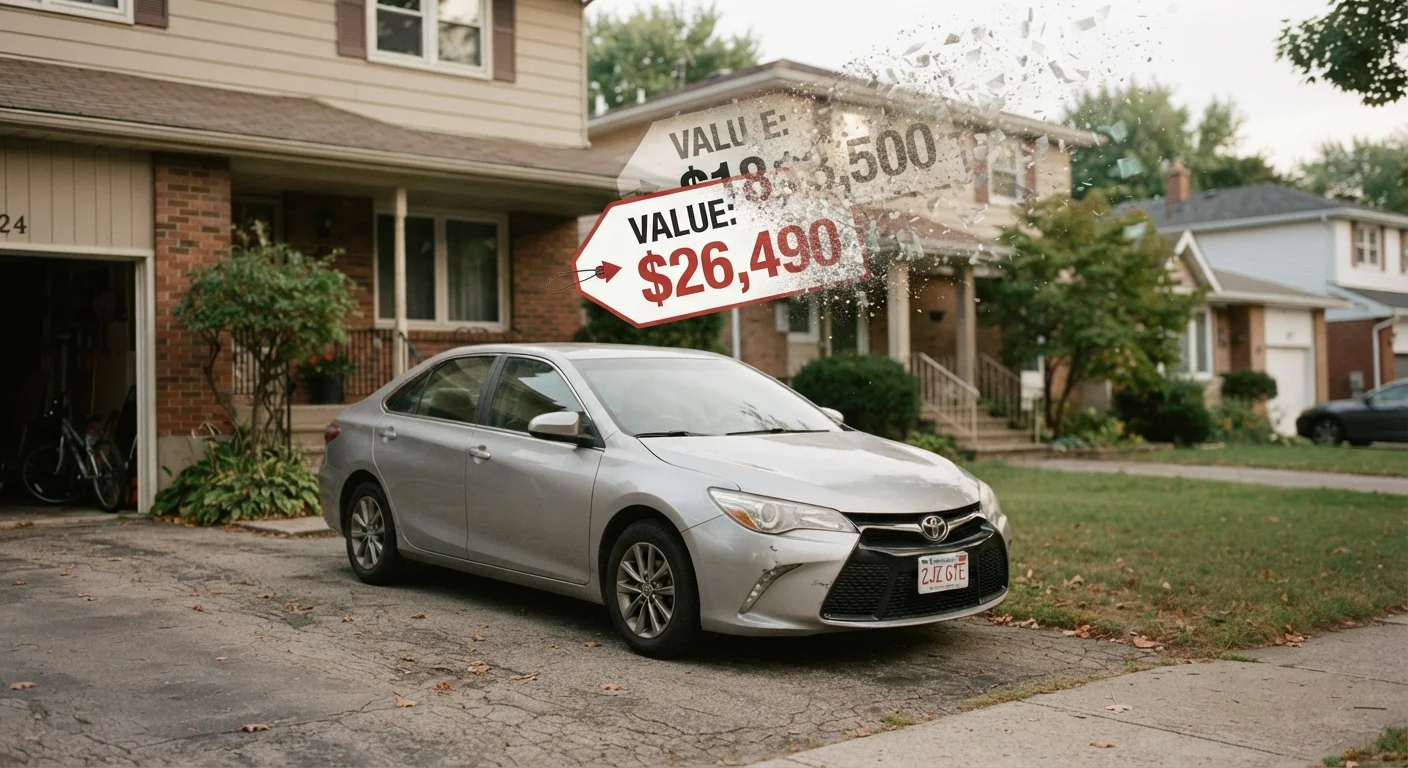
Vehicles begin losing value the moment they are driven off the lot. If your loan term is long and your down payment is small, you can quickly find yourself owing more than the car is worth. This becomes a serious problem if the vehicle is totaled or you need to sell it - your insurance payout or sale proceeds may not cover the remaining loan balance. Gap insurance (which covers this difference) exists for this reason, though it adds cost.
Add-ons rolled into the loan. Extended warranties, gap insurance, and other products are sometimes added to the loan balance at the dealership. Each dollar added increases both your principal and the interest you pay over time. Evaluate any add-on on its own merits, separately from the financing conversation.
Focusing only on the monthly payment. Dealers sometimes extend the loan term simply to make a more expensive vehicle fit a payment target. Always return to total cost. This is one of the car ownership cost myths that catch families off guard.
Skipping the comparison. Accepting the first financing offer without checking alternatives can be costly. Getting pre-approved through a bank or credit union before visiting a dealer takes relatively little time and gives you a concrete benchmark. If you are also considering whether to buy at all, leasing versus buying outlines an important alternative. For broader family budgeting strategies, family budgeting resources offer practical frameworks to help put any vehicle expense in context.
Frequently Asked Questions
Interest rates vary based on your credit score, the loan term, and whether the vehicle is new or used. Borrowers with strong credit typically qualify for lower rates. Check current rate ranges from multiple lenders - banks, credit unions, and online lenders - to get a realistic benchmark before visiting a dealership.
A longer term spreads payments out, reducing what you owe each month. However, it also means you pay interest for more months, increasing the total cost of the loan significantly. A 72-month loan on the same vehicle at the same rate will cost more in interest than a 48-month loan.
Neither is automatically better - it depends on the specific rates and terms offered to you. Getting pre-approved by your bank or credit union before visiting the dealership gives you a comparison point and negotiating leverage. Always read the full terms of any financing offer.
APR stands for Annual Percentage Rate. It reflects the yearly cost of the loan, including the stated interest rate and any required fees, expressed as a single percentage. Comparing APRs across lenders is more accurate than comparing interest rates alone.
Paying extra toward your principal can reduce total interest paid. However, some loans carry prepayment penalties - charges for paying off early. Review your loan agreement carefully before making extra payments, and ask the lender directly if any prepayment fees apply.
A larger down payment reduces the amount you borrow, which lowers both your monthly payment and the total interest paid. A common general guideline is to aim for at least 10-20% down, though your circumstances will vary. This is general information - consult a financial professional for advice tailored to your situation.
The content provided on our blog site traverses numerous categories, offering readers valuable and practical information. Readers can use the editorial team’s research and data to gain more insights into their topics of interest. However, they are requested not to treat the articles as conclusive. The website team cannot be held responsible for differences in data or inaccuracies found across other platforms. Please also note that the site might also miss out on various schemes and offers available that the readers may find more beneficial than the ones we cover.