
Our Verdict
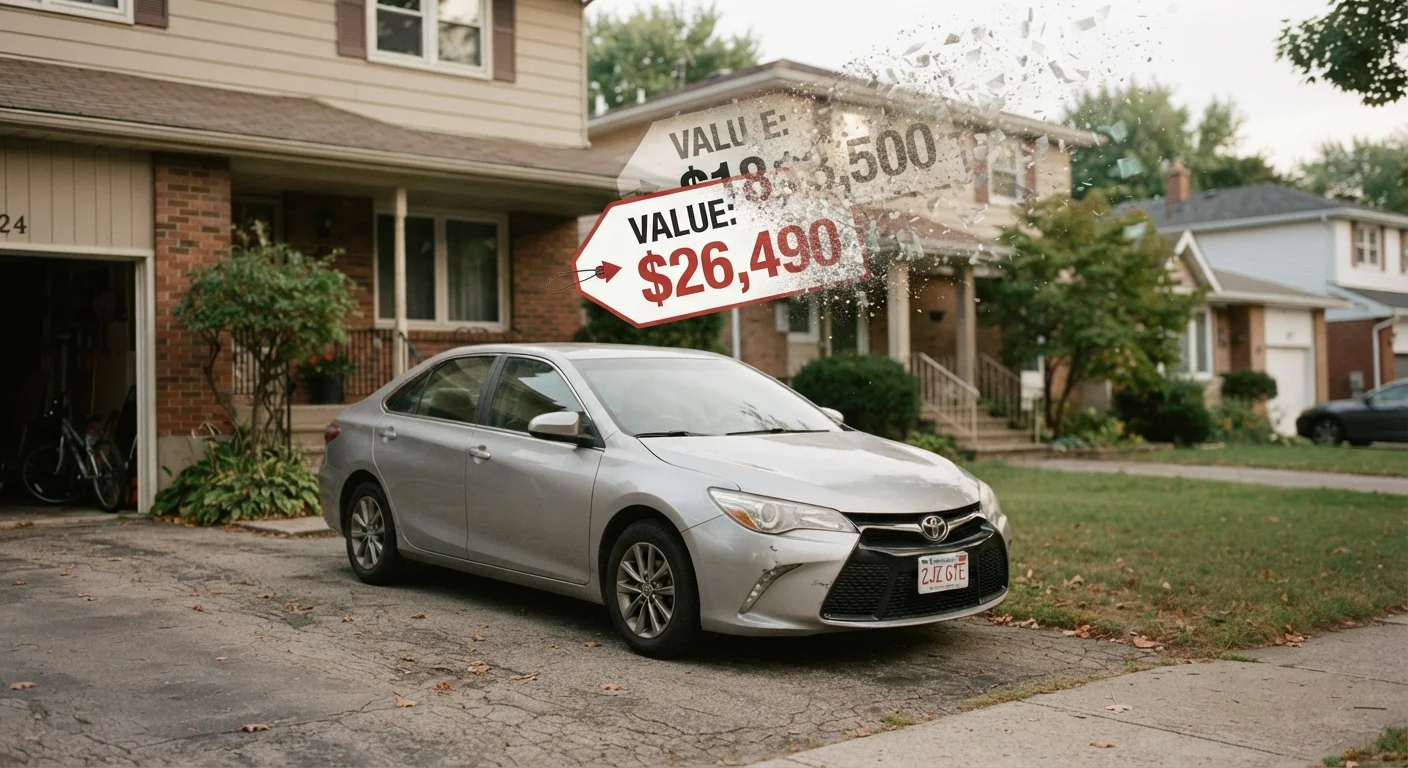
For most families, keeping a reliable high-mileage vehicle is the lower-cost path - provided repair bills remain reasonable and the car passes a professional inspection. Trading in becomes the smarter move when a single repair rivals the car's trade-in value, safety systems are compromised, or the vehicle no longer fits the family's practical needs.
Families who track their total ownership costs carefully and can handle occasional repair bills without financial strain will generally benefit most from keeping a well-maintained high-mileage vehicle.
Why This Decision Is Harder Than It Looks
When the repair estimate lands on your kitchen table, the instinct to trade in can feel overwhelming. But the financial reality is more nuanced. Your current vehicle, even with 150,000 miles on it, may still be your cheapest transportation option - or it may be quietly draining your budget in ways a newer car wouldn't.
The key is comparing total costs, not just the headline repair bill. That means factoring in monthly payments, insurance, registration, depreciation, and the opportunity cost of a down payment. For a full accounting of what vehicle ownership actually costs, see our breakdown of total family car ownership costs.
This article lays out the honest financial case for each path so your family can make a decision grounded in numbers, not anxiety.
The Financial Case for Keeping Your High-Mileage Car
The most powerful argument for keeping an older vehicle is simple: no car payment. The average new vehicle payment in the U.S. has climbed well above $700 per month in recent years. Even a year of moderately expensive repairs rarely reaches that sum. A car you already own and have paid off is a financial asset, even when it needs work.
No monthly car payment frees up family cash flow
A paid-off vehicle eliminates what is often a household's second-largest monthly expense. That freed-up money can cover repairs, build an emergency fund, or go toward other family priorities.
Steepest depreciation already absorbed by prior owner
Vehicles lose value most rapidly in their early years. By keeping a high-mileage car, your family sidesteps that depreciation curve entirely - your vehicle's value decline has already slowed considerably.
Lower or more flexible insurance coverage options
Without a lender requiring full comprehensive and collision coverage, you may be able to tailor your policy to your actual risk exposure, potentially reducing annual premiums by several hundred dollars.
Known maintenance history reduces surprises
If you've owned the car for years, you know what's been fixed, what's been neglected, and what to watch. That institutional knowledge is genuinely valuable and disappears the moment you buy unfamiliar used inventory.
Repairs are often cheaper than new payment difference
Even a $2,000 repair spread over a year costs less per month than most new car payments. When you account for the full cost of a replacement vehicle, keeping and fixing the existing one frequently wins financially.
Depreciation is another factor families often underestimate. New cars typically lose a significant portion of their value within the first few years of ownership. When you keep your high-mileage car, you've already absorbed that depreciation hit - someone else paid it when the vehicle was new.
Insurance premiums are also worth considering. Lenders on financed vehicles require comprehensive and collision coverage. On an owned older vehicle, you have the flexibility to adjust your coverage, which can meaningfully reduce your annual insurance bill.
Staying on top of preventive maintenance is what keeps older cars viable. Families who slip on routine service often face avoidable repair costs - a pattern explored in our article on maintenance tasks families commonly skip.
The Financial Case for Trading It In
There are real scenarios where holding on costs more than letting go. The clearest signal is when a single repair estimate approaches or exceeds what you'd realistically get for the vehicle at trade-in. Paying $3,500 to repair a car with a private-party value of $4,000 is a narrow margin with little financial cushion if another problem surfaces shortly after.
Single large repair can rival the vehicle's trade-in value
When a transmission, engine, or major component fails, the repair bill can approach what the car is actually worth on the market. At that point, pouring money into it carries real financial risk with little upside.
Repair frequency may create an unpredictable expense pattern
Aging vehicles sometimes enter a cycle where one fix leads quickly to another. The cumulative cost and the logistical disruption of repeated breakdowns can rival or exceed a car payment over the course of a year.
Older vehicles lack modern active safety technology
Features like automatic emergency braking and blind-spot detection are now standard on many newer vehicles and have been associated with meaningful reductions in collision rates. High-mileage older cars typically don't have them.
Fuel efficiency may be significantly lower than newer models
Depending on the age and condition of your vehicle, a newer model in the same category might deliver noticeably better fuel economy. Over tens of thousands of miles, that gap adds up at the pump.
Financing terms may favor trading in during certain market conditions
Trade-in values and financing rates shift with the market. In some environments, the combination of a strong trade-in offer and competitive interest rates can reduce the effective cost of moving to a newer vehicle more than expected.
Reliability also has a hidden financial cost: rental cars, rideshares, missed work, and the stress of an unpredictable vehicle. If your car has entered a cycle where something new breaks every few months, the cumulative cost can rival a car payment - without the predictability.
Safety technology is another legitimate reason to consider trading. Older vehicles lack automatic emergency braking, blind-spot monitoring, and lane-keeping assist - features that are now standard on many newer models and have measurable safety benefits for families. Our hub on safe driving tips covers how modern vehicle safety systems fit into broader family road safety.
It's also worth questioning some common assumptions. The belief that newer cars are always more expensive to maintain, for example, doesn't always hold up. Our piece on car ownership cost myths examines these ideas against real data.
How to Run the Numbers for Your Situation
$700+
Average new vehicle monthly payment (U.S.)
Federal Reserve and industry data have consistently shown average new car payments exceeding $700 per month in recent years, underscoring the cost of trading into a financed vehicle.
~20%
Typical first-year vehicle depreciation
Automotive valuation analysts generally estimate new vehicles lose roughly 15-20% of their value in the first year, with cumulative losses reaching 50% or more by year five.
$100-$200
Cost of a pre-decision mechanic inspection
An independent pre-purchase or pre-decision inspection is widely regarded by consumer advocates as among the highest-return diagnostic investments a car owner can make.
Start by getting a written estimate for any pending repairs, then look up your vehicle's current market value using a reputable valuation tool. If the repair cost is under roughly 50% of the car's value and the vehicle has a reasonable maintenance history, keeping it is generally worth considering.
Next, price out what a replacement would actually cost - not just the sticker price, but monthly payments, the down payment you'd need, any increase in insurance, and higher registration fees on a newer vehicle. That comparison often shifts the calculus back toward keeping what you have.
A pre-purchase inspection from an independent mechanic (typically $100-$200) is one of the most cost-effective steps you can take before deciding. A mechanic can identify whether your car has one fixable problem or is approaching a cascade of failures - information that changes the entire financial picture.
For families weighing a trade against buying used instead of new, our new vs. used car financial comparison walks through the trade-offs in detail.
Don't Overlook the Cost of a Down Payment
Trading in often requires a down payment on the replacement vehicle - money that leaves your savings immediately. Even if monthly payments seem manageable, the upfront cash outlay is a real cost that doesn't appear in payment-focused comparisons. Factor it into your total-cost calculation before deciding. If you're financing at a high interest rate, the long-term cost climbs further.
The content provided on our blog site traverses numerous categories, offering readers valuable and practical information. Readers can use the editorial team’s research and data to gain more insights into their topics of interest. However, they are requested not to treat the articles as conclusive. The website team cannot be held responsible for differences in data or inaccuracies found across other platforms. Please also note that the site might also miss out on various schemes and offers available that the readers may find more beneficial than the ones we cover.