

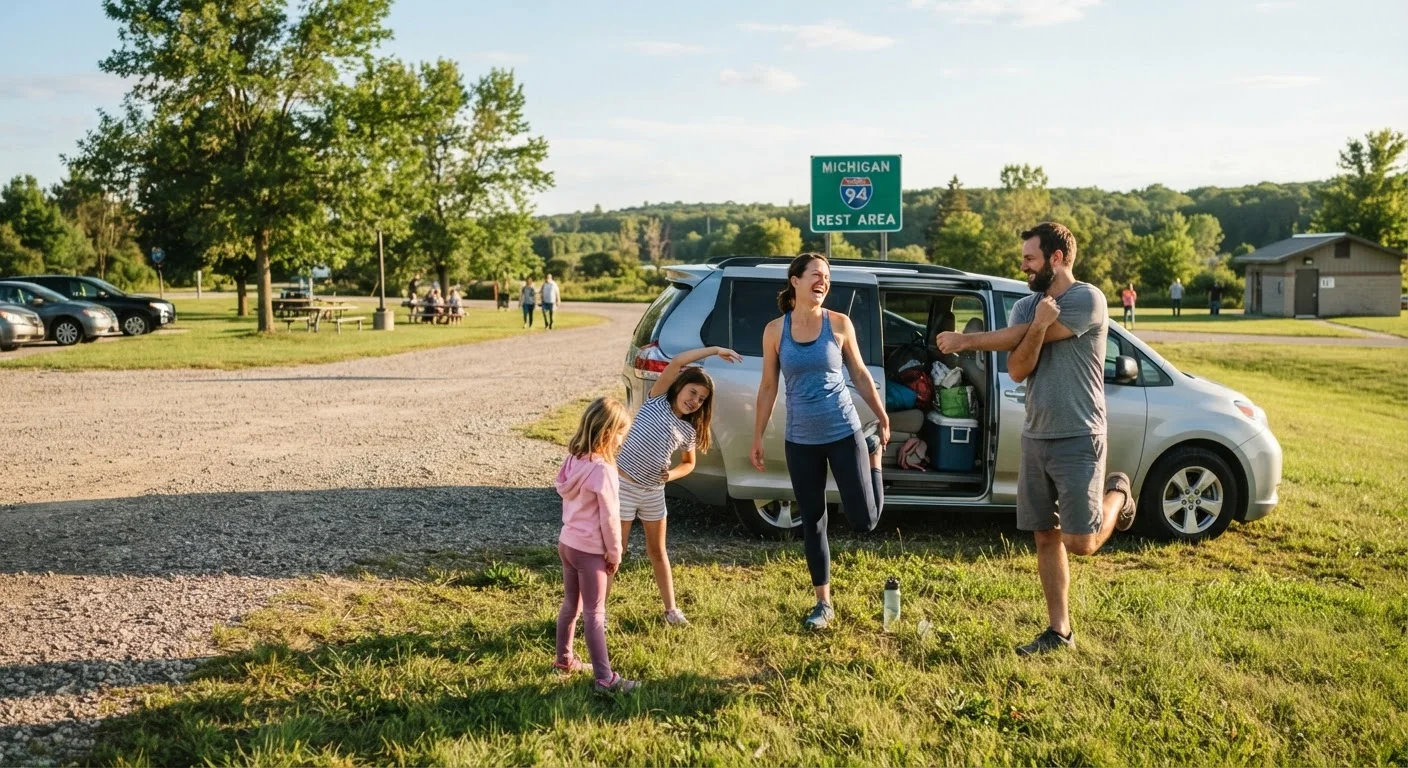
Why Rest Stops Deserve a Spot in Your Route Plan
Most families treat rest stops as interruptions — something that happens to the trip rather than something built into it. That instinct is understandable, but it's one of the quiet planning mistakes that makes road trip days feel punishing. As our guide on underestimating travel days explains, how you budget time directly shapes how the whole trip feels.
The reality is that a family with kids will stop. The only question is whether those stops are chaotic and scattered, or intentional and efficient. When you build stops into your plan, you control their timing, location, and duration — which means everyone arrives at the day's destination with energy left over.
Part of the complete road trip planning process is treating rest stops the same way you'd treat a route waypoint: look them up in advance, mark the ones near parks or open green space, and give each stop a defined purpose so it doesn't expand to fill the time.
The Best Practices That Actually Work
These approaches are drawn from the collective experience of families who've logged serious highway miles — and the difference between a smooth stop and a 90-minute derailment usually comes down to a few deliberate habits.
Set a stop interval before you leave, and stick to it
Without a plan, stops happen reactively — triggered by the loudest need in the car. A consistent interval (most travel experts suggest every 1.5–2 hours for families with young kids) prevents desperation stops and keeps everyone's needs roughly synchronized. It also gives kids a concrete answer to 'how much longer?' which reduces backseat friction.
Require everyone to attempt a bathroom break at every stop
The single biggest cause of unplanned stops is one family member needing a break 20 minutes after everyone else just went. Making bathroom attempts mandatory — even if kids insist they don't need to go — dramatically cuts emergency pull-offs. It also shortens each stop because you're not negotiating.
Choose stops with physical movement built in
A parking lot stretch is better than nothing, but kids who've been sitting for 90 minutes need real movement to reset. Stops near rest areas with open lawns, playgrounds, or short walking paths return kids to the car significantly calmer. Physical activity also helps adults manage fatigue more effectively than caffeine alone.
Separate snacks from stops whenever possible
When snacks are handed out only at stops, you create a powerful incentive for kids to request stops more frequently. Keeping a small, accessible snack bag in the back seat — stocked with items that don't require refrigeration or mess — means hunger doesn't force an extra pull-off. Reserve real meals for stops that are already planned.
Cap each stop at 25–30 minutes with a visible timer
Without a clear endpoint, stops expand. Kids explore further, adults lose track of time, and a 15-minute break becomes 45 minutes before anyone notices. A phone timer that everyone can see creates shared accountability and removes the confrontational 'time to go' negotiation — the timer made the call, not you.
Quick Wins You Can Use on Your Next Drive
Not every improvement requires advance planning. Some of the most effective rest stop habits are things you can start doing immediately, even mid-trip.
Make the Stop Part of the Adventure
Frame rest stops as destinations, not delays. If a stop has an interesting feature — a covered bridge nearby, a scenic overlook, an unusual state welcome center — mention it before you arrive. Kids who are curious about the stop are much easier to get back in the car than kids who feel they were dragged away from nothing in particular.
How Stop Strategy Fits Into the Bigger Picture
Rest stop habits don't exist in isolation. They connect directly to how you've planned the full drive day — and many families discover that smarter stopping is the single easiest fix for a trip that always seems to run long. If your road trips consistently feel more draining than fun, this breakdown of common planning missteps is worth a read before your next departure.
Driver fatigue is also a genuine safety factor, not just a comfort one. Safe driving practices consistently recommend stopping every two hours on long drives regardless of how the schedule looks on paper. That guidance exists because fatigue impairs reaction time in measurable ways — a point reinforced by research on stopping distances and driver response.
Once the driving day is done, how you choose your overnight stop matters just as much. See our overview of overnight lodging options for road trips to round out your planning.
Rest Stop Safety at Night
If you're driving into the evening, be selective about where you stop. Well-lit, staffed travel plazas are generally preferable to unmanned rest areas after dark. Check your state's DOT website or a highway travel app for information on which rest areas along your route are staffed or monitored. Always trust your instincts — if a stop feels wrong, it's fine to keep driving to the next one.
The content provided on our blog site traverses numerous categories, offering readers valuable and practical information. Readers can use the editorial team’s research and data to gain more insights into their topics of interest. However, they are requested not to treat the articles as conclusive. The website team cannot be held responsible for differences in data or inaccuracies found across other platforms. Please also note that the site might also miss out on various schemes and offers available that the readers may find more beneficial than the ones we cover.